Table of Contents
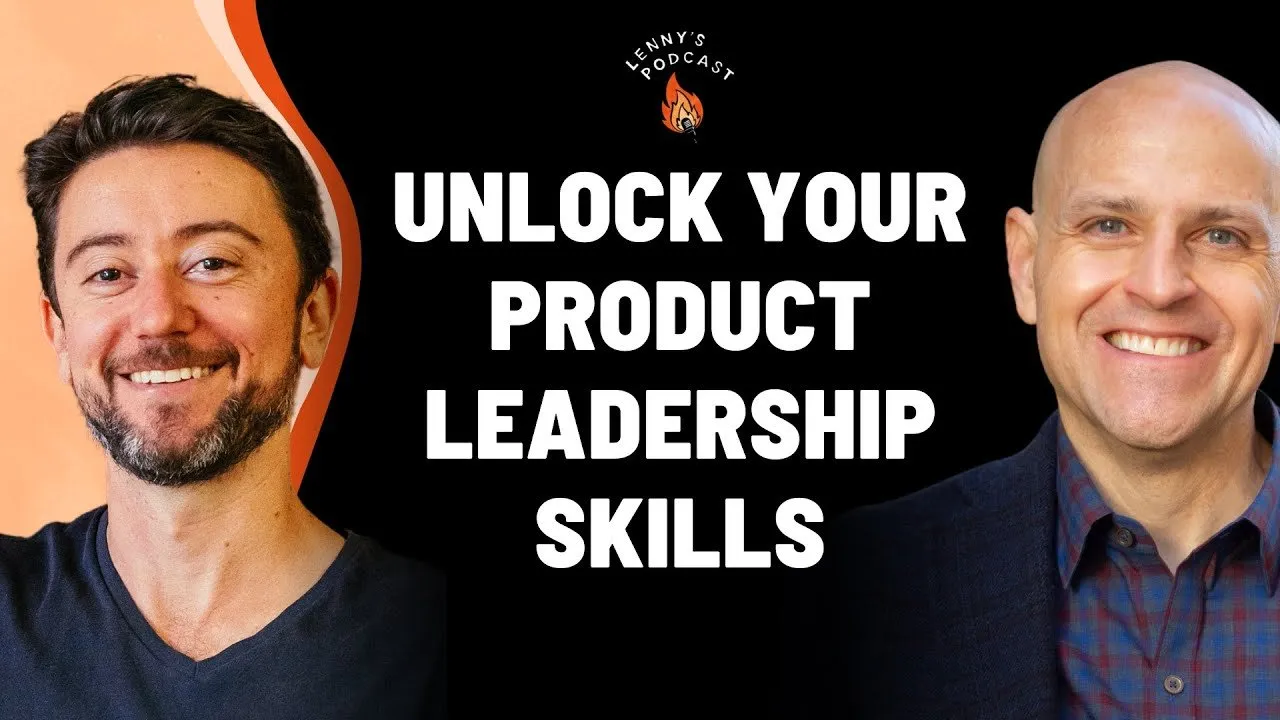
Product management is frequently described as "leadership without authority," a role where influence outweighs command. Yet, as careers progress, the skills that help a Product Manager (PM) execute a successful sprint are rarely the same skills required to lead an organization. After a 14-year career at Google—leading teams for products used by over three billion people, including Google Docs, Calendar, and Maps—Ken Norton transitioned into executive coaching to address this exact gap.
Norton’s work now focuses on the internal operating systems of product leaders. He moves beyond frameworks and KPIs to address the psychological and emotional shifts required to scale leadership. The journey from a senior PM to a product executive is not merely about learning new tactics; it requires a fundamental transformation from a reactive mindset to a creative one.
Key Takeaways
- The "Cotton Candy" Effect of Advice: Direct advice often provides a quick "sugar high" but lacks nutritional value because it rarely addresses the unique context or internal blocks of the recipient. Coaching focuses on internal transformation rather than external tactics.
- Upgrade Your Operating System: As roles increase in complexity, learning new skills (like learning to drive) isn't enough. Leaders must upgrade their internal meaning-making systems to handle ambiguity and pressure.
- Reactive vs. Creative Leadership: Research shows 70-75% of leaders operate reactively—driven by fear, compliance, or a need for control. Creative leadership, which is correlated with higher business success, operates from purpose, vision, and passion.
- Managing the Inner Critic: Imposter phenomenon is universal. Effective leaders do not eliminate self-doubt but manage it by treating the "inner critic" as just one voice on their internal board of directors.
- Hiring for Intangibles: Modern interview processes have become like SAT prep—highly structured and gameable. Hiring managers must dig deeper into the "art" of collaboration and soft skills to find true product leaders.
The Limits of Advice and the Power of Coaching
In the tech industry, mentorship and advice are often treated as the gold standard for career growth. However, there is a diminishing return on advice as a leader becomes more senior. Norton describes advice as "cotton candy"—it provides a temporary boost but fails to sustain long-term growth.
You start to realize advice is not as powerful as you might think it is. It’s a little like cotton candy: it doesn't have a lot of nutrition. You get a nice sugar high, both sides feel happy, but a couple of months later, nothing has really changed.
Advice often fails because it is context-dependent. What worked for a product leader at Google in 2010 may not work for a startup CPO in 2023. Furthermore, advice usually addresses the symptom rather than the root cause. Coaching, conversely, is a partnership designed to unlock the client's potential by examining their internal drivers. It shifts the focus from "How do I do this task?" to "Who do I need to be to lead this team?"
The "Learning to Drive" Analogy
Norton uses the metaphor of learning to drive to explain the shift in complexity. As a child, cars simply "go places." As a teenager, you learn the mechanics—the pedals and the wheel. But once you are behind the wheel on a busy highway, knowing the mechanics is insufficient. You must process complex, real-time data, anticipate others' actions, and make split-second decisions.
In product leadership, the environment constantly increases in complexity. Relying on "rules of the road" or rigid frameworks (like the "10 and 2" hand position) becomes obsolete when the terrain changes. The challenge for leaders is not to learn more rules, but to develop a "self-complexity" that matches the complexity of their environment.
Shifting from Reactive to Creative Leadership
One of the most profound concepts Norton explores is the distinction between Reactive and Creative leadership, a framework heavily researched by management scientists Bob Anderson and Bill Adams.
Reactive Leadership is an "outside-in" approach. The leader responds to the world from a place of fear or anxiety. While often effective in the early stages of a career, it eventually caps a leader's potential. Reactive habits typically manifest in three postures:
- Complying (Heart): Moving toward people. Seeking approval, wanting to be liked, and hesitating to rock the boat.
- Protecting (Head): Moving away from people. Retreating into intellect, arrogance, or criticism to maintain a sense of superiority or safety.
- Controlling (Will): Moving against people. Seeking dominance, winning at all costs, and maintaining rigid control over outcomes.
Many leaders mistakenly believe that to stop being "Complying," they must become "Controlling." Norton argues this is a false binary. The goal is to move toward Creative Leadership.
Creative Leadership is an "inside-out" approach. It is driven by purpose, vision, and passion rather than fear. A creative leader does not seek to be liked; they seek to be effective and respected over the long term. They engage with problems not as threats to their ego, but as opportunities for growth.
For me, the key was letting go of needing to be liked and redefining it as an admiration that takes place over time. Rather than wanting to leave this room with everyone liking me, I want to be the type of leader where a decade later, people say, "I would work with that guy again in a heartbeat."
Navigating the Imposter Phenomenon
Even highly successful executives struggle with the sense that they are frauds. Norton notes that product management is particularly prone to this because the role is cross-functional and ill-defined. A PM will never be as good at engineering as the engineers or as good at design as the designers, creating a natural breeding ground for insecurity.
However, Norton emphasizes a crucial nuance: we must distinguish between internal self-doubt and external systemic bias. For women and people of color, "imposter syndrome" is often a rational response to an environment that signals they do not belong. Leaders have an obligation to dismantle these systemic barriers rather than simply telling employees to "fix" their mindset.
The Inner Board of Directors
For dealing with internal critics, Norton suggests "parts work" or Internal Family Systems (IFS). Instead of viewing self-doubt as the defining characteristic of one's identity, leaders can view the "critic" as a single character in their mind—a board member who is loud but not the chairperson.
By naming the critic (e.g., "Larry Loser" or "The Judge"), leaders can create distance. They can acknowledge the voice, thank it for trying to protect them from risk, and then ask it to step aside so the true self—the "Chairperson"—can make the decision.
The Art of Product Management: Hiring and Strategy
Beyond internal psychology, Norton highlights specific tactical blind spots that plague product organizations, particularly in hiring and strategic planning.
The "SAT Prep" Hiring Problem
Hiring processes in tech have become overly structured. Candidates now study for interviews as if they are standardized tests, memorizing frameworks for every possible case study. This results in candidates who can pass the interview but cannot do the job.
Norton advises hiring managers to focus on the intangibles—the "art" of product management. This includes communication, empathy, and the ability to influence without authority. A powerful question for candidates to ask employers is: "How does this company define a product team?" The answer reveals volumes about the organization's culture, autonomy, and decision-making structures.
10x vs. 10% Thinking
Finally, Norton touches on the necessity of "10x thinking"—the willingness to aim for moonshots rather than incremental 10% improvements. This is not just a resource allocation strategy; it is a cultural one.
To achieve 10x results, leaders must create an environment of psychological safety where failure is a permissible outcome. If a team fears the consequences of a failed experiment, they will inevitably retreat to "small ball"—safe, incremental updates that keep the business running but prevent it from evolving. Great product leadership involves protecting the space for wild ideas, knowing that while most will fail, the one that succeeds will redefine the company.
Conclusion
The transition from product manager to product leader is less about acquiring new technical skills and more about discarding old survival mechanisms. It requires moving from a reactive stance—where one is driven by the need for validation or control—to a creative stance driven by purpose.
Whether it involves silencing the inner critic, rethinking how we hire, or finding the courage to pursue 10x opportunities, the work is fundamentally internal. As Norton suggests, the goal is not to find the "right" way to lead based on a book or a blog post, but to uncover one's own authentic leadership style that can withstand the complexity of the modern world.