
Table of Contents
Many companies invest tens of millions of dollars into paid advertising while dedicating a fraction of that budget to Search Engine Optimization (SEO). This resource allocation often ignores a fundamental reality: for many businesses, organic traffic potential rivals or exceeds what can be bought via ads. SEO is frequently misunderstood as a "dark art" or purely technical endeavor, yet it remains one of the most powerful and scalable growth levers available to product leaders today.
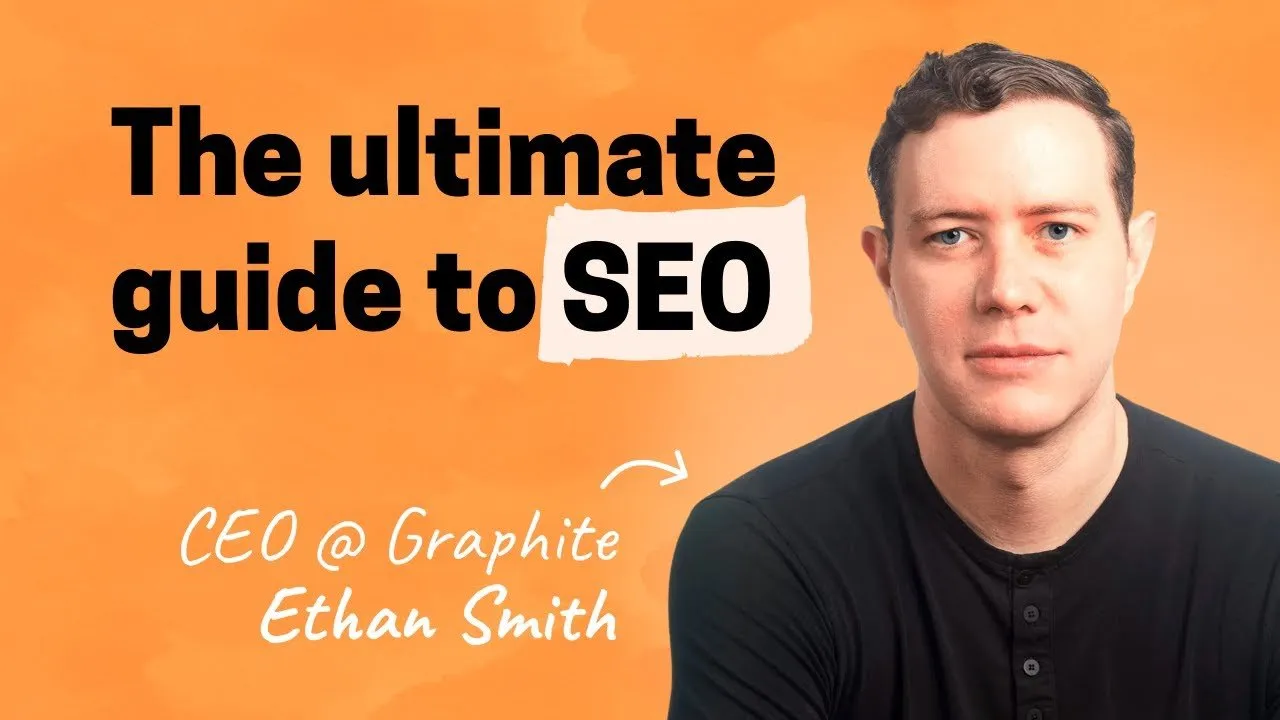
Ethan Smith, CEO of Graphite, has developed and executed SEO strategies for industry giants like MasterClass, Thumbtack, Robinhood, and Honey. His approach shifts the focus from technical bug fixes to comprehensive product and content strategies. By understanding the mechanics of programmatic versus editorial SEO, the importance of topical authority, and the undervalued power of internal linking, companies can unlock sustainable, compounding growth.
Key Takeaways
- Assess viability before investing: SEO is most effective when a company already has "authority signals," specifically around 1,000 daily non-search visits and 1,000 referring domains.
- Distinguish your strategy: Successful SEO is split between Programmatic (generating pages from data, like Zillow) and Editorial (creating high-quality content, like MasterClass).
- Focus on topics, not keywords: Modern search algorithms rank based on topical authority. Grouping hundreds of keywords into single comprehensive topic pages is more effective than creating fragmented pages.
- Internal linking is critical: The vast majority of websites suffer from poor internal linking structures, leaving valuable pages "orphaned" from Google’s crawlers. Flattening site architecture is a high-impact lever.
- AI is for structure, humans are for wisdom: While AI tools can assist with keyword clustering and outlining, relying on them for final content generation risks factual inaccuracies and a lack of genuine insight.
Deciding When to Invest in SEO
Not every startup should focus on SEO from day one. Google’s algorithms favor domains that demonstrate existing credibility. If a site has zero traffic and zero backlinks, it is difficult to rank because Google views the domain solely as an "SEO vessel" rather than a legitimate brand. Before dedicating significant resources to an SEO strategy, companies should look for specific authority signals.
The Authority Thresholds
A practical benchmark for timing your investment is the "1,000 rule." Ideally, a site should have at least 1,000 visits per day from non-search channels—such as direct traffic, email, social, or paid ads. Additionally, having roughly 1,000 referring domains links points to the site provides the baseline authority Google requires to trust your content.
Non-SEO traffic serves as a proxy for brand legitimacy. If users are finding the product through other means, it signals to Google that the business is a credible entity worth ranking. If a startup has not yet reached these metrics, it may be more effective to focus on product-market fit and other growth channels before pivoting to SEO.
Assessing the Addressable Market
Beyond authority, you must determine if the Total Addressable Market (TAM) for search justifies the investment. This involves analyzing two types of competitors:
- Product Competitors: Direct rivals selling the same solution (e.g., Robinhood looking at other brokerages).
- Audience Competitors: Sites that capture the same attention but offer different value (e.g., Robinhood looking at Investopedia).
By analyzing the search volume and traffic of these competitors using tools like SimilarWeb, you can estimate the potential return on investment. If the search volume for the relevant persona is high, the ceiling for growth is likely high enough to warrant a dedicated SEO team.
The Three Pillars: Programmatic, Editorial, and Technical
A common misconception is that SEO is primarily about fixing code. In reality, "technical audits" often result in lists of minor bugs that, while good to fix, rarely drive significant growth. Real growth comes from choosing the right page architecture: Programmatic or Editorial.
Programmatic SEO
Programmatic SEO involves automatically generating pages based on a database of information. This strategy is ideal for marketplaces or aggregators with large inventories. For example, Zillow does not manually write a blog post for every house on the market; they programmatically generate address pages based on real estate data. Similarly, TripAdvisor generates pages for hotels and attractions.
The advantage of programmatic SEO is scalability. You do not pay for every page created, allowing you to target millions of long-tail keywords (like specific addresses or product SKUs) efficiently. Success here requires a growth engineer or product manager who can manage taxonomies and indexation logic.
Editorial SEO
Editorial SEO relies on manually created content, such as articles, guides, and listicles. This approach is essential for companies where the user intent is informational or educational. MasterClass is a prime example; they cannot programmatically generate pages about "how to cook," so they invest in high-quality articles written by humans.
While editorial SEO has a higher cost per page, it is often the best route for establishing deep topical authority. The most successful modern strategies often blend both, but companies must identify which page type maps best to their user’s search intent.
I think people under resource SEO a lot of times and over resource ads... if you're Zillow you're going to spend tens of millions of dollars on ads... why would you not have a really great SEO team? The amount of traffic you get is probably equal to that.
Moving From Keywords to Topical Authority
In the early days of the internet, the strategy was "one keyword, one page." If you wanted to rank for "best digital cameras" and "top digital cameras," you might create two separate pages. Today, Google’s semantic understanding is far more advanced. The algorithm understands that hundreds of keyword variations represent the same underlying topic.
The Power of Keyword Clustering
Instead of chasing individual keywords, successful SEO strategies focus on topics. A single well-structured page can rank for 2,000 different keyword variations. By analyzing search results, you can determine if Google views two keywords as the same topic. If the search results for "butter lettuce recipes" and "butter lettuce salads" are largely identical, you should create one comprehensive page covering both.
This approach prevents "keyword cannibalization" (where your own pages compete against each other) and ensures you are building comprehensive assets. When a page covers a topic holistically—addressing sub-themes like health benefits, recipes, and storage—it achieves a higher content score and satisfies user intent more effectively.
Adjacency and Domain Authority
Topical authority is specific, not generic. A site might have high authority for "Gordon Ramsay" but zero authority for "Butter Lettuce." Google evaluates what a domain is disproportionately known for.
To grow, companies should expand into adjacent topics. If a site ranks well for "Jello Shots," it has established authority in alcohol recipes. It is then easier to rank for semantically related topics like "Vodka Recipes" or "Whiskey Cocktails" than it would be to pivot to an unrelated vertical like "Camera Reviews." Mapping out this "ingredient graph" allows for strategic content expansion that leverages existing wins.
The Internal Linking Opportunity
Perhaps the most undervalued lever in SEO is internal linking. Many websites rely on default algorithms—"Most Recent Posts" or "Related Items"—to generate internal links. This often creates a "power curve" where the top 5% of pages receive 95% of the links, while the vast majority of content is buried deep in the site architecture, effectively invisible to search crawlers.
Flattening the Graph
Google discovers and prioritizes pages based on links. If a page is six clicks away from the homepage, Google assumes it is unimportant. The goal of a robust internal linking strategy is to flatten the site graph, ensuring that valuable pages are accessible within a few hops from high-authority entry points (like the homepage or popular viral posts).
If you don't have good link spread, fixing it has significant opportunity, typically 25% plus opportunity, even like 100% opportunity sometimes if your links are really under optimized.
Strategies to fix this include creating static "browse" pages, improving "related content" logic to surface older or less-visited pages, and ensuring that product taxonomies link horizontally across categories (e.g., linking a plumber in San Francisco to a plumber in Oakland). This distribution of link equity can revive dormant pages and drive massive traffic uplifts without creating new content.
Operationalizing the Strategy: Tools and Talent
Building an SEO machine requires the right stack and the right people. It is crucial to distinguish between the tools that provide data and the strategy that drives execution.
The Essential Tool Stack
- Google Search Console: The source of truth for traffic data and crawl issues. It offers free, direct feedback from Google.
- Clearscope: Essential for content optimization. It analyzes top-ranking pages to tell you which sub-topics and terms must be included to achieve "comprehensiveness."
- Ahrefs or Semrush: Critical for competitive analysis, keyword research, and understanding the backlink landscape.
- Screaming Frog: The standard for crawling your own site to visualize internal linking structures and identify technical errors.
Hiring the Right Team
The profile for a Programmatic SEO lead is vastly different from an Editorial SEO lead. Programmatic requires a technical product manager or growth engineer—someone who can look at a database and visualize how to structure millions of pages. These hires are often best found at companies with massive organic footprints but lower brand recognition, where the SEO had to work harder to succeed.
For Editorial SEO, the focus is on workflow. You need a strategist to define the topics and outlines (ensuring all semantic bases are covered) and subject matter experts to do the actual writing. It is rarely effective to have the SEO manager write the content, or to have a writer guess the SEO strategy.
The Role of AI in SEO
With the rise of large language models like GPT-3 and GPT-4, there is a temptation to auto-generate thousands of pages. This is a high-risk strategy. AI is excellent at understanding structure, clustering keywords, and generating outlines. It can process thousands of keywords to find patterns that humans might miss.
However, AI lacks "underlying wisdom." It generates sentences that sound plausible but may be factually incorrect—hallucinating details about medical treatments or product specifications. Google rewards content that demonstrates expertise and trustworthiness (E-E-A-T). Therefore, the best use of AI is to accelerate the research and structuring phase, while leaving the final content creation to human experts who can ensure accuracy and insight.
Conclusion
SEO is a long-term compounder. While paid ads stop working the moment you stop paying, a well-executed SEO strategy continues to deliver traffic for years. The key is to move past the mystery of "algorithms" and focus on the fundamentals: building a site architecture that makes content easy to find, creating comprehensive pages that satisfy user intent, and establishing authority in specific, adjacent topics. By treating SEO as a product discipline rather than a marketing checklist, companies can unlock one of the most efficient growth channels available.


)