
Table of Contents
Objectives and Key Results (OKRs) have become a standard operating system for high-growth technology companies, yet they remain one of the most misunderstood frameworks in business. Many teams view them as a bureaucratic burden—a quarterly exercise in filling out spreadsheets that are promptly ignored until the next grading cycle. However, when implemented correctly, OKRs act as a mechanism for radical focus, alignment, and, most importantly, organizational learning.
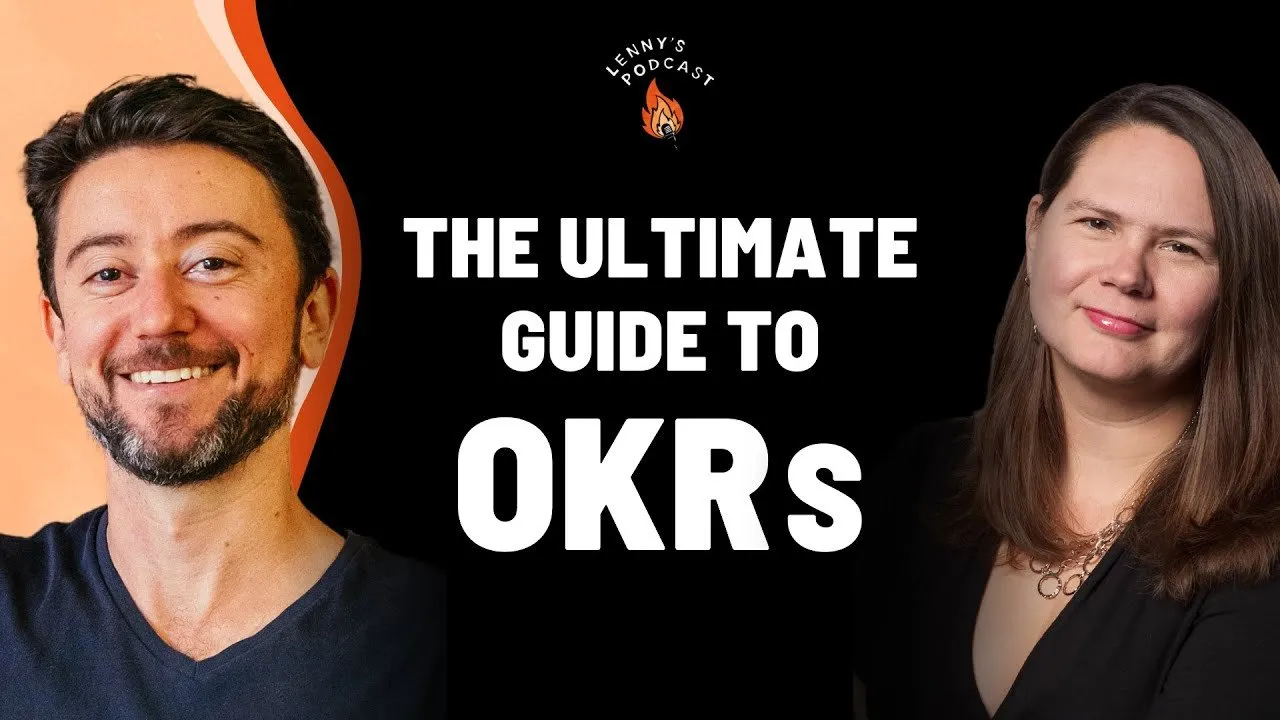
Christina Wodtke, author of Radical Focus and a lecturer at Stanford, argues that OKRs are not a medicine that cures a broken company culture; they are a vitamin that supercharges a healthy one. Success relies not on the document itself, but on the cadence of conversation, the psychological safety of the team, and the discipline to prioritize outcomes over output.
Key Takeaways
- The atomic unit of an OKR is the week: The system succeeds or fails based on the question, "What are we doing this week to get closer to our goals?" rather than the quarterly planning session.
- OKRs require a strategic foundation: You cannot set effective quarterly goals without a clear 5-year mission and a strategy that serves as a hypothesis for how to win.
- Cadence is king: A rhythm of Monday commitments and Friday celebrations creates accountability and team cohesion.
- Start small: Never roll out OKRs to an entire organization at once. Pilot the process with a single high-performing team to adapt the framework to your culture.
- Measure the "squishy" stuff: Effective Key Results go beyond revenue; they must measure customer delight and retention to ensure sustainable growth.
The Four Superpowers of Effective OKRs
While many leaders treat OKRs as a performance management tool, their primary function is to enforce discipline in how a company operates. When stripped of unnecessary complexity, OKRs provide four distinct benefits that drive high performance.
1. Radical Focus
The most immediate benefit of OKRs is the elimination of the "peanut butter approach"—spreading resources so thin that no single initiative receives the attention it requires to succeed. By limiting objectives to a critical few, teams are forced to make hard trade-off decisions at the beginning of the quarter rather than during execution.
2. Alignment
OKRs clarify the single most important objective for the company. When written correctly, they eliminate ambiguity. Everyone from the executive team to individual contributors understands what matters most, reducing friction between departments that might otherwise be pulling in different directions.
3. A Cadence of Progress
Strategy often feels abstract and long-term. OKRs translate "mooji-mooji" strategic visions into concrete, quarterly sprints. This creates a rhythm of execution where progress is visible, measurable, and continuous.
4. The Learning Cycle
Perhaps the most undervalued aspect of OKRs is their role in organizational learning. Grading an OKR at the end of a quarter is not about punishment or reward; it is a diagnostic tool.
Because an OKR focuses you for one quarter and at the end of the quarter you grade your OKRs... it creates this learning cycle so then you can take that information and say next quarter what should we try next.
If a team focuses intensely on retention for a quarter, the insights gained during that period persist even when the focus shifts to acquisition in the following quarter. Over time, this builds a cumulative advantage in market knowledge.
Structuring the Hierarchy: Mission, Strategy, and OKRs
A common point of failure occurs when teams attempt to write OKRs in a vacuum. OKRs are the execution layer of a broader strategic hierarchy. Without the upper layers, quarterly goals lack direction.
The 5-Year Mission
Teams need a "North Star" that remains stable. A mission should be a five-year projection of what the company hopes to achieve. It does not need to be permanent, but it must be durable enough to guide decision-making over significant timeframes.
Strategy as a Hypothesis
Strategy acts as the bridge between the long-term mission and the quarterly OKR. It answers the specific questions of how the company intends to win in the current market environment. Wodtke defines strategy as a "strongly held hypothesis."
For example, if the mission is to dominate digital gaming, the strategy for the year might be to focus exclusively on the Apple Arcade ecosystem to build brand recognition. The strategy provides the constraints necessary for writing good objectives.
The Quarterly OKR
Once the strategy is set, the OKR defines the immediate tactical push. The Objective should be qualitative and inspiring—something that makes the team want to get out of bed in the morning. The Key Results answer the question: "How would we know we succeeded?"
Key Results should typically include:
- Usage metrics: Active users, engagement depth.
- Revenue metrics: Sales, ARR, or financial efficiency.
- Satisfaction metrics: "Squishy" but vital measurements like Net Promoter Score (NPS), customer sentiment, or retention rates.
The Operating Cadence: Mondays and Fridays
The document containing the goals is less important than the rituals used to track them. A healthy OKR process is built on a weekly rhythm that blends accountability with psychological safety.
Monday Commitments
Every Monday, the team should check in to answer a single question: "What are we doing this week to move the needle on our Key Results?" This moves the conversation from general status updates to goal-oriented action. It prevents the "tomorrow problem," where important strategic work is perpetually pushed aside by urgent, low-value tasks.
Friday Celebrations
Friday sessions are strictly for demonstrating progress and celebrating wins. This is critical for team morale and momentum. In high-pressure environments, teams often forget to acknowledge what went right.
People do not value celebrations enough... The simple Act of getting together and saying what was the most awesome thing that happened to you this week... makes people feel like they're part of something really special.
By booking-ending the week with commitment and celebration, teams maintain a continuous link between their daily work and the company’s strategic goals.
Diagnosing and Fixing Broken OKR Processes
If your OKR implementation feels like a burden, the process is likely broken. The most common symptom of a failed OKR process is boredom. If the weekly check-in meeting is tedious, or if it involves reading line-by-line through a spreadsheet of hundreds of tasks, the team has lost the plot.
Common Root Causes of Failure
- Set and Forget: Writing goals at the start of the quarter and not looking at them until the end. This renders the process useless.
- Task Lists Disguised as OKRs: Key Results should be outcomes (e.g., "Increase retention by 10%"), not outputs (e.g., "Ship feature X").
- Lack of Psychological Safety: If teams are afraid to report red/yellow status, leadership cannot intervene to help. OKRs require honest reporting to function as a learning tool.
- The Approval Bottleneck: In complex organizations, the approval process for OKRs can drag on for weeks. Wodtke recommends a "rule of three": get feedback from three relevant peer teams within 24 hours, then lock the goals. Speed is essential.
The Pilot Strategy
Leaders often mistake enthusiasm for readiness, rolling out OKRs to the entire company simultaneously. This invariably leads to confusion and resistance. Instead, identify a "pilot team"—typically a high-performing, cross-functional group. Let them adopt the framework, break it, fix it, and adapt it to the company culture. Once they have a working model, expand to two more teams, creating a gradual, stable rollout.
Beyond the Metrics: The Human Element of Product
While frameworks like OKRs provide structure, the success of a product organization ultimately relies on human skills: business acumen, storytelling, and collaboration.
Business Acumen Over "Product Sense"
There is a pervasive myth in the industry regarding "product sense"—an intuitive ability to know what to build. Wodtke argues that intuition is simply compressed experience. For younger Product Managers, relying on intuition is dangerous. Instead, they should focus on understanding business models.
A PM must answer fundamental questions: How does this product make money? Why is this the target market? What are the unit economics? The Product Manager serves the business, ensuring that user experience and technical feasibility translate into a sustainable economic model.
Storytelling and Drawing
Humans are hardwired for narrative. A list of bullet points is easily forgotten, but a story regarding user success is retained. Leaders should leverage the structure of storytelling (hook, struggle, resolution) to communicate strategy.
Furthermore, simple drawings are vastly underrated as alignment tools. The moment a leader stops talking and starts sketching on a whiteboard, ambiguity disappears. It forces concrete understanding in a way that abstract words cannot.
Conclusion
OKRs are not a rigid set of rules but a flexible framework for fostering discipline. They require a leader to be clear about the mission, a team that trusts one another enough to fail openly, and a rigorous cadence of checking in. Whether you are a startup of ten or a corporation of thousands, the goal remains the same: stop trying to do everything, and start doing the most important things with intensity and purpose.


)