Table of Contents
While global attention increasingly drifts toward developments in Iran and potential geopolitical shifts regarding Greenland, the situation within Ukraine is accelerating toward a critical juncture. The conflict has evolved beyond the frontlines into a comprehensive systemic crisis involving energy infrastructure collapse, severe political infighting among the oligarchy, and a depletion of air defense capabilities. As the Zelensky administration seeks security guarantees in Davos, the realities on the ground suggest that the window for diplomatic maneuvering is closing, replaced by what appears to be the beginning of an endgame scenario driven by methodical Russian military pressure and internal Ukrainian fractures.
Key Takeaways
- Systemic Infrastructure Failure: A methodical Russian campaign has successfully degraded Ukraine's power generation, placing major cities like Kiev, Kharkov, and Odessa under severe, near-permanent blackouts.
- Political Instability: Internal unity is fracturing as oligarchs and political factions engage in public infighting, highlighted by high-profile arrests and power struggles between the administration and opposition figures.
- Military Escalation: The depletion of Western air defense systems, including Patriot batteries, has left urban centers vulnerable, while Russia prepares potential new offensives in the north.
- Diplomatic Dead End: "Ghost negotiations" and varying peace plans are failing to gain traction, primarily because Russia, holding the military advantage, currently sees no incentive to compromise.
- The Strategic Pivot: A potential U.S. pivot toward securing Greenland could serve as a political "win" for a future administration, allowing Washington to disengage from Ukraine while leaving Europe to manage the fallout.
The Collapse of Critical Infrastructure
The conflict has entered a phase where the battlefield extends deep into Ukraine's logistical and civilian backbone. For years, observers noted that Russia possessed the capability to cripple the Ukrainian energy grid but had exercised a degree of restraint. That restraint has seemingly evaporated. The current strategy is methodical and devastating, plunging major metropolitan areas into darkness.
The Impact on Major Cities
The energy situation in Kiev is described as desperate, with rolling blackouts becoming permanent features of daily life. The situation is even more acute in Kharkov and Odessa. Odessa remains under an effective blockade, halting port operations and export capabilities, which accelerates the country's economic deterioration. In Kharkov, the destruction of energy nodes is compounded by the confirmed loss of air defense systems, leaving the city defenseless against aerial bombardment.
It seems the Russians have been working steadily and methodically for years to build up this capability where they can plunge Ukraine into darkness. They are now plunging Ukraine in darkness.
This critical power shortage is not localized; it creates a cascading failure across the national grid. Reports indicate that energy is being diverted from smaller towns and rural areas to keep life support systems running in the capital, creating a disparity that further strains social cohesion. From a military perspective, this degradation of infrastructure mirrors the "shock and awe" tactics often employed by major powers before a significant ground offensive: cut the lights, cut the communications, and degrade the opponent's ability to coordinate.
Political Fractures and Internal Strife
As resources dwindle and the military situation deteriorates, the political unity in Kiev is showing visible cracks. The "Davos trip" intended to secure security guarantees and financial aid is overshadowed by a ruthless internal power struggle. The administration appears to be tightening its grip on the security apparatus, appointing figures with reputations for ruthlessness to key positions within the SBU (Security Service of Ukraine) to maintain control over a fracturing state.
Oligarchs and Factions Turning on Each Other
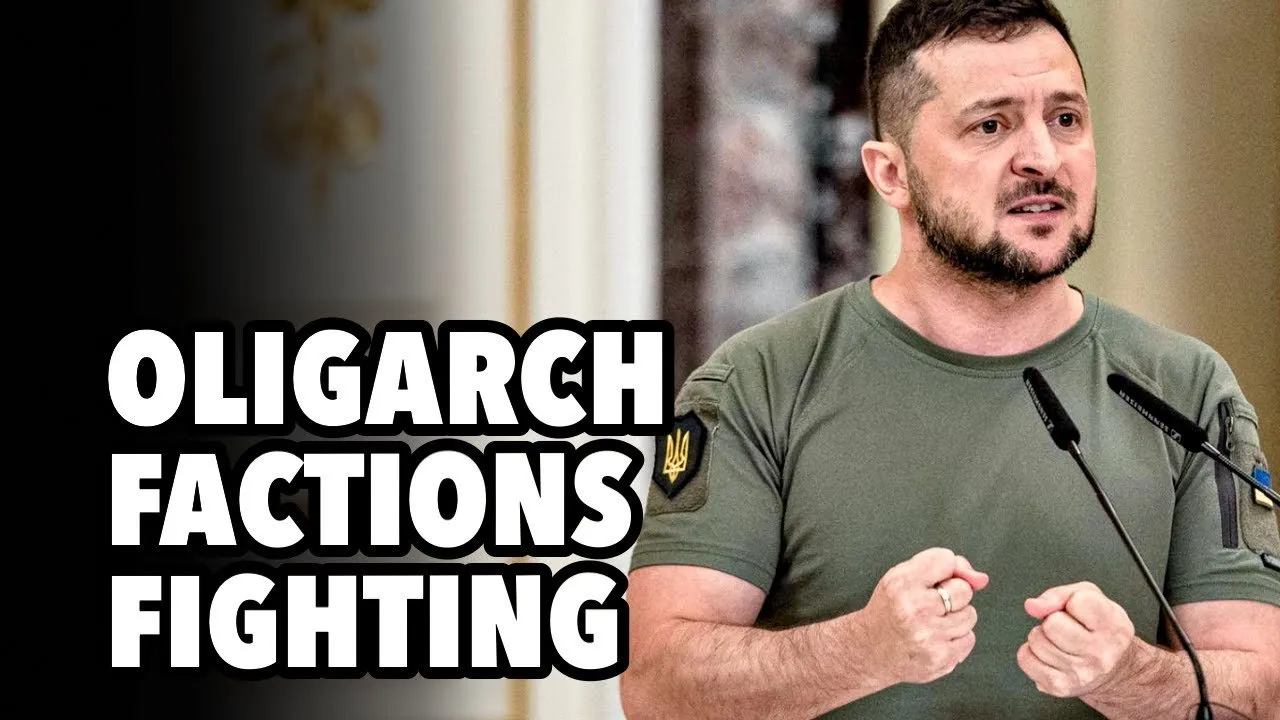
The facade of a united front is crumbling. Prominent figures such as Yulia Tymoshenko have faced arrest, and public disputes have erupted between President Zelensky and Kiev Mayor Vitali Klitschko. Klitschko is politically aligned with former President Poroshenko and former Commander-in-Chief Valery Zaluzhny, forming a potent opposition bloc.
There is speculation that the administration is attempting to fracture this opposition alliance by courting Zaluzhny, perhaps offering him a role to neutralize his political threat. However, this maneuvering is not about positioning for future elections—which are logistically impossible in a blackout-ridden country—but rather a scramble for control over diminishing financial flows and state assets before the current political order potentially collapses.
The Illusion of Diplomacy and the "Oreshnik" Factor
Diplomatic efforts have descended into what can be described as "ghost negotiations." While various peace formulas—ranging from 10 points to 28 points—are floated in European capitals, they lack engagement from the one party that dictates the tempo of the war: Russia. The consensus in Moscow appears to be that negotiations are futile when military objectives, such as the capture of the Donbas, are nearing completion.
Advanced Weaponry Changing the Calculus
A significant development changing the strategic calculus is the introduction of the "Oreshnik" missile system. Initially dismissed by some analysts as a prohibitively expensive prestige weapon, new intelligence suggests the system is surprisingly cost-effective, with a unit cost around $3 million. Furthermore, production rates may be as high as 25 units per month.
This revelation is critical. If Russia can mass-produce unstoppable hypersonic-class weaponry at a sustainable cost, it reinforces their leverage. With the capability to strike decision-making centers or hardened targets at will, and harboring deep distrust toward Western agreements, Moscow has little reason to pause operations for talks that it views as delaying tactics.
The Geopolitical Pivot: Greenland as an Exit Strategy
In the broader geopolitical context, the failing situation in Ukraine poses a reputation risk for the United States. However, emerging narratives suggest a strategic pivot that could allow a future U.S. administration to decouple from the conflict without admitting a total loss. The renewed American interest in purchasing or securing rights to Greenland offers a compelling alternative narrative.
By securing Greenland, a U.S. administration could present a massive territorial and strategic expansion in the Arctic as a historic victory that outweighs the loss of influence in Ukraine. This narrative allows for a "Win" at home: "We expanded the nation and secured the Arctic, while the situation in Eastern Europe is a regional issue."
Europe Left Isolated
The implications of this pivot are stark for the European Union. If Washington shifts its focus to the Arctic and domestic victories, Europe is left to manage the security and financial disaster on its eastern border alone. With European funding stalling and legal questions mounting over the use of frozen Russian assets, the EU faces the prospect of bearing the full economic and political cost of the conflict's aftermath.
Conclusion
The convergence of energy collapse, political fragmentation, and military setbacks suggests that the conflict in Ukraine is entering its final, most volatile phase. The anticipated spring offensives, potentially opening new fronts in the Sumy and Chernihiv regions, could serve as the catalyst that breaks the current stalemate. As the lights go out in Kharkov and Kiev, and as the political elite scramble for survival, the geopolitical focus is already beginning to shift, potentially leaving Ukraine and Europe to face the consequences of the endgame in isolation.