Table of Contents
The recent by-election results in Gorton and Denton have sent shockwaves through the British political establishment, signaling a potential end to the century-long dominance of the traditional three-party system. For decades, the United Kingdom’s electoral landscape has been defined by a predictable swing between Labour and the Conservatives, with the Liberal Democrats serving as the primary outlet for protest votes. However, the surge of the Green Party and Reform UK suggests that the electorate is no longer interested in the "standard" menu of political options, opting instead for insurgent movements that challenge the very foundations of the Westminster consensus.
Key Takeaways
- Political Displacement: For the first time in modern history, neither Labour nor the Conservatives finished in the top two spots in a significant English by-election, with the Greens and Reform UK taking the lead.
- Labour's Vulnerability: Even "bedrock" Labour seats are experiencing a double-sided squeeze, losing younger and Muslim voters to the Greens while losing working-class voters to Reform.
- The "New Establishment": Critics argue that while the Greens and Reform present themselves as insurgents, their core policies on geopolitics and "Project Ukraine" often mirror the establishment they claim to oppose.
- Starmer’s Waning Authority: Keir Starmer’s inability to campaign openly on the doorsteps in former strongholds highlights a deepening disconnect between the Labour leadership and its traditional base.
The Gorton and Denton Earthquake
The constituency of Gorton and Denton in Greater Manchester serves as a microcosm of the current British political crisis. Historically, this region was considered the sixth safest seat for the Labour Party, a place where victory was once seen as a statistical certainty. The demographic makeup—a mix of traditional English working-class voters in Denton and a diverse, progressive, and large Muslim community in Gorton—should have provided a comfortable cushion for the government. Instead, Labour collapsed to 22% of the vote, while the Green Party secured a dominant 40% victory.
A Failure of the Three-Party System
This result marks a departure from the historical trend where an unpopular government would simply see its support shift to the main opposition or the Liberal Democrats. In this instance, the entire traditional political class was effectively sidelined. As the political landscape shifts, the Liberal Democrats were notably absent from the top tier of results, and the Conservatives were "completely demolished," according to recent analysis. This suggests that the British public is attempting to rebel against a globalist order that has been entrenched for over thirty years.
"The entire British political class, the entire spectrum of parties that make up the British political class have been completely discredited."
The Green Party's Strategic Shift
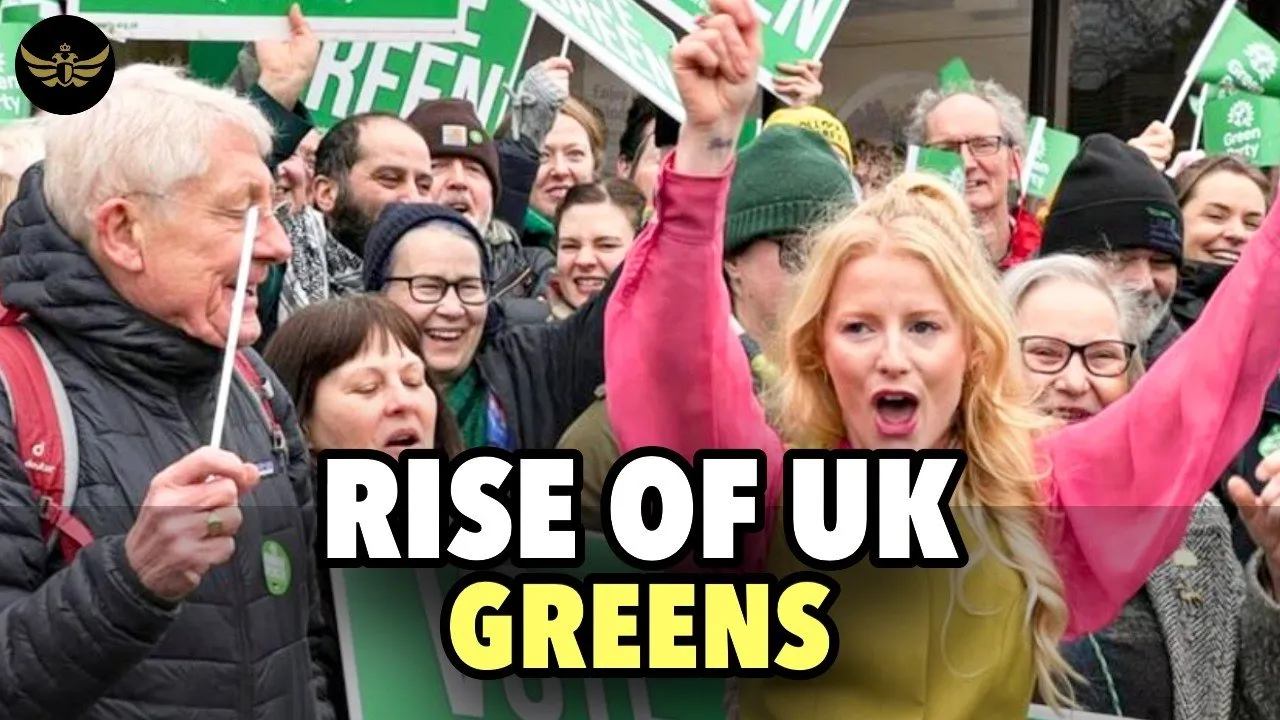
The victory of Hannah Spencer for the Green Party was not merely an environmentalist win; it was the result of a highly opportunistic and culturally targeted campaign. By focusing heavily on the conflict in Gaza and positioning themselves as the ultimate "anti-Reform" party, the Greens managed to bridge a gap between younger progressive voters and the local Muslim community. However, this success comes with questions about the party’s long-term identity and its similarity to the German Greens.
Geopolitics Over Environment
There is a growing observation that the Green Party is evolving into something far more complex than a single-issue environmental group. Like their counterparts in Germany, the UK Greens are increasingly focused on geopolitics and identity issues. While they maintain a residual skepticism of the United States—driven largely by opposition to certain administrations—they remain "uber-Europeanists" who advocate for rejoining the EU and forming new military alliances. Critics suggest that beneath the "green" exterior lies a political platform that is even more radical on social liberal identity issues than the current American Democratic Party.
Reform UK and the Working-Class Pivot
While the Greens captured the left-leaning and urban demographics, Reform UK secured a significant second-place finish by appealing to older working-class voters in Denton. These voters, many of whom shifted from Labour to the Conservatives during the Boris Johnson "Brexit" era of 2019, now feel abandoned by the Tories. However, Reform UK’s performance was hampered by what some analysts call a "candidate mismatch."
The Struggle for Authenticity
By running Matt Goodwin—an intellectual and academic—in a staunchly working-class seat, Reform may have missed an opportunity to actually win the constituency. The Greens, by contrast, ran a "photogenic working-class young woman" who worked as a plumber, providing a sense of local authenticity that resonated with the electorate. Furthermore, Reform UK is increasingly seen as "Conservative Party Mark 2," as a flood of former Tory officials move into the party's top ranks, potentially diluting its insurgent appeal and maintaining the establishment’s commitment to foreign interventionism.
"Political energy is migrating from the old establishment parties to what I am going to call the new establishment parties."
The Paralysis of the Labour Government
For Keir Starmer, the Gorton and Denton result is a "disastrous defeat" that underscores his lack of authority within his own party. Reports indicate that while Starmer visited the constituency, he avoided meeting local people on the streets or canvassing on doorsteps due to a perceived hostility from the public. This vacuum of leadership has left the Labour government "ambling on from day to day," unable to govern effectively while its support base bleeds out to the left and right.
The Leadership Vacuum
The party appears unable to mount a leadership challenge despite the looming threat of a "wipeout" in local elections. Potential successors like Angela Rayner are currently sidelined by personal investigations, leaving the party in a state of inertia. Remarkably, the one policy that continues to unite the fractured Labour Party, the Conservatives, and even the Greens is a continued commitment to "Project Ukraine," a stance that remains largely unchallenged within the Westminster bubble regardless of the domestic political turmoil.
Conclusion: The More Things Change...
The UK is currently witnessing a massive migration of political energy. Voters are signaling a desperate desire to end the era of the traditional establishment, yet the alternatives emerging—the Greens and Reform—may not offer the radical departure the public expects. As these insurgent parties grow, they show signs of drifting toward the same institutional norms that defined their predecessors. While the names on the ballot papers are changing, the fundamental policy directions on the economy and foreign affairs remain strikingly familiar. Unless new ideas from outside the current party structures take center stage, the British political system may simply be rebranding its decline rather than reversing it.