Table of Contents
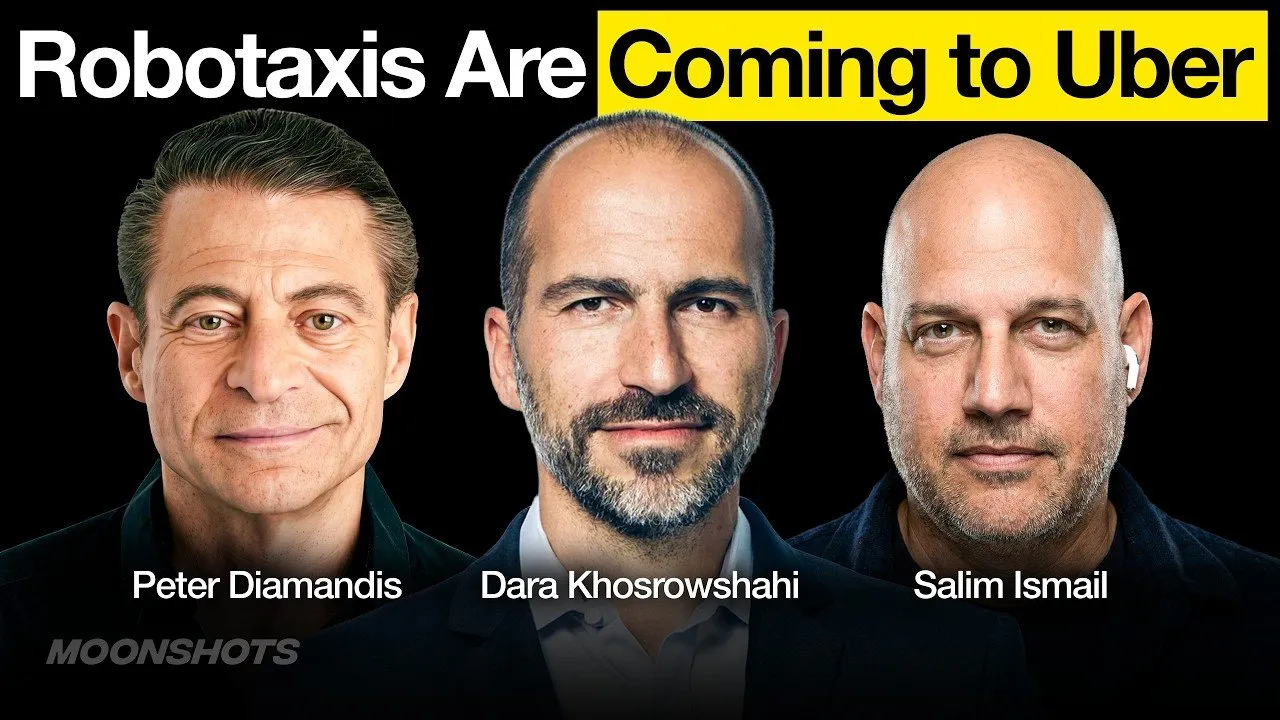
The race toward an autonomous future is no longer a futuristic concept discussed in labs; it is unfolding on city streets today. Uber CEO Dara Khosrowshahi has steered the company from a massive annual deficit to profitability exceeding $10 billion, positioning the platform as the central nervous system of a changing transportation landscape. As the company integrates robotaxis alongside human-driven fleets, the focus has shifted from mere survival to building a massive, interconnected ecosystem that promises to redefine how the world moves.
Key Takeaways
- Hybrid Transition: The future of transportation is not binary; Uber envisions a long-term coexistence of human-driven vehicles and autonomous fleets.
- Platform Strategy: By acting as a demand aggregator, Uber manages the complex logistics of fleet maintenance, data collection, and API integration, allowing hardware partners to focus on safety and innovation.
- Asset-Light Model: Much like the hotel industry, Uber aims to move toward a model where financial institutions own the vehicle fleets while the company operates the underlying technology.
- Expanding the Horizon: Beyond ride-hailing, Uber is aggressively expanding into multimodal delivery, leveraging drone technology for suburban areas and sidewalk robots for short-distance urban logistics.
The Evolution of the Autonomous Ecosystem
Khosrowshahi emphasizes that the path to autonomy is a marathon, not a sprint. The industry is currently moving through a hybrid phase where autonomous vehicles (AVs) operate alongside human drivers. This reality necessitates a platform-agnostic approach. Rather than betting on a single manufacturer, Uber is building an open network, partnering with industry leaders such as Waymo, Nvidia, and various OEMs to bring diverse autonomous solutions onto a single interface.
Building the "Sockets" for Mobility
The real challenge of the autonomous transition is not just the software behind the wheel—it is the operational infrastructure. Managing a fleet requires sophisticated, scalable services that go far beyond ride-booking. Uber is currently creating the technical "connectors" for fleet management, which include:
- Predictive maintenance and vehicle cleaning protocols.
- Advanced API integrations for diverse hardware stacks.
- Comprehensive data collection to train and improve safety models.
There isn't going to be this kind of binary outcome. It's going to develop in a hybrid way. You are going to have fleets in cities that consist of some autonomous vehicles and then many human-driven vehicles as well.
The Path to Global Implementation
Regulatory landscapes and geographic nuances dictate the pace of adoption. While the U.S. and China remain primary battlegrounds for innovation, Khosrowshahi notes that the Middle East is currently the most proactive region. Governments in cities like Abu Dhabi and Dubai are leaning forward, viewing autonomous technology not just as an improvement to transport, but as a core pillar of their future economic infrastructure.
The Economics of Ownership
A critical shift occurring in the industry is the movement away from individual car ownership toward an asset-light, service-oriented model. Khosrowshahi believes that as the cost per trip drops due to AV efficiency and increased safety, the logic of owning a personal vehicle will weaken. This transition creates opportunities for specialized financial players to own the fleets, while Uber manages the high-frequency operations that connect riders to the vehicles they need, exactly when they need them.
Beyond Mobility: The Future of Delivery
Uber’s reach is expanding rapidly into what Khosrowshahi calls the "delivery of anything and everything." The success of Uber Eats has provided the foundation for a much broader strategy. By utilizing a mix of drone technology in suburban areas and ground-based sidewalk robots in dense urban environments, the company is attempting to achieve a logistics network that can deliver goods to a consumer's doorstep within minutes.
The "Never Underestimate Human Laziness" Rule
The expansion into grocery, retail, and pharmacy deliveries is driven by a clear consumer desire for convenience. This isn't just about moving people anymore; it is about "wiring up" the physical world. By integrating drone delivery for first and last-mile logistics, the company aims to turn complex retail tasks into instantaneous, frictionless experiences.
Workforce Transformation in the Age of Autonomy
The introduction of AVs frequently sparks concerns regarding labor displacement. However, Khosrowshahi argues that the growth of the platform is currently outpacing the rate of autonomous integration. In his view, the platform is actually evolving into a versatile space for work. As driving becomes partially automated, opportunities for data labeling, fleet management, and specialized service roles are emerging.
The biggest reason why I joined Uber was that this is a company that is having real impact on society and how society moves and I think with autonomous revolution even more so.
The goal is to provide drivers with new forms of agency, such as the ability to transition into fleet ownership. This creates a bridge for laborers to participate in the capital side of the transportation economy, shifting the focus from manual labor to managing the assets that sustain the network. By maintaining an intense, focused work culture, Uber continues to navigate these complex societal shifts while striving to maintain its position as a global leader in technology and logistics.
Ultimately, the transition to an autonomous, multimodal world will be a slow, iterative process rather than a sudden overnight shift. As vehicle fleets turn over and regulatory frameworks mature, the infrastructure Uber is building today will likely serve as the backbone for a more efficient and safer transportation future. By focusing on deep partnerships and operational excellence, the company remains uniquely positioned to capture the value of this impending trillion-dollar shift.