
Table of Contents
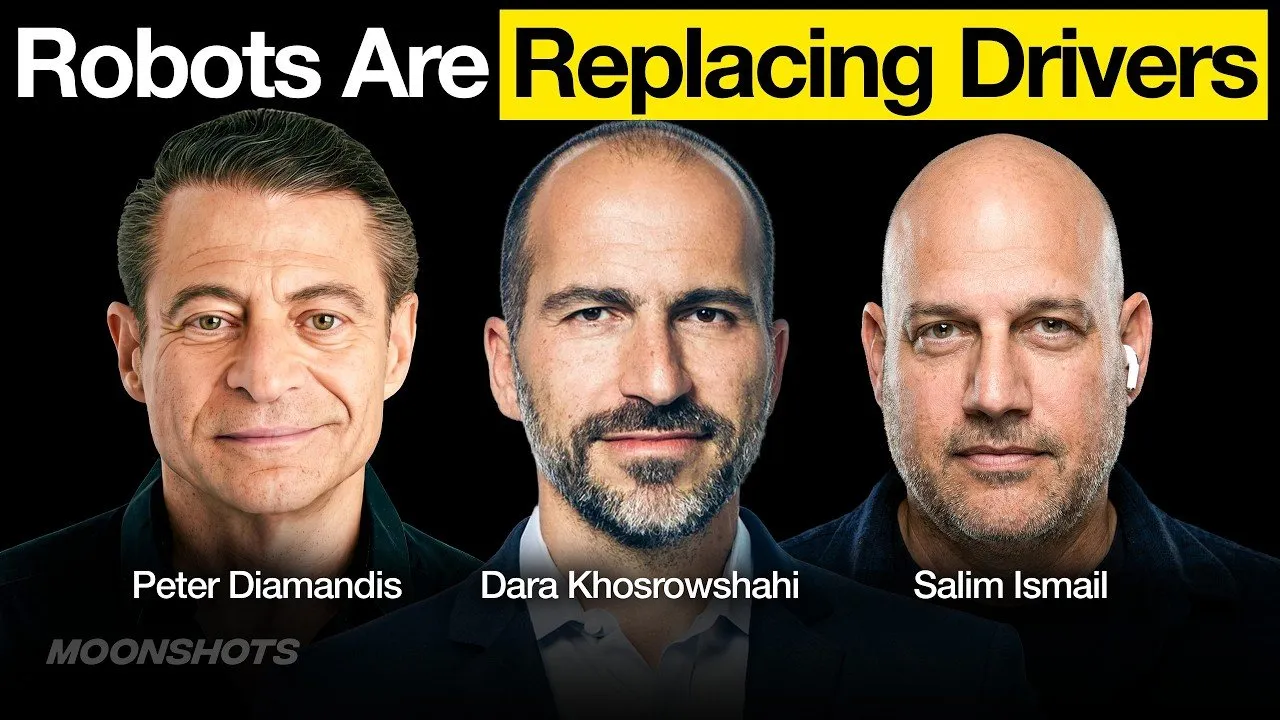
The transportation landscape is on the cusp of a generational shift. As autonomous vehicle (AV) technology matures, the traditional model of personal car ownership and human-operated transit is being challenged by high-tech, platform-based solutions. Dara Khosrowshahi, CEO of Uber, recently sat down to discuss how this transition will reshape our cities, our labor markets, and the future of mobility.
Key Takeaways
- The Shift to Autonomy: While humans currently drive millions of miles daily, autonomous systems are expected to become demonstrably safer than human drivers within the next 25 years.
- Marketplace Dynamics: Uber’s success relies on "supply-led" liquidity, where real-time data and algorithmic dispatching optimize efficiency far beyond what manual human dispatch could achieve.
- Labor Augmentation: Rather than total replacement, the future of work involves humans overseeing automated systems, with platform companies serving as "societal capacitors" that retrain and redeploy workers into new roles.
- Scaling Innovation: Large corporations often succumb to conservatism, but Khosrowshahi argues that as companies generate more cash flow, they should be more willing to place aggressive, high-stakes bets on the future.
The Evolution of Safety and Regulation
One of the most pressing questions in the autonomous age is the future of the human driver. Will the simple act of driving eventually be outlawed? Khosrowshahi suggests a gradual transition rather than a sudden prohibition. He compares the shift to the decline of horseback riding—a once-universal skill that has become a niche pursuit.
He notes that regulators will eventually have to define what a "human license" entails. In the future, driving tests may become significantly more demanding than they are today, ensuring that those who choose to operate their own vehicles do so with high levels of competency. However, he maintains that human error—fueled by factors like speeding and intoxication—creates a massive societal cost that autonomous vehicles are uniquely positioned to solve.
Humans will be demonstrably less safe than autonomous drivers. And then it's going to be up to regulators to decide what a human license looks like.
Infrastructure and the Real Estate Opportunity
The rise of autonomous, multi-modal transportation will fundamentally change city design. Moving beyond ground vehicles to potential aerial solutions, the concept of "vertiports"—hubs for takeoff and landing—opens up significant real estate opportunities. Khosrowshahi highlights that Uber’s data provides a roadmap for where these hubs would be most effective, targeting high-traffic areas like city centers and transit deserts.
Beyond urban centers, autonomous technology holds the promise of connecting remote or isolated regions, such as small islands, which have historically been difficult to service. The goal is to move from a luxury service to a mass-market product, ensuring that safe and affordable transportation is not restricted to the wealthy, but is accessible to everyone regardless of their location.
Managing the Multi-Robot Workforce
The Challenge of Coordination
Managing a massive fleet requires more than just hardware; it requires an intelligent software layer that can predict the state of a city in real-time. Uber’s current dispatch systems already look several seconds into the future, predicting demand patterns to connect riders with the most efficient vehicle. As fleets shift to robots and autonomous aircraft, this coordination becomes the primary technical bottleneck.
Predictability as a Business Asset
Khosrowshahi finds machines to be inherently more predictable than humans. While human drivers can choose whether or not to accept a trip, machines can be programmed for specific acceptance rates and operational patterns. This allows for a more seamless "stitching" of rides, where a ground vehicle might deliver a passenger to a location where an aerial vehicle is ready to complete the next leg of the journey.
The Future of Labor and "Societal Capacitors"
A frequent criticism of AI and automation is the potential for mass unemployment. Khosrowshahi reframes this narrative, arguing that automation is more about augmentation than replacement. Just as factory automation reduced manual labor while increasing the need for quality control specialists, the future of the Uber platform involves workers overseeing systems rather than performing manual tasks.
Automation typically doesn't replace work, but it augments work. You've got to realize that the press is like any business as well; they will tend to dramatize things to be able to earn revenue.
Khosrowshahi positions Uber as a "societal capacitor," capable of absorbing labor and redeploying it into new roles. Whether through data labeling, system design, or fleet management, the platform aims to grow its user base from 10 million to 20 million people by 2035, even if the nature of the work performed shifts significantly.
Strategic Scaling and the "Do the Right Thing" Culture
Maintaining an entrepreneurial spirit at scale is the eternal struggle of the modern CEO. Khosrowshahi emphasizes that at Uber, the internal culture centers on the core value: "Do the right thing, period." This instruction intentionally lacks a detailed definition, forcing every employee to take personal responsibility for their ethical and strategic decisions.
He argues against the common tendency for companies to become risk-averse as they grow. When a company is losing billions, every dollar is precious. However, when a company generates $10 billion in cash flow, it has the freedom—and the obligation—to take big, bold bets. By pursuing "adjacencies" that rhyme with its core business—moving food, freight, and eventually people through the air—Uber seeks to continue its growth trajectory while navigating the complexities of a rapidly changing technological landscape.
The transition toward an autonomous future is inevitable, but the pace and outcome will be defined by how platforms balance innovation with public safety and labor stability. While we may still be a few years away from a world where robotaxis are the norm, the building blocks of this transition are already being laid. The companies that succeed will be those that view this shift not merely as a technological upgrade, but as an opportunity to reshape the social contract of work and mobility for the better.
![Warning TRUMP: This Is Very Dangerous [It’s Starting]](/content/images/size/w1304/format/webp/2026/04/trump-middle-east-market-volatility-oil-prices.jpg)
)