Table of Contents
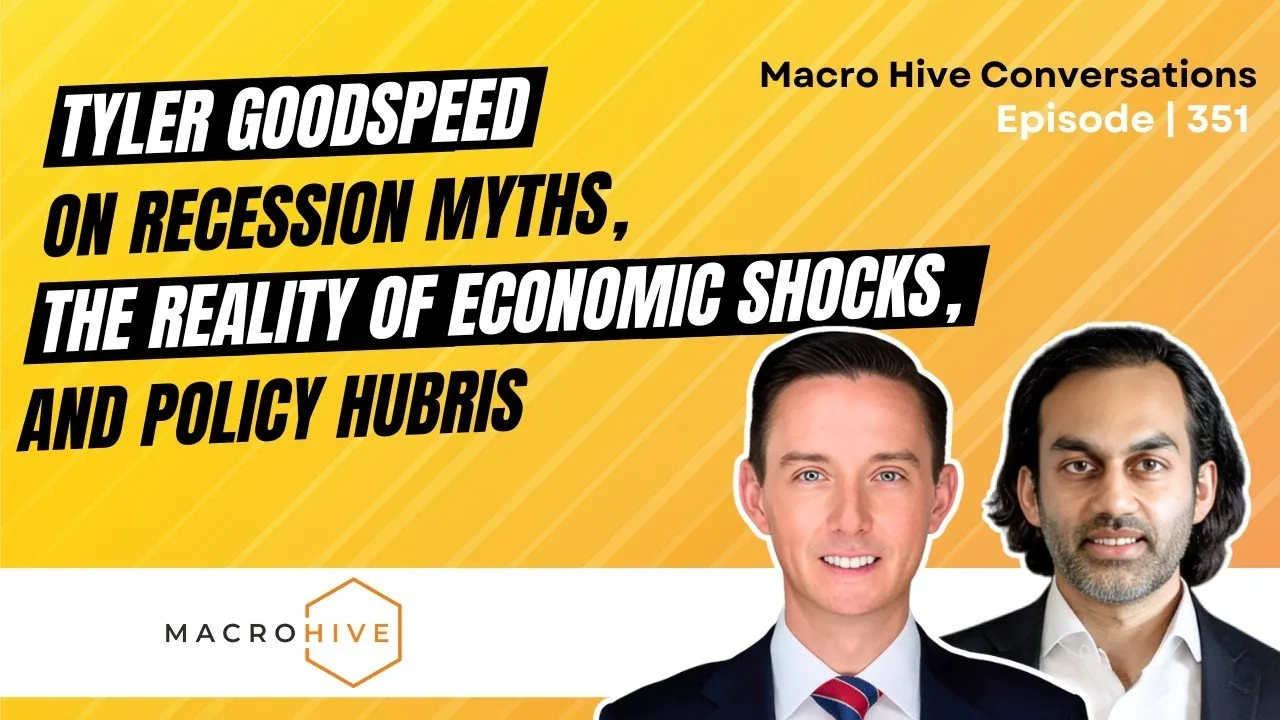
Economic downturns are often shrouded in myths of "boom and bust" cycles, where observers claim that an economy must pay a moral or structural penance for past excesses. However, according to Dr. Tyler Goodspeed, former chair of the White House Council of Economic Advisers, the reality of recessions is far less predictable and significantly more mechanical. In his latest book, Recession: The Real Reasons Economies Shrink and What to Do About It, Goodspeed argues that our obsession with finding "culprits" for economic contractions is a byproduct of human nature—our innate desire to find patterns where none exist.
Key Takeaways
- Recessions are not moral corrections: There is no statistical evidence linking the length or intensity of an economic expansion to the severity or duration of the subsequent recession.
- The role of shocks: Recessions are typically triggered by specific, often isolated, supply-side shocks—such as energy price spikes, industrial bottlenecks, or geopolitical events—rather than inherent failures in the economy.
- The "Apophony" Trap: Humans are pattern-seeking mammals prone to "apophony," or assigning false meaning to random economic events to comfort ourselves and avoid future guilt.
- Policy limitations: While targeted relief is essential, policymakers should avoid the hubris of believing they can "tame" the business cycle or prevent recessions by artificially manipulating growth.
- Economic resilience: Despite the pain of downturns, economies demonstrate remarkable fidelity to long-term growth trends, often returning to their pre-recession trajectories relatively quickly.
The Myth of Boom and Bust
The prevailing narrative in economics suggests that periods of rapid growth inevitably build up "malinvestments" or fragilities, leading to a cleansing recession. Goodspeed challenges this by examining four centuries of economic data from the United States and the United Kingdom. He finds that these periods of expansion are not inherently fragile; rather, they are often healthy, "innocent" periods that are suddenly interrupted by exogenous shocks.
Why We Crave Patterns
As humans, we are wired to interpret stimuli as part of a larger narrative. When an economic contraction occurs, we look for a scapegoat—a housing bubble, a tech stock decline, or excessive debt—to justify the pain. Goodspeed describes this tendency as an apophony. By identifying a cause, we feel that we can avoid future errors, yet the data shows no consistent relationship between expansionary records and recessionary depth.
"The core myth that we tell ourselves about recessions is that recessions and economic fluctuations generally are about boom and bust. That there is some excess, there is some malinvestment, there is some error in an economic expansion to which the subsequent contraction is the inevitable, even necessary remedy."
The Anatomy of Economic Shocks
If recessions are not the result of cumulative errors, what actually causes them? Goodspeed classifies recessionary shocks into two main categories: macroeconomic shocks that affect the entire system, and sector-specific shocks that act as critical bottlenecks.
Supply-Side Constraints
Whether it is a "cotton famine" in the 19th century, energy price surges, or the shutdown of major manufacturing sectors, recessions often stem from supply-side failures. When a critical input becomes unavailable, hiring freezes, and production halts. These supply-side issues quickly manifest as demand-side problems because workers lose income and confidence, triggering a broader slowdown.
The 2001 and 2008 Precedents
Modern recessions are frequently mislabeled. For instance, the 2001 recession is often attributed solely to the dot-com bubble. Goodspeed argues this is reductive. That year, the US economy faced multiple simultaneous shocks, including energy price spikes in California, the global economic impact of the 1998 Asian crisis, the integration of China into global markets, and the September 11 terrorist attacks. These events created a "perfect storm" that had little to do with the valuation of tech stocks.
Policy Hubris and the Role of Government
Throughout the 20th century, many policymakers believed they had finally mastered the business cycle through fiscal management and central bank intervention. Goodspeed notes that this belief is rooted in policy hubris. Attempting to suppress economic growth to prevent future recessions can be counterproductive, as it disrupts a healthy, functioning market.
"I think the book would caution policymakers against excessive hubris that they can prevent recessions or that by medicating or otherwise sedating economic expansions that fundamentally die innocent and healthy."
When Intervention Is Necessary
While the state cannot abolish history or prevent every contraction, Goodspeed emphasizes that policy still has a vital role. Contractionary fiscal or monetary policy implemented during a recession often exacerbates the downturn. Instead, the government’s focus should be on providing targeted relief to the households and individuals most affected by the sudden loss of income, rather than trying to manage the overall macroeconomic "temperature."
Investor Takeaways and Looking Ahead
For investors attempting to "read the tea leaves," Goodspeed offers a sobering perspective. Most leading indicators for recessions have high rates of false positives and negatives. He suggests that while it may be possible for a savvy investor to predict the movement of specific assets, predicting the timing of a recession is an entirely different—and significantly more difficult—task.
"Recessions are unforcastable. That doesn't necessarily mean that asset prices are unforcastable... You may get a recession that may be contemporaneous with some asset price decline but more likely the asset price decline is a casualty rather than a cause."
Ultimately, the history of economic fluctuations is one of increasing resilience. As economies have become more diversified and our ability to absorb shocks—such as through strategic reserves and more flexible energy stacks—has improved, the frequency and impact of these "bolts from the blue" have been mitigated. For future generations, the path forward involves a commitment to constant skill upgrading, a reliance on data-driven analysis over narrative, and a humility regarding our ability to control the global economy.