Table of Contents
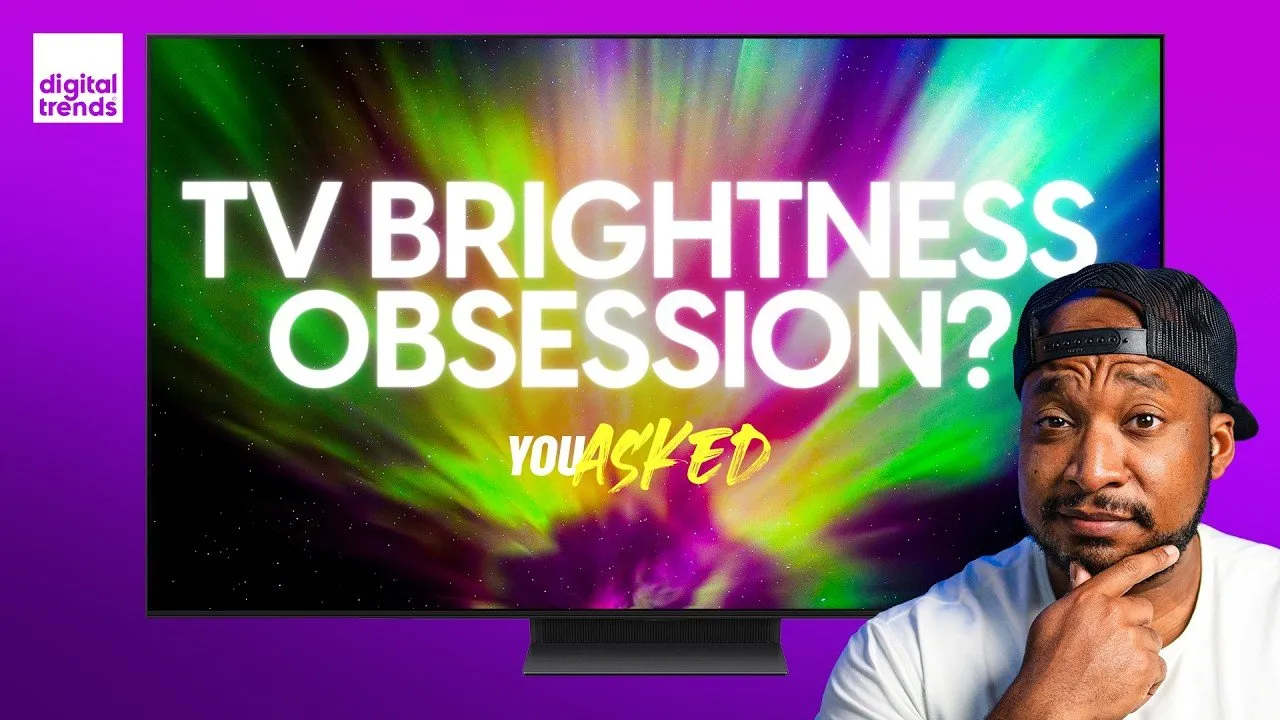
Consumer electronics manufacturers are aggressively increasing peak brightness capabilities in modern televisions, a move driven not by a desire for overwhelming luminance but by the technical requirements of High Dynamic Range (HDR) performance. As the industry transitions toward advanced RGB mini-LED technology and the new Dolby Vision 2 standard, experts at Digital Trends have outlined how these innovations address persistent consumer complaints regarding contrast control and dark scene visibility.
Key Points
- HDR Functionality: High brightness levels are essential for creating dynamic contrast between highlights and shadows, rather than simply illuminating a room.
- Local Dimming Mechanics: Proper configuration of backlight zones is critical for preventing "washed out" images and maintaining deep black levels.
- Market Competition: Sony and LG are positioned to lead the premium segment with rival implementations of RGB mini-LED and next-generation OLED panels.
- Dolby Vision 2: The new standard aims to rectify consumer reports of overly dark content, though it requires compatible hardware from early adopters like Hisense and TCL.
The Engineering Behind the "Brightness Obsession"
A frequent point of confusion among consumers concerns the industry's push for increasingly brighter panels. According to market analysis, this trend is misunderstood as an attempt to create blindingly bright displays. In reality, the luminance is a necessary component of HDR mechanics.
For a television to produce a lifelike image that "jumps off the screen," it requires a wide differential between its darkest and brightest points. A high peak brightness allows specular highlights—such as reflections on metal or sunlight piercing through clouds—to stand out against dark backgrounds. This dynamic range relies heavily on local dimming technology.
Local dimming allows a TV’s backlight to adjust brightness in specific zones independently. When functioning correctly, this prevents light from bleeding into dark areas, a common issue known as "blooming." For users experiencing washed-out colors on mid-range models, such as the Hisense U7N, experts recommend setting local dimming to "High" to maximize contrast control.
"It’s not that everyone’s obsessed with a blindingly bright TV that’s maxed out from edge to edge, but rather a bright TV means you have a better-looking HDR picture. So long as the TV has a local dimming feature and does a good job with it, that means the bright areas will be brighter and the darker areas remain dark."
Optimizing Settings for Color Accuracy
Beyond hardware capabilities, user settings play a pivotal role in image fidelity. Many consumers find default "Standard" modes artificially saturated, while "Filmmaker" modes may appear too flat in well-lit rooms. To bridge this gap, experts suggest utilizing "Theater Day" and "Theater Night" presets.
These modes typically offer a balance between accuracy and vibrancy. By adjusting the brightness within "Theater Day" for ambient light conditions and tweaking "Theater Night" for dark-room viewing, users can maintain contrast without sacrificing detail in shadows. This calibration is particularly important when dealing with compressed streaming content where bitrate limitations can muddy dark scenes.
The Battle for Premium Dominance: OLED vs. RGB Mini-LED
Looking toward the next hardware cycle, the high-end television market is bracing for a showdown between advanced OLED iterations and emerging RGB mini-LED technology. Consumers seeking the highest fidelity are currently weighing options between established leaders like LG, Samsung, and Sony.
Analysts forecast that Sony’s implementation of RGB mini-LED technology will be highly competitive, building on the success of the Bravia 9 series. Sony is expected to introduce unique processing twists to maximize the potential of RGB tech, which uses distinct red, green, and blue LEDs for purer light generation compared to traditional white backlights.
Conversely, LG continues to refine its OLED offerings. The anticipated panels utilizing the Gen 3 Alpha 11 processor are projected to close the gap in color volume that has historically separated WOLED from QD-OLED technology.
"I think Sony is going to be extremely competitive with its RGB mini-LED TV. The Bravia 9 remains incredible, and whatever Sony cooks up to top that is going to be very good... [However], save room for brands like Hisense and TCL on your list as well, because I think their options are going to be stellar."
Dolby Vision 2 and the Future of Dark Content
A significant shift is occurring regarding HDR standards. Early adopters of the original Dolby Vision format have long cited issues with content appearing too dark, obscuring details in series such as Game of Thrones or The Man in the High Castle. This issue is often exacerbated on televisions that lack the peak brightness of flagship models.
The industry's response is Dolby Vision 2, a new iteration of the format explicitly designed to address these luminance concerns. While this acknowledges the limitations of the original format on consumer-grade hardware, it presents a fragmentation issue: accessing Dolby Vision 2 requires new, compatible displays.
While premium brands like Sony are expected to eventually support the format, value-focused manufacturers like Hisense and TCL are planning to integrate Dolby Vision 2 support rapidly. This strategy could allow them to capture a segment of the market frustrated by the "black crush" phenomenon on older high-end panels.
As the 2024/2025 release cycle approaches, buyers should monitor how legacy brands adopt these new HDR standards versus the aggressive implementation strategies of their Chinese competitors. The industry appears to be moving toward a future where hardware and software finally align to deliver the creator's intent without compromising visibility in home viewing environments.