
Table of Contents
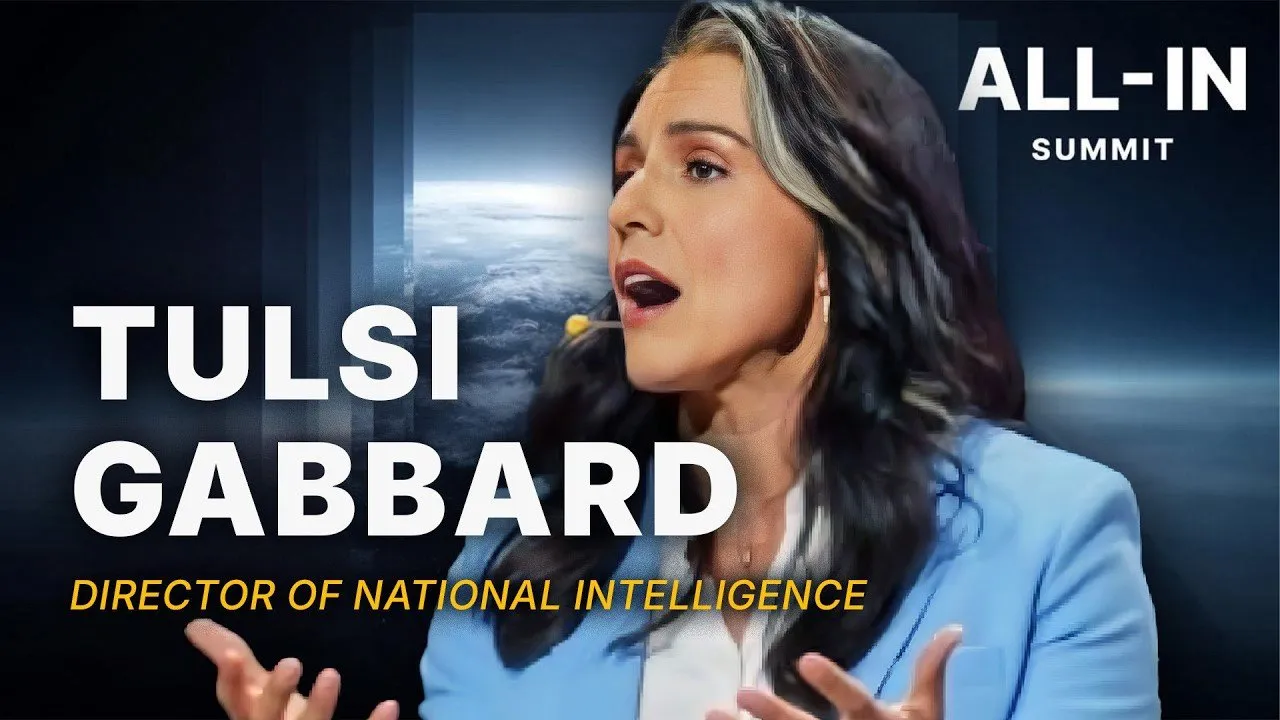
From a fierce Democratic congresswoman to a staunch supporter of the "America First" agenda, Tulsi Gabbard has always been defined by her independence. Now, serving as the Director of National Intelligence (DNI), she has stepped into the epicenter of the American security apparatus with a clear mandate: to root out politicization and restore integrity to the intelligence community. In a recent detailed discussion, Gabbard pulled back the curtain on the declassified files surrounding the 2016 "Russiagate" narrative, the internal reforms she is implementing at the ODNI, and the administration’s aggressive new stance on foreign policy and border security.
Key Takeaways
- The Russiagate Narrative Was Manufactured: Newly declassified documents reveal that the intelligence community’s assessment of Russian collusion was a politicized product, contradicted by career analysts and suppressed briefings.
- Evidence Was Suppressed: A pivotal President’s Daily Brief from December 8, 2016, which assessed no Russian interference, was pulled back and replaced by a narrative directed by the outgoing administration.
- Intelligence Reform is Underway: Gabbard is streamlining the ODNI, reducing personnel bloat, and refocusing the agency on core mission objectives rather than political outcomes.
- Strategic Shifts in Foreign Policy: The administration has adopted a results-oriented military strategy, exemplified by the precise "Midnight Hammer" operation in Iran and the designation of drug cartels as Foreign Terrorist Organizations.
Unveiling the Origins of the Russiagate Narrative
For years, the American public was bombarded with headlines alleging that Donald Trump was a puppet of Vladimir Putin. According to Gabbard, the declassification of documents related to the Crossfire Hurricane investigation and the subsequent Durham inquiry has provided the "receipts" necessary to disprove these allegations definitively. The significance of these files lies not just in exonerating the former president, but in exposing how intelligence was weaponized to undermine a democratic election.
Gabbard outlined a specific timeline that began during the 2016 primary. While career intelligence staff largely assessed that Putin did not have the intent or capability to hack the U.S. election, a counter-narrative was seeded by the Clinton campaign and cultivated by senior officials within the FBI and the Obama administration. This culminated in the illegal surveillance of Carter Page and the use of the discredited Steele Dossier to obtain FISA warrants.
The December 8th Pivot
Perhaps the most startling revelation from Gabbard’s tenure as DNI involves the suppression of contradictory intelligence during the transition period between the Obama and Trump administrations. Gabbard highlighted a specific document: the President's Daily Brief (PDB) drafted for December 8, 2016.
This draft was consistent with previous assessments, stating there was no evidence of Russian interference affecting the election outcome. However, it was never published. Hours before it was set to reach President Obama’s desk, it was pulled back. The very next day, the administration convened a meeting tasked with producing an assessment that specifically concluded Russia did meddle.
The Anatomy of Politicized Intelligence
The shift from the December 8th draft to the January 6th Intelligence Community Assessment (ICA) represents, in Gabbard’s view, a catastrophic failure of integrity. A small group of senior leaders—including James Clapper, John Brennan, and James Comey—bypassed standard tradecraft standards to produce a document that contradicted the views of their own career analysts.
Gabbard detailed how dissenting voices were silenced. When Admiral Mike Rogers of the NSA pushed back against the manufactured consensus, citing a lack of time to vet the intelligence properly, he was overruled. Gabbard cited internal emails found literally "in the back of a safe" that shed light on the pressure applied to comply with the narrative.
"James Clapper sent a response essentially saying, 'Mike, this is a team sport. This is the time where you just have to say yes and sign off on this.'"
The implications of this "team sport" mentality were severe. The resulting assessment served as the foundation for the Special Counsel investigation that shadowed the Trump presidency for years. Gabbard emphasized that the motive appeared to be two-fold: to destabilize the incoming Trump administration and to provide an external excuse for Hillary Clinton’s unexpected electoral defeat.
Reforming the Intelligence Community from Within
Transitioning from a critic of the establishment to the leader of the ODNI has presented Gabbard with the challenge of fixing the very institutions she once critiqued. Her approach has been rooted in accountability and a return to mission focus. She argues that the lack of accountability for past failures—such as the politicized intelligence regarding WMDs in Iraq—emboldened leaders to act with impunity in 2016.
To combat the "rot" within the agency, Gabbard has initiated significant structural changes:
- Personnel Reduction: Slimming down the headcount to ensure only essential, mission-focused staff remain.
- Cultural Shift: Moving away from the hubris of "knowing better" than the electorate and returning to a service-based ethos focused on the Constitution.
- Vigilance: Actively filtering information to ensure the President receives unvarnished truth rather than curated narratives designed to manipulate decision-making.
A New Era of Foreign Policy and Border Security
Beyond the retrospective analysis of 2016, Gabbard discussed the current administration's proactive security measures. Her philosophy on military engagement is defined by a rigorous set of questions she felt were ignored during the Global War on Terror: What is the objective? Is it achievable? What is the exit strategy?
Operation Midnight Hammer and Iran
Gabbard defended the administration's recent military actions against Iran, referred to as "Operation Midnight Hammer." Contrasting this with previous indefinite conflicts, she described it as a precise operation with a clear objective: denying Iran nuclear weapons capability. The result, she noted, was the destruction of nuclear infrastructure and a severely weakened Iranian economy, achieved without falling into the trap of regime change or prolonged occupation.
"Very rarely did leaders in our country ask the fundamental question of what is our objective? ... If we're discussing a potential military operation, what is winning? How do you define winning?"
Designating Cartels as Terrorist Organizations
On the domestic front, the administration has pivoted to treating the southern border crisis as a national security threat rather than merely an immigration issue. By designating Mexican drug cartels as Foreign Terrorist Organizations (FTOs), the ODNI has unlocked new legal and operational authorities.
This designation allows the National Counterterrorism Center to turn its sophisticated apparatus—historically focused on groups like ISIS and Al-Qaeda—toward the cartels. Gabbard argued this is a necessary evolution given the cartels' use of military-grade weaponry, drones, and counter-intelligence tactics. The move aims to dismantle the supply chains of fentanyl that are claiming over 100,000 American lives annually, treating the crisis with the severity of a foreign attack.
Conclusion
Tulsi Gabbard’s tenure as DNI marks a distinct departure from the status quo. By declassifying the documents regarding the 2016 election, she aims to close the chapter on a divisive era of American politics while setting a precedent for transparency. Her reforms suggest a future where the intelligence community is leaner, more accountable, and strictly confined to its role of gathering information rather than shaping policy.
As the administration moves forward with aggressive strategies against foreign adversaries and border threats, Gabbard remains a central figure in the effort to align the powerful machinery of the U.S. intelligence apparatus with the interests of the American people.

![Trump Market Manipulation Will Trap You! [This Happens Next]](/content/images/size/w1304/format/webp/2026/03/trump-market-manipulation-volatility-warning.jpg)
