Table of Contents
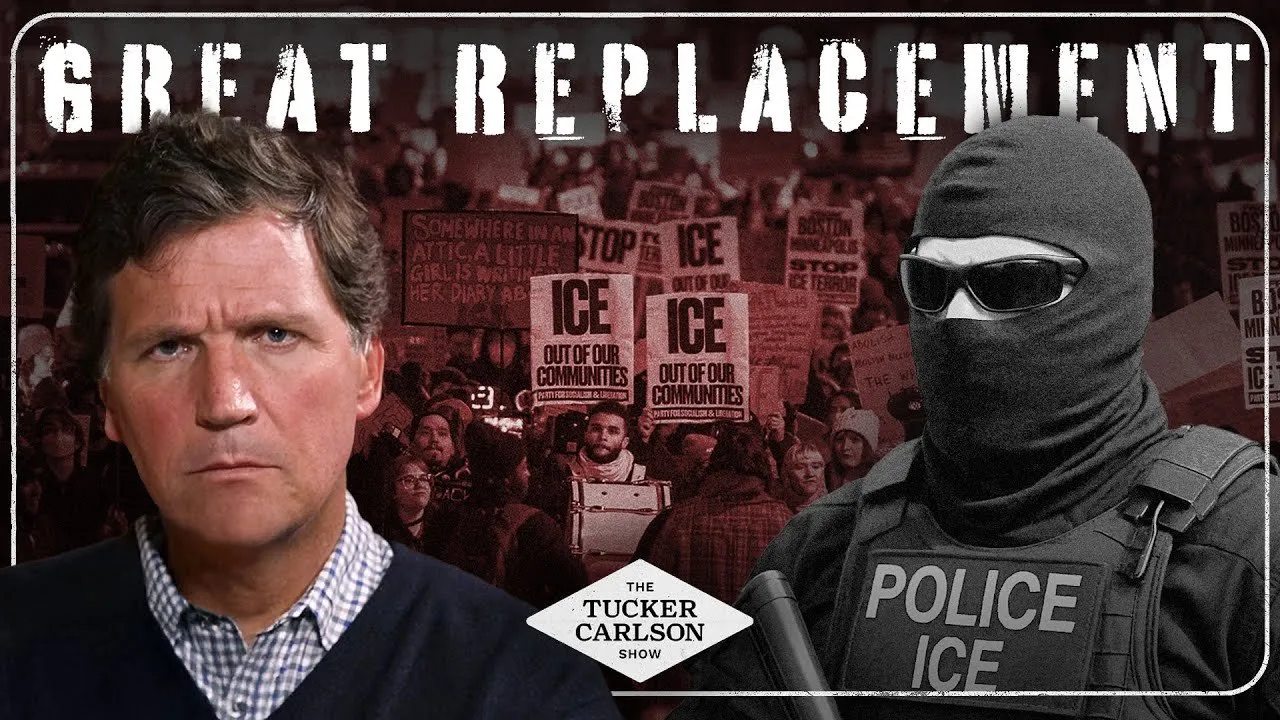
The violent unrest surrounding Immigration and Customs Enforcement (ICE) in cities like Minneapolis is often portrayed by the media as a simple conflict over law enforcement tactics or border policy. However, a closer examination suggests these flashpoints represent something far more fundamental. Beyond the riots and the political turmoil lies the single most significant issue defining the future of the United States: demographic change. The battle over ICE is, at its core, a battle over who lives in America, who has authority, and the intentional reshaping of the nation’s population.
For decades, the question of demographic transformation has been treated as a taboo subject, often dismissed as conspiracy theory or ignored entirely. Yet, as the population shifts dramatically, the tension between the country's historic identity and its engineered future is boiling over. To understand the violence in the streets, one must look past the surface-level politics and confront the numbers, the history, and the motivations driving this wholesale change.
Key Takeaways
- The ICE debate is a proxy for demographic change: The conflict over border enforcement is fundamentally about who has the right to live in the United States and the future composition of the electorate.
- Census data reveals a total transformation: Since 1950, major American cultural and economic hubs like New York, Los Angeles, and Chicago have seen their demographics invert, often due to federal immigration policies starting in 1965.
- Demographic engineering is historical fact: From the British in Ireland to the Mongols in Asia, leaders have historically used mass migration to subdue indigenous populations and consolidate power.
- Political motives are driving current policy: Evidence suggests that mass migration is utilized to secure permanent political power, as seen in the transformation of states like California into one-party strongholds.
The Gulf Between Official Narratives and Census Reality
If you attempt to research "Great Replacement Theory" through mainstream channels or artificial intelligence search tools, you will be met with a uniform wall of denial. These sources categorically label the concept as a "debunked," "far-right," and "dangerous" conspiracy theory. They argue that believing demographic shifts are intentional or orchestrated by elites is not only factually wrong but morally reprehensible.
However, this narrative of denial collapses when placed against hard data. Science begins with numbers, and the United States Census provides an indisputable record of the nation’s transformation. To understand the scale of the change, one must look at the "peak America" era of 1950—a time when the U.S. was the undisputed industrial and cultural leader of the West.
The Statistical Collapse of American Cities
In 1950, the demographic profile of America's six largest cities—New York, Chicago, Philadelphia, Los Angeles, Detroit, and Baltimore—looked radically different than it does today. These were not just population centers; they were the engines of American prosperity.
- New York City: In 1950, the city was 90% white. Today, that number has plummeted to approximately 30%.
- Los Angeles: Once 94% white, effectively a demographic monolith, it is now around 37% white.
- Detroit and Baltimore: Formerly industrial powerhouses with large white majorities (84% and 76% respectively), these cities have seen their white populations evaporate to roughly 10% and 27%.
While economic factors like deindustrialization played a role, they do not account for the totality of the shift. In New York City, for instance, the population has grown by a million people since 1950, yet the white population has declined by millions. This is the result of the Immigration and Nationality Act of 1965. The "Great Replacement" is not a theory; statistically speaking, it is the defining demographic reality of the last 60 years.
Demographic Engineering as a Tool of Conquest
The reluctance to discuss demographic change honestly ignores a universal truth of history: populations rarely change on a massive scale organically. Almost always, replacement is the result of human choice and leadership strategy. The primary concern of any ruling class is the composition of the people they rule. By altering who lives in a territory, leaders can fundamentally alter the culture, religion, and political allegiance of that nation.
"Populations change because leaders decide they should change. Population demographics, the question of who lives within the borders of a country, is not only a concern of leaders of governments, it is the main concern."
History is replete with examples of this strategy. The British Empire famously utilized this tactic in Ireland. To subdue a Catholic, indigenous population, the British Crown planted Protestant settlers from Scotland and England into Ulster. Later, they introduced French Huguenots to Dublin. The goal was not economic aid; it was cultural imperialism intended to dilute the native population and make the territory easier to control.
This pattern repeats across civilizations, from the Mongol expansion under Genghis Khan to the demographic shifts in Mandate Palestine in 1948. Leaders understand that to conquer a place permanently, you must change the people. The removal of historical monuments, such as Confederate statues or the renaming of institutions, serves as the cultural victory lap—a declaration that the old order has been replaced by a new one.
The Political Utility of Mass Migration
Why would the current American leadership class facilitate such rapid change? While short-term economic arguments are often made—such as the need for agricultural labor—these rationales fall apart under scrutiny. In an era of increasing automation and Artificial Intelligence, the need for low-skilled labor is decreasing, not increasing. Importing millions of low-skilled workers on the brink of an AI revolution defies economic logic.
The remaining explanation is the pursuit of raw political power. Mass migration dilutes the voting power of the native-born population and creates a new electorate more likely to support the party that allowed them entry. This is not speculation; political figures have occasionally admitted as much.
The California Model
California serves as the proof of concept for this strategy. In 1980, California was a functional, prosperous state with a competitive two-party system. Today, following decades of mass immigration, it is a one-party state with the highest poverty rates in the nation. Conservative voters still exist in California, but they have been rendered politically irrelevant by sheer numbers.
This strategy is now being deployed nationally. Currently, 14 states plus the District of Columbia do not require voter ID. Three of the five most populous states—California, Illinois, and Pennsylvania—are among them. By flooding the zone with non-citizens and removing the barriers to voting, the political opposition is effectively drowned out. As Stacey Abrams noted in 2018 when describing the "Blue Wave," the coalition includes the "documented and undocumented." The intent to enfranchise illegal aliens to secure a permanent majority is no longer a subtext; it is the text.
Hostility and the Culture of Self-Loathing
Perhaps the most disturbing aspect of this transformation is the palpable hostility directed toward the legacy population. Historically, when a majority group becomes a minority, they are rarely treated with benevolence. The current cultural climate in the United States encourages open animosity toward white Americans, framed under the guise of "equity" or "justice."
This hostility manifests in policy, such as race-based taxation proposals or housing authorities declaring that specific racial groups "own too much." It also manifests psychologically, where self-hatred is praised as a virtue.
"The face of the future for our country is all American. And that has many versions." — Nancy Pelosi, recounting her grandson wishing he had brown skin like his friend Antonio.
When political leaders celebrate a child wishing to change their race, it signals a profound cultural pathology. If a child expressed a desire to change their sexual orientation, society would affirm their innate identity. Yet, when a white child expresses a desire to be non-white, it is applauded as "beautiful." This is not compassion; it is a form of self-negation that political elites are projecting onto the country.
Conclusion
The chaos in Minneapolis and the vitriol directed at traditional religious communities are not isolated incidents. They are the inevitable friction points of a society undergoing a forced and rapid demographic overhaul. The economic arguments for this change have collapsed, leaving only political power and cultural resentment as the driving forces.
The "Great Replacement" is not a conspiracy theory to be debunked by search algorithms; it is a measurable reality confirmed by census data and historical precedent. Understanding this is essential for anyone trying to make sense of the current political landscape. The question is no longer whether this change is happening, but rather what the future looks like for the people who are being replaced.