Table of Contents
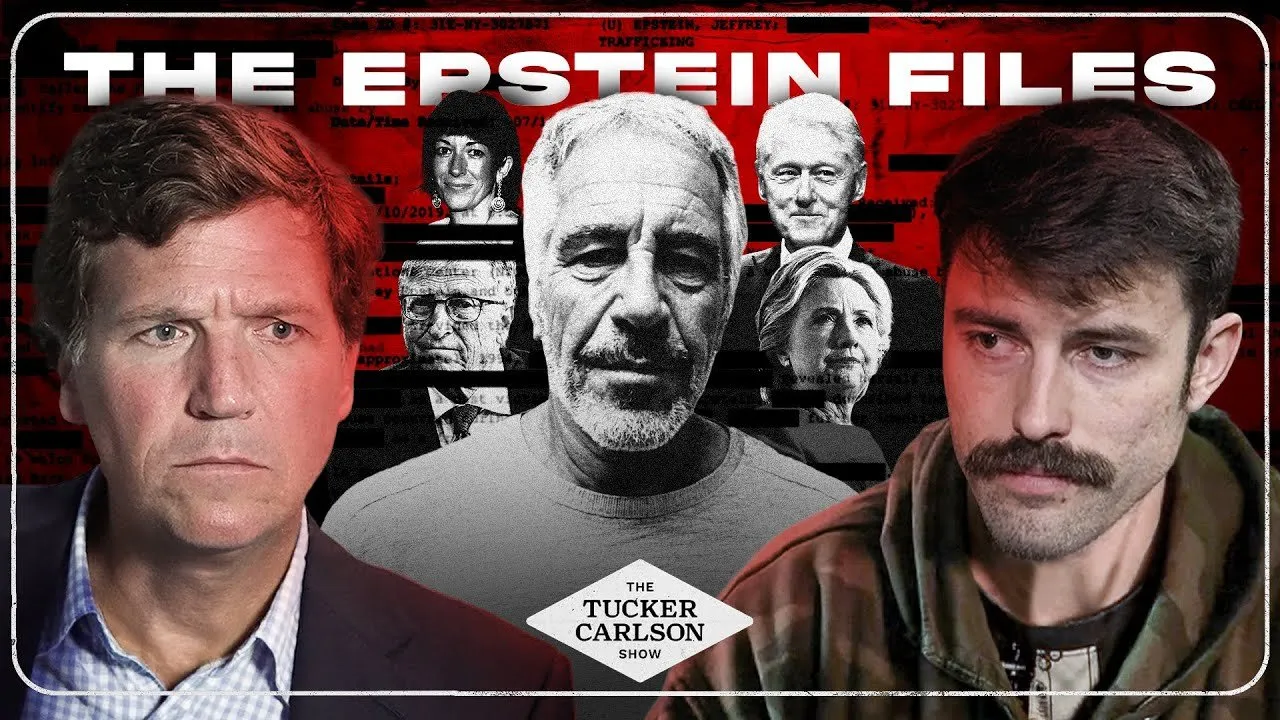
If you have been waiting for disclosure regarding the Jeffrey Epstein saga, the recent release of more than three million related documents by the US government offers a complex mix of revelation and confusion. This massive cache contains a blend of tantalizing evidence, potential disinformation, and raw data that requires careful sifting. Amidst the noise, however, specific communications have emerged that challenge previous dismissals of controversial theories. The documents force a re-examination of the narratives surrounding the elite, the justice system, and the very nature of corruption in the West.
Key Takeaways
- Code Words Resurface: New documents reveal texts between Epstein and his doctors referencing "pizza and grape soda" in contexts that suggest code rather than culinary preferences, reigniting questions about the "Pizzagate" theory.
- The Silence of Law Enforcement: Despite named individuals and specific incriminating exchanges, there is a distinct lack of basic investigative follow-up, such as FBI interviews, regarding high-profile associates.
- Financial Origins: The files suggest Epstein’s influence wasn't just social; he was deeply entrenched in the financial mechanics of the 2008 crisis through entities like Liquid Funding Limited and Bear Stearns.
- Generational Nihilism: A disturbing cultural shift is occurring where younger generations are becoming desensitized to elite corruption, accepting it as a baseline reality rather than an aberration to be fought.
- Verification is Vital: With misinformation rampant, the only way to ascertain the truth is by cross-referencing claims directly with the primary source documents hosted on government servers.
Revisiting the "Pizza" Anomaly
For years, the "Pizzagate" theory—which posited that "pizza" was used as a code word for illicit activities in the leaked emails of John Podesta—was dismissed by mainstream narratives as a baseless conspiracy. However, the new Epstein document dump has produced communications that make it difficult to dismiss the linguistic patterns as mere coincidence.
One specific exchange highlights this anomaly. In a text conversation between Epstein and a physician, reportedly Dr. Harry Fisch, the two discuss prescriptions for erectile dysfunction medication. The conversation takes a turn that defies logical explanation for health-obsessed individuals.
"After you use them, wash your hands and let's go get pizza and grape soda. Call me."
Critics and researchers, including Ian Carroll, argue that it requires a suspension of disbelief to accept that a fitness-focused billionaire and a medical doctor are genuinely discussing a meal of junk food immediately following the use of sexual performance drugs. When viewed alongside the 2016 Podesta emails, which contained similarly inorganic references to "pizza" and "hot dogs" costing thousands of dollars, the pattern suggests a coded lexicon used by a specific subset of the elite.
The Institutional Cover-Up
Perhaps more disturbing than the content of the emails is the reaction—or lack thereof—from federal law enforcement. In a functioning justice system, the emergence of potential code words linked to sexual abuse, or clear evidence of trafficking, would trigger immediate interviews.
The Missing Interviews
The standard operating procedure for the FBI in federal investigations involves interviewing associates, witnesses, and peripheral figures. This was seen extensively in the aftermath of January 6th, where hundreds of individuals were questioned. Yet, in the Epstein case, high-profile figures named in the documents appear to have immunity from even basic questioning.
The question remains: Has the FBI sat down with the surviving participants of these text exchanges to simply ask, "What did you mean by this?" The absence of these interviews suggests a deliberate lack of curiosity by the Department of Justice.
Intelligence Connections
The reluctance to investigate may stem from Epstein's deep ties to intelligence apparatuses. The files include references where Epstein privately describes former Attorney General Bill Barr as "CIA." Furthermore, the handling of the initial evidence—where the FBI reportedly left hard drives and binders at Epstein's residence rather than seizing them during the initial raid—points to a systemic protection racket rather than a standard criminal investigation.
High-Profile Complicity and the Financial Web
The documents implicate figures across the political and social spectrum, dismantling the partisan idea that this is solely a "Democrat" or "Republican" issue. The files touch on everyone from Bill Clinton and Donald Trump to tech moguls and scientists.
The Tech and Science Sector
The correspondence sheds light on the behavior of individuals who shape global policy. Ian Carroll highlights disturbing implications regarding Bill Gates, suggesting the files contain evidence of him attempting to manage the medical consequences of his associations with Epstein. Similarly, emails involving tech leaders like Elon Musk and venture capitalists like Peter Thiel require reconciling their public personas with their private associations.
Epstein’s Financial Origins
A critical, often overlooked thread is Epstein’s involvement in the global financial crisis. The documents corroborate that Epstein was not merely a socialite but a sophisticated financial operator. Through Liquid Funding Limited, a company domiciled in the Bahamas and partially owned by Bear Stearns, Epstein was involved in the sale of CDOs (Collateralized Debt Obligations)—the very toxic assets that triggered the 2008 crash.
Epstein reportedly wound down these operations and redeemed assets shortly before the collapse of Bear Stearns, suggesting inside knowledge or a strategic exit that mirrors the behavior of a professional money launderer rather than a mere investor. This positions Epstein as a central node in a network of financial fraud that underpins his human trafficking operations.
The Societal Cost of Corruption
The continued exposure of such deep-seated rot within the establishment is having a profound psychological effect on the American populace. We are witnessing a divergence in generational responses to these revelations.
- The Older Generation: Often reacts with denial. The reality that institutions they trusted (the FBI, the DOJ, the media) might be complicit in demonic crimes is too shattering to their worldview to accept.
- The Younger Generation: Reacts with dangerous nihilism. Growing up in a post-9/11 world defined by surveillance and endless war, many young people simply accept that "the elites are pedophiles" as a baseline fact of life.
This normalization of evil is the ultimate subversion of a nation. When a society collectively decides that justice is unattainable and that criminal governance is inevitable, the republic effectively ceases to function.
Conclusion: The Responsibility of the Citizen
We are currently in an information war where the sheer volume of data is used to overwhelm the public. The release of millions of unorganized files is, in itself, a tactic to make finding the truth difficult. However, the tools to verify these claims exist.
Citizens and journalists must resist the urge to rely solely on social media summaries. By accessing the primary documents at justice.gov and performing specific keyword searches (such as exact phrases from leaked texts), individuals can verify the reality of these exchanges. The preservation of a free society depends not on the Department of Justice, which has failed to act, but on the willingness of the people to witness the truth and demand accountability.