Table of Contents
In the wake of escalating hostilities between Israel and Iran, the geopolitical landscape of the Middle East is undergoing a seismic shift. As the conflict enters its second day, the fundamental questions of why this war started, what its objectives are, and how the United States should respond remain at the forefront of public discourse. While the official narrative often focuses on immediate security threats and nuclear proliferation, a deeper analysis reveals a complex web of regional ambitions, foreign influence, and long-term strategic planning that extends far beyond the borders of the Levant.
Key Takeaways
- The conflict is primarily driven by Israel's pursuit of regional hegemony and the desire to decapitate the Iranian government, rather than immediate American national security threats.
- Strategic losers in this war include the United States, the Gulf Monarchies, and Western Europe, all of which face severe economic, social, and military risks.
- The influence of foreign lobbies and dual-citizen officials within the U.S. government is cited as a primary reason for the alignment of American military power with foreign interests.
- A spiritual and moral crisis exists within segments of the American church, where some religious leaders have pivoted toward endorsing violence and regional conflict.
- True stability requires radical transparency, including the declassification of documents related to 9/11, the Kennedy assassination, and recent intelligence reports.
The Geopolitical Origin: A Conflict Driven by Regional Ambition
The sudden escalation of the war in Iran is characterized not as a defensive necessity for the United States, but as a calculated move by the Israeli leadership. Critics argue that the impetus for the war stems from a 40-year strategic dream of Prime Minister Benjamin Netanyahu to achieve "regime change" in Tehran. This shift in the Middle Eastern order is viewed as a culmination of lobbying efforts designed to commit the U.S. military to an overseas objective that offers little direct benefit to the American public.
- Authenticity and Truth: Understanding the true motivations behind the war is essential for making wise decisions, as hubris is often the product of self-deception and state-sponsored lies.
- History as a Guide: Conventional wisdom regarding past wars is often distorted over time; maintaining an honest record of current events prevents the creation of a "fake reality" for future generations.
- Netanyahu’s Long-Term Vision: The Prime Minister has openly stated his decades-long desire for this conflict, framing it as a personal and national destiny.
- U.S. Military Commitment: American troops have been committed to this conflict following intense lobbying, despite the lack of a clear plan for what follows the potential collapse of the Iranian government.
- The Myth of Imminent Nukes: While the nuclear threat is cited as the primary casus belli, observers note that Iran has been described as being on the "verge" of a weapon for 40 years without a deployment.
- Manipulation of the Public: In the months leading up to the war, there was a noticeable effort to "soften up" the public and silence dissenting voices who questioned the wisdom of an Iranian intervention.
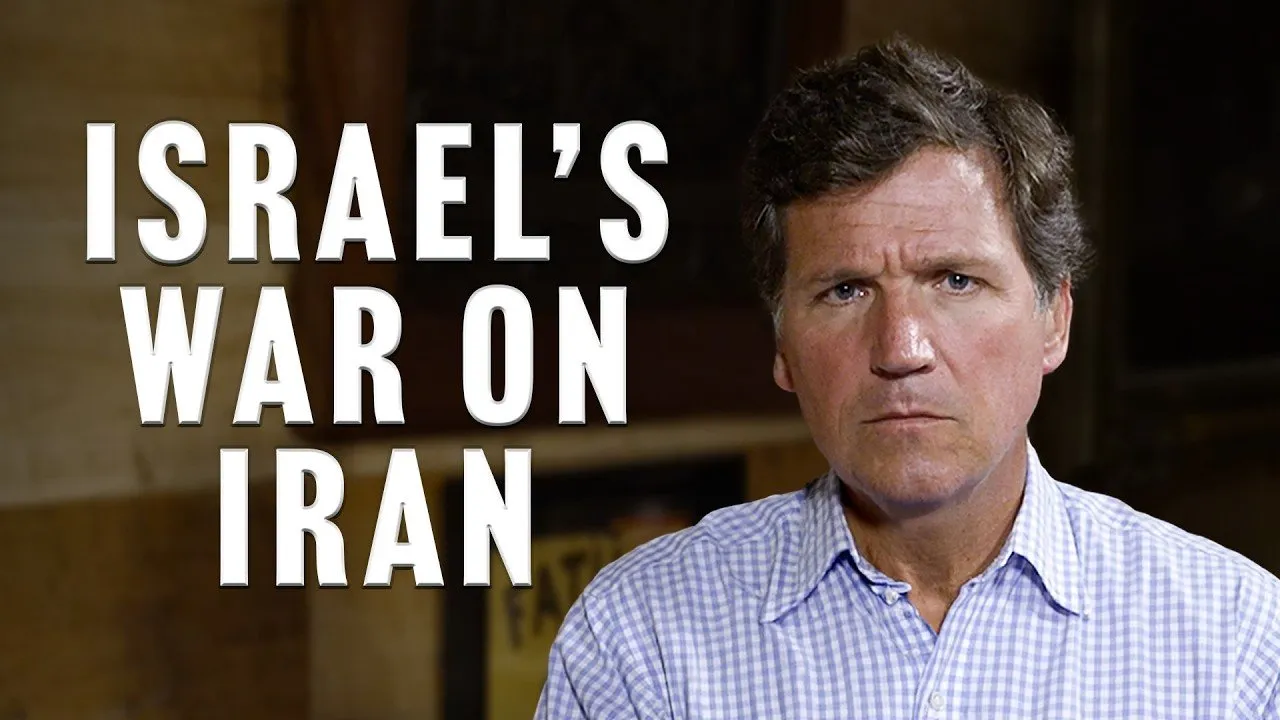
"This happened because Israel wanted it to happen. This is Israel's war. This is not the United States' war."
The Pursuit of Regional Hegemony and Territorial Expansion
Beyond the rhetoric of nuclear containment lies the reality of regional hegemony. For any growing nation-state, the desire to be the unrivaled power in its neighborhood is a natural, albeit aggressive, geopolitical instinct. Israel's ambition to control the Middle East requires the removal of any sovereign power capable of checking its influence, most notably the Islamic Republic of Iran.
- Defining Hegemony: Israel seeks to establish a Middle Eastern version of the "Monroe Doctrine," where it can determine regional outcomes without external constraints.
- Decapitation vs. Reconstruction: The strategic goal is to "decapitate" the Iranian leadership, potentially turning the country into a "hellscape" to ensure it can no longer fund regional rivals like Hezbollah or Hamas.
- Territorial Interests: As an expansionist power, Israel has long-standing interests in parts of Syria and Lebanon, which become more accessible if Iran is neutralized.
- Demystifying State Actions: It is necessary to view these events through the lens of conventional geopolitics rather than moralistic templates like "Churchill vs. Hitler."
- The End of Multi-Polarity: By removing Iran, Israel aims to eliminate a significant pole of power that has challenged its primacy for decades.
- The Humanitarian Downstream: Destabilizing large nations often leads to massive refugee crises, as seen previously in Syria and Lebanon, which serve as a precedent for the current conflict.
Assessing the Strategic Losers: The Gulf States and Western Europe
While the immediate focus is on the combatants, the secondary effects of the war threaten to devastate some of America's most functional allies. The Gulf Cooperation Council (GCC) states and the nations of Western Europe are positioned to suffer significant economic and social blowback from the ongoing kinetic operations.
- The Vulnerability of the Gulf: Countries like the UAE, Qatar, and Saudi Arabia rely on safe air travel and energy exports; images of smoke over Dubai’s airport threaten their status as global hubs.
- Erosion of U.S. Reliability: Gulf monarchs now feel that the U.S. is an unreliable partner, failing to protect their infrastructure from Iranian retaliatory strikes despite the presence of American bases.
- The Energy Crisis: The shutdown of Qatari Liquefied Natural Gas (LNG) exports has immediate impacts on 40% of British homes and the manufacturing sectors of East Asia.
- Refugee Influx into Europe: The collapse of order in Iran would likely trigger a migration wave into Western Europe, further destabilizing an already fragile social fabric.
- Economic Disruption: High-profile projects like Saudi Aramco face direct threats, impacting the global economy through hiked inflation and market volatility.
- Sowing Discord: Some analysts suggest that the chaos in the Gulf is not an accident but a desired outcome for those who wish to diminish potential rivals in the energy market.
"The message to them is the US is not a reliable partner."
The Domestic Political and Media Landscape
The domestic response to the war has been marked by a lack of scrutiny and a unified front among political leaders of both parties. The media environment has been carefully constructed to prevent the public from seeing the obvious strategic misalignments, often resorting to inflammatory labels to shut down debate.
- Media Control: Major media outlets are seen as tools for describing events in a way that prevents clear sight, often muddying conversations with accusations of antisemitism.
- The Absence of Dissent: Leaders in both the Democratic and Republican parties, from Chuck Schumer to Donald Trump, have largely aligned with the neoconservative agenda.
- Lack of Public Support: Despite the consensus in Washington, the war lacks majority support among the American public, many of whom are focused on domestic economic struggles.
- The Goal of U.S. Withdrawal: Ironically, the war may be designed to eventually force the U.S. out of the Middle East, leaving Israel to pivot toward new partners like China.
- Propaganda Templates: The use of historic analogies to manipulate public emotion prevents a realistic assessment of current costs and benefits.
- The Scruples of Leadership: Political figures like Tom Cotton are criticized for downplaying the possibility of "boots on the ground" while advocating for regime change that necessitates them.
Transparency and the Need for Declassification
A functioning democracy cannot exist under a veil of total secrecy. With over a billion classified federal documents, the U.S. government has created an environment where suspicion and conspiracy theories flourish. To restore trust, the government must provide evidence for the claims that lead the nation into war.
- Intelligence Verification: The public deserves to see the evidence linking Iran to alleged assassination attempts on U.S. leaders, particularly given the flawed history of intelligence regarding Iraqi WMDs.
- The 9/11 Files: Declassifying the full records of the September 11 attacks would address long-standing questions about foreign foreknowledge and involvement.
- The Kennedy Legacy: After 63 years, the continued classification of JFK assassination documents suggests a persistent effort to hide institutional failures or crimes.
- Ending "Sources and Methods" Excuses: National security classifications are often used to protect political agendas rather than legitimate secrets.
- Restoring Legitimacy: For the government to have the trust of the governed, it must operate with the "sunlight" that disinfects corruption and misinformation.
- Countering Domestic Strife: Secrecy sow divisions; openness is the only way to prevent the rise of ethnic and religious animosity within the American population.
"Secrecy abets evil. That's the point of it."
The Spiritual Crisis and the Endorsement of Violence
The current conflict is framed by some as a spiritual war, yet the response from many American religious leaders has been to embrace bloodlust rather than the message of peace. This shift represents a fundamental corruption of the Christian message and a departure from historical reverence for life.
- Heresy in the Pulpit: Leaders like John Hagee and Franklin Graham are criticized for describing God as a "God of war" and demanding the destruction of foreign populations.
- The Target of War: Historically, spiritual conflicts often end with the persecution of sincere Christians, as seen in the French and Bolshevik revolutions.
- The Sanctity of Life: A refusal to mourn the dead and a "cost-free" attitude toward war casualties is viewed as a sign of spiritual hubris.
- Importing Grudges: Mass immigration risks importing ancient ethnic and religious conflicts into the U.S., threatening the concept of the "melting pot."
- The Call for Peace: True spiritual leadership should focus on the "strength of love" and the gathering of peoples under a "banner of peace."
- The Danger of Bloodlust: Violence is described as a "demonic influence" that is never sated, leading only to further radicalism on all sides of a conflict.
A Call for Strategic Realism
As the United States navigates the complexities of the second Iranian war, the most prudent course of action is to prioritize the national interest and the safety of American citizens. The mission remains ill-defined, and the potential for a catastrophic nuclear exchange or a generational religious conflict looms large. To avoid further humiliation and loss of life, the U.S. must reassess its relationship with foreign heads of state who do not share its priorities.
The path forward requires a return to the foundational duty of the government: serving the people who pay for it and in whose name it acts. This involves protecting Americans abroad, limiting the influence of foreign lobbies, and demanding total honesty from the administrative state. Only by acknowledging the truth of the situation—no matter how uncomfortable—can the country hope to preserve its prosperity and peace in an increasingly volatile world.