Table of Contents
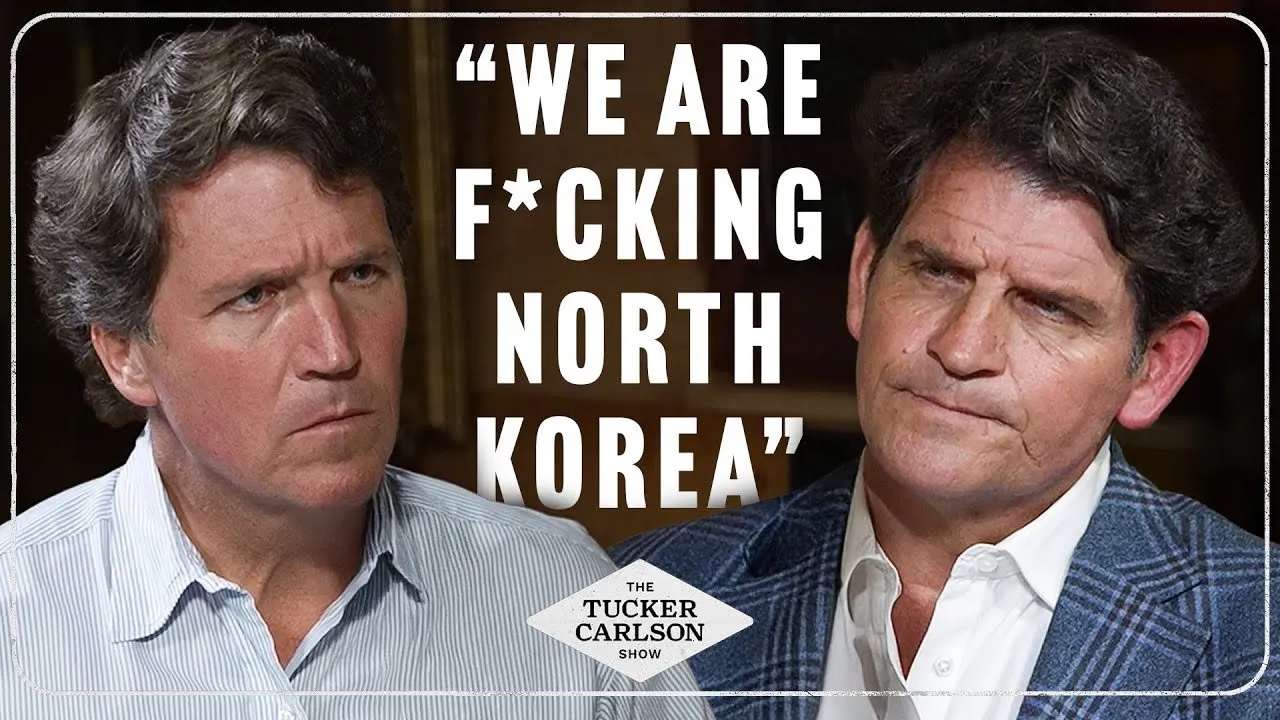
In a rare and candid exchange, Tucker Carlson sat down with his brother, Buckley Carlson—known affectionately to the internet as "Uncle Buck." What began as a conversation about Buckley’s sudden and accidental rise to fame on X (formerly Twitter) quickly evolved into a profound dialogue covering the decline of American courage, the manipulative nature of corporate messaging, and the spiritual battles defining the modern era.
Buckley, who has spent much of his life avoiding the public eye, offers a perspective that is both hilariously irreverent and deeply serious. From his battles with "woke" private school administrators to his time working inside the Washington political machine, his insights reveal a man committed to truth-telling in an age of conformity. The brothers explore their unconventional childhood, the wisdom of dogs, and why cowardice in the ruling class has become the West's greatest liability.
Key Takeaways
- The Cost of Cowardice: Buckley argues that societal conformity breeds self-loathing, which inevitably manifests as hostility toward those who refuse to submit to the mob.
- The Inversion of Values: The conversation highlights how traditional resilience (e.g., "sticks and stones") has been replaced by a culture that fears words more than physical violence.
- Corporate Manipulation: Drawing from his time with pollster Frank Luntz, Buckley reveals the calculated psychological tactics used to shape public perception, particularly regarding the pharmaceutical industry.
- The Spiritual Dimension: Both brothers agree that the current cultural and political struggles are not merely civic disagreements but rooted in a deeper spiritual conflict.
- The Wisdom of Dogs: In a lighter yet poignant segment, dogs are presented as the ultimate judges of character and essential companions for maintaining joy and perspective.
The "Uncle Buck" Phenomenon and the War on Free Speech
Buckley Carlson’s entry into the public square was unintentional. Mistaken for his brother’s son on social media, he found himself the target of online vitriol, which paradoxically launched his status as a cult figure among conservatives. However, his presence on X is less about seeking fame and more about finding the last refuge for information.
The conversation opens with a critique of the stifling atmosphere in modern America, symbolized by the "humiliating" submission required by the TSA at airports. For Buckley, these daily indignities are training grounds for compliance.
The Inversion of "Sticks and Stones"
One of the most striking observations made during the discussion is the cultural shift regarding speech and violence. The brothers reflect on the old adage, "Sticks and stones may break my bones, but words will never hurt me," noting that society has completely inverted this wisdom.
"It's actually been inverted where we've endorsed sticks and stones. Violence is no big deal... but words are the threat. That is not a Western orientation."
Buckley suggests that the suppression of speech stifles imagination and creativity, particularly in children. The modern educational environment, he argues, no longer encourages students to ask questions or deviate from the script, resulting in a generation terrified of independent thought.
Battling Indoctrination in Education
A significant portion of the interview focuses on the brothers' shared experiences as fathers navigating the elite private school system in Washington, D.C. Despite the immense financial cost, these institutions often serve as ground zero for ideological indoctrination.
Buckley recounts his refusal to remain silent when his son’s school began pushing race-based affinity groups and gender ideology on ten-year-olds. Unlike many parents who privately disagreed but publicly acquiesced to maintain social standing, Buckley chose open defiance.
The Bumper Sticker and the Harley
In a milieu where conformity is currency, Buckley’s acts of rebellion were visceral. He recalls driving a Chevy Tahoe adorned with a bumper sticker featuring a cross and anti-abortion imagery through the drop-off line of a liberal Episcopal school. Even more provocative was his decision to drop his son off at school on a Harley Davidson with "ape hanger" handlebars.
"It was a cultural violation... Pure celebration of joy and freedom. That's it. That's how I try to live my life. You're called to be joyful. In fact, you're commanded to be joyful."
This joy, however, triggered hostility from other parents. Buckley theorizes that this reaction stems from deep-seated insecurity: "Cowardice breeds self-loathing, and which turns into hostility." When people compromise their values to fit in, they despise those who refuse to do the same.
Inside the Machine: Frank Luntz and Corporate Messaging
Buckley’s professional background offers a rare glimpse into the mechanics of political and corporate manipulation. He spent years working as a writer and strategist for Frank Luntz, the renowned pollster and messaging architect. While Buckley acknowledges Luntz’s brilliance and work ethic, he paints a disturbing picture of how language is engineered to manipulate public sentiment.
The Engineering of the Opioid Crisis
The most damning revelation concerns their work for Purdue Pharma and the Sackler family. Buckley admits to being part of a "society-wide campaign" designed to convince Americans that pain is inherently evil and must be eradicated at all costs.
The messaging strategy involved shifting the blame for addiction away from the drug (OxyContin) and onto the user. If a patient became addicted, the corporate narrative framed it as a result of their own "latent addictive personality" or abuse of the product, rather than the chemical properties of the drug itself.
"We engaged in a society-wide campaign to convince Americans that there is no such thing as acceptable pain... To say that our goal is to eliminate all pain, that's evil. Failure is necessary. Pain is necessary."
This segment serves as a mea culpa and a warning about trusting institutional narratives, with Buckley noting that he initially dismissed critics of Big Pharma as anti-capitalist, only to realize later that the "blue-haired" critics were often right about the dangers.
The Decline of the WASP Elite
The conversation takes a sociological turn as the brothers discuss their own background and the decline of the White Anglo-Saxon Protestant (WASP) establishment. Once characterized by a sense of duty, stoicism, and fairness, the modern remnants of this class are depicted as fearful and apologetic.
Buckley shares an encounter with Neil Bush, brother of former President George W. Bush, which encapsulates this decline. When confronted, Bush refused to engage in a substantive debate, instead relying on passive-aggressive comments and retreating into the safety of consensus opinion (citing the New York Times). For Buckley, this interaction highlighted a total loss of will among the American elite.
The brothers argue that the defining characteristic of the old WASP elite—at its best—was a commitment to judging individuals on their merits rather than collective identity. The abandonment of this principle in favor of identity politics marks the end of that cultural era.
Canines, Nicotine, and the Good Life
Amidst the heavy cultural critique, the interview is peppered with humor and an unapologetic embrace of "vices" that the modern world demonizes.
The Philosophy of Dogs
Both brothers are avid dog lovers, with Buckley currently owning five. He describes dogs as essential for raising children because they teach kids that they are not the center of the universe. More importantly, dogs possess a wisdom and purity of emotion that humans often lack.
"They are the essence of purity... A dog will never pretend to be happy when it's not. And they have no sense of vanity."
The brothers recount a hilarious and tense standoff with Park Police in Washington, D.C., involving unleashed dogs, a taser threat, and a defiant Buckley refusing to be cowed by authority figures over-policing a meadow while ignoring actual crime in the city.
Unapologetic Nicotine Use
In a world that legalizes marijuana and celebrates psychedelics but ostracizes tobacco, Buckley remains a defiant user of nicotine pouches and cigarettes. He views the war on tobacco not as a health crusade, but as a compliance test. To him, the ritual of smoking—especially unfiltered cigarettes—is linked to a bygone era of American grit and authenticity.
Conclusion: The Spiritual Battle
Ultimately, the conversation lands on a sobering realization: the political is personal, and the personal is spiritual. Both brothers reflect on their father, a man of fearlessness and decency, and contrast his generation with the current leadership.
Buckley frankly discusses his past struggles with alcohol and his journey to sobriety, framing it as a divine intervention. This spiritual lens is applied to the state of the nation as well. The lies of the intelligence agencies, the subversion of truth, and the promotion of self-destruction are not merely policy failures—they are described as "demonic."
The interview concludes with a call to action. It is not a call for violence, but for the courage to speak the truth.
"The most profound thing you can do to fight tyranny is to tell the truth about tyranny."
For Buckley Carlson, the time for silence is over. Whether it is confronting a school board, challenging a police officer over a leash law, or speaking out on social media, the defense of liberty requires a willingness to be disliked, a commitment to joy, and an unshakeable belief in a higher power.