Table of Contents
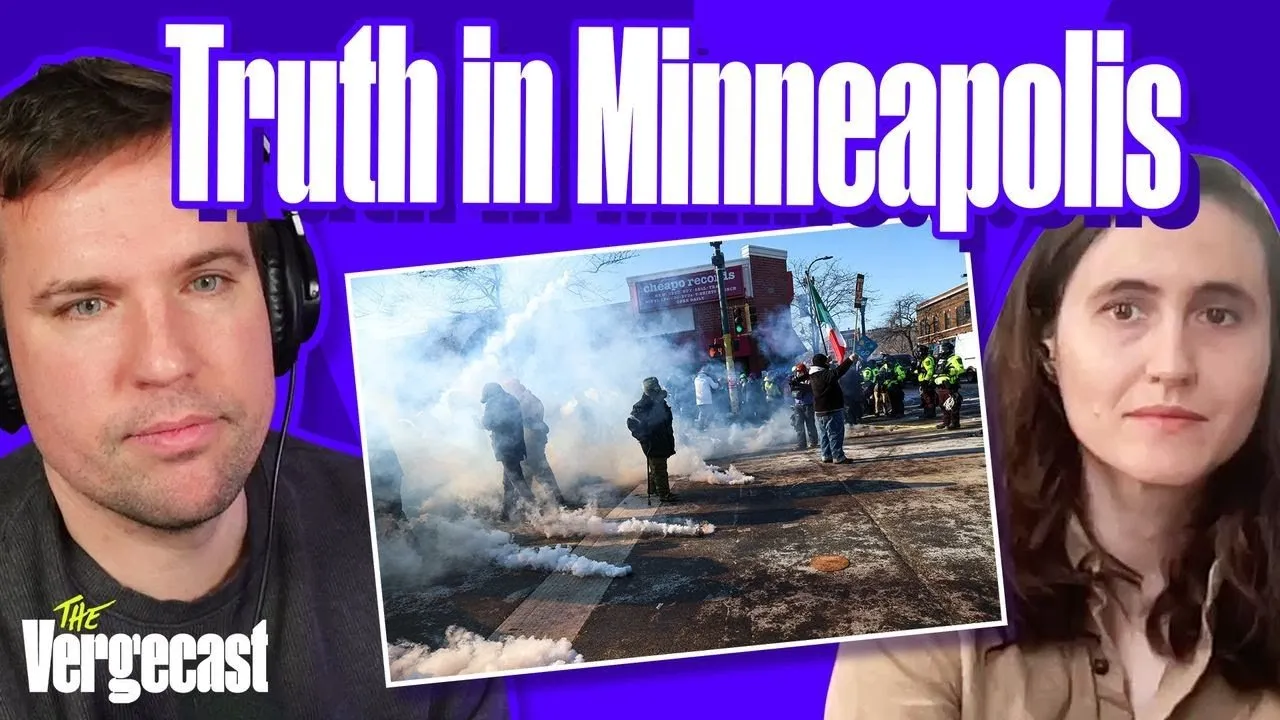
The intersection of digital truth and media consolidation dominated the latest episode of The Vergecast, as hosts and guests analyzed a week defined by a high-profile shooting in Minneapolis, a finalized TikTok ownership deal, and Netflix’s aggressive pivot into podcasting. While the events vary in scope, they share a common thread: the rapid evolution of how information is documented, distributed, and monetized in an increasingly algorithmic ecosystem.
From the distortion of video evidence by artificial intelligence to the blurring lines between television and podcasts, the digital landscape is undergoing a significant structural shift. The episode highlights how platforms are moving from being passive vessels of content to active shapers of reality and entertainment economics.
Key Points
- AI Distortion: High-quality video documentation of the Alex Pretti shooting in Minneapolis is being undermined by AI tools that hallucinate details, such as weapons, complicating the public narrative.
- TikTok’s New Era: The long-awaited ownership deal is complete, shifting concerns from foreign interference to domestic data privacy and political alignment under new US leadership.
- Netflix’s Strategy: The streaming giant is embracing "cheap television" by integrating video podcasts, signaling a move away from expensive production values toward cost-effective engagement.
AI and the Erosion of Visual Evidence
The recent killing of Alex Pretti by ICE agents in Minneapolis has become a grim case study in the collision between documenting reality and AI-generated misinformation. According to Verge reporter Adi Robertson, while the incident was documented from multiple angles—a transparency improvement compared to previous cases like that of Renee Good—the clarity of the footage has not prevented distortion.
Robertson and host David Pierce discussed a disturbing trend where AI tools, used ostensibly to "enhance" blurry images, are altering historical facts. In one widely circulated instance, AI software interpreted a blurry object in Pretti's hand as a gun, despite video evidence showing he had been disarmed. This phenomenon suggests that generative AI tends to fill in data gaps with probabilistic outcomes, often reinforcing biases.
"Nobody has really established a social way to deal with AI as a stereotype machine. And what it does is give you the most plausible narrative outcome, which is a stereotype."
The speed at which misinformation now travels matches the speed of documentation. While provenance—the ability to trace the origin of an image—remains possible for researchers, the average viewer dropping into the middle of a story on social media faces an increasingly difficult task in discerning truth from algorithmic fiction.
TikTok’s Ownership and Data Privacy
Following years of regulatory scrutiny, the TikTok deal has officially closed, placing TikTok US under new ownership involving Oracle and Larry Ellison. While the move was ostensibly designed to separate the platform from its Chinese parent company, ByteDance, and secure US user data, The Vergecast team suggests the "black box" nature of the platform remains.
The new ownership structure brings updated terms of service, which reportedly allow for the collection of sensitive data, including biometric information and political affiliations. However, the primary concern has shifted from foreign espionage to domestic political influence. Robertson drew parallels between the potential trajectory of TikTok and the transformation of X (formerly Twitter) under Elon Musk.
"The intent of the people who own TikTok and the intent of the people that they are working with has become somewhat dramatically different... The good case scenario is capitalism works... [but] X is sort of the worst case scenario for what we see with TikTok now."
The transition involves training a new algorithm exclusively on US data, a process that has reportedly caused temporary glitches and user experience degradation. The long-term implication is a platform that may be less susceptible to foreign influence but arguably more vulnerable to domestic political pressures and "censorship in the actual government sense."
Netflix and the Rise of 'Cheap Television'
In a sharp pivot from serious news to entertainment strategy, Netflix has begun integrating video podcasts into its service, signing deals with major networks like Barstool, iHeart, and The Ringer. Additionally, the streamer is commissioning original shows featuring talent like Pete Davidson and Michael Irvin.
According to podcast critic and New York Magazine writer Nick Quah, this move represents a collapse of categories. Netflix is leveraging the podcast format to produce talk show content at a fraction of the traditional cost. By utilizing "webcam aesthetic" productions rather than studio-quality setups, Netflix can drive engagement without the overhead of shows like The Late Show.
The Industrial Logic of Content
Quah described this strategy as "machine logic"—a way to generate maximum retention for minimal investment. While traditional television relies on prestige and production value, the new wave of video podcasts prioritizes volume and personality. This blurs the line between a "podcast" and a "TV show," creating a new tier of entertainment that Quah refers to as "cheap television."
"It really does feel like we have two kinds of podcasts now. You have podcasts as we know it... and then there's like cheap television. And that is Netflix's play... Many of those shows visually are uninteresting, but they can get to a point where it is meeting local access cable standards."
The panel noted that while this dilutes the aesthetic quality of the platform, it aligns with modern consumption habits where audiences are accustomed to watching low-fidelity video on YouTube. The move also serves as a defensive strategy against YouTube's dominance in the podcasting space, offering Netflix a steady stream of "shoulder content" to keep subscribers within its ecosystem.
What’s Next
As these stories develop, the common challenge for consumers is navigating a media environment where definitions are in flux. In Minneapolis, the immediate hurdle is establishing a factual narrative in an era of AI distortion. For TikTok users, the coming months will reveal whether the platform's "vibes" and algorithm shift under new ownership. Meanwhile, Netflix’s experiment will test whether subscribers are willing to accept lower production values in exchange for star power and convenience.