Table of Contents
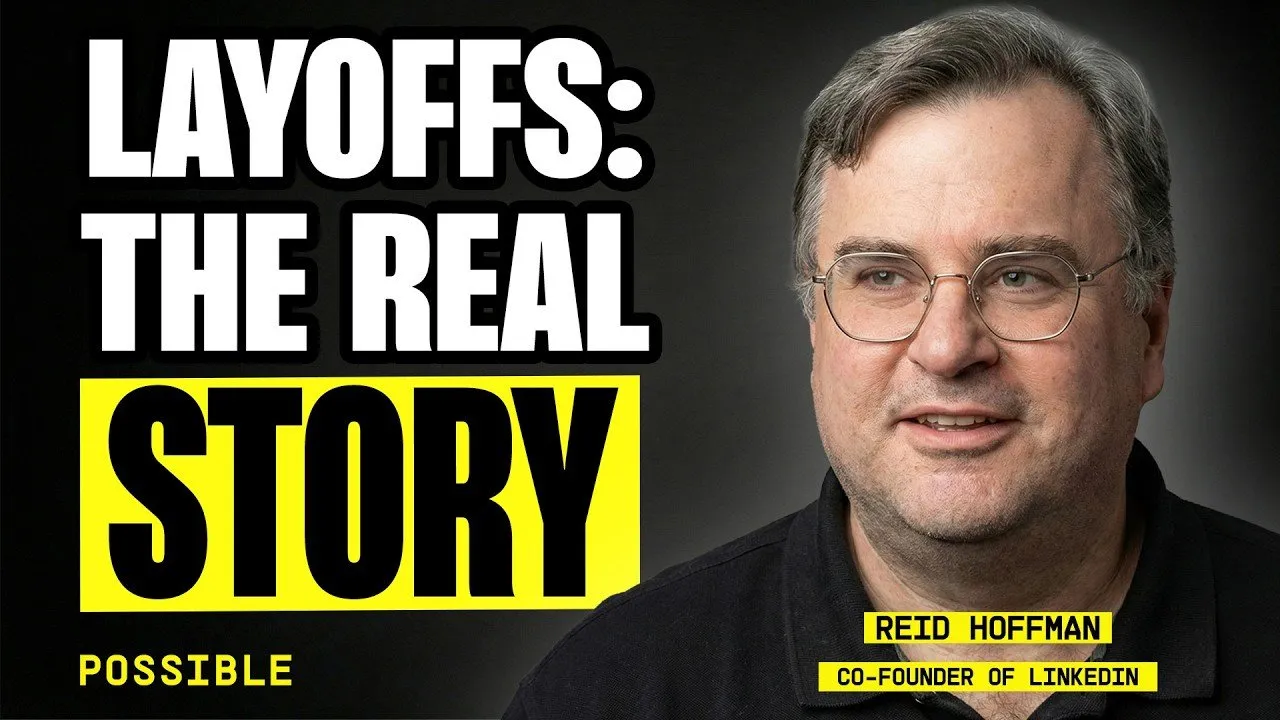
The technology sector is currently navigating a period of profound turbulence. January marked the worst month for job cut announcements since the Great Recession, with over 100,000 cuts announced—a 120% increase year-over-year. As headlines swirl linking these reductions to artificial intelligence, anxiety in the workforce is palpable. However, a closer look at the data suggests that the narrative of AI displacing workers is not as straightforward as it seems.
Beyond the labor market, the industry is grappling with the rapid evolution of autonomous AI agents and a growing moral imperative for business leaders to engage in political discourse. From the economic rationale behind layoffs to the ethical responsibilities of Silicon Valley, understanding these shifting dynamics is crucial for navigating the year ahead.
Key Takeaways
- Layoffs are primarily economic, not technological: Current job cuts are largely a result of post-COVID organizational restructuring and tariff uncertainty, rather than direct replacement by AI.
- The "AI Layoff Demon": Companies are rebranding financial course corrections as "AI pivots" to signal innovation and strength to investors, rather than admitting to financial weakness.
- The shift to Agentic AI: We are moving from chatbots to autonomous agents that perform actions, introducing new challenges regarding security and liability.
- Silence is complicity: There is a growing argument that tech leaders have a moral obligation to speak out against government actions that violate the rule of law, moving beyond neutrality.
Deciphering the "AI" Layoff Wave
The recent surge in job cuts, particularly within major organizations like Amazon and UPS, has triggered a debate about the role of automation in the workforce. While it is tempting to attribute these reductions to the rise of Generative AI, the reality on the ground paints a different picture. Most economists and industry insiders suggest that we are currently witnessing a "refactoring" of the workforce rather than a technological replacement.
During the COVID-19 pandemic, many companies engaged in aggressive hiring sprees that created organizational inefficiencies. As the market stabilizes, businesses are correcting these over-extensions. Furthermore, the current business environment is defined by unpredictability, particularly regarding tariffs and global economic policy. When businesses cannot predict costs, they retract investment and reduce headcount to preserve capital.
"I literally know of CEOs who have said, 'If I could sell my US business unit I will because I can't deal with this roller coaster anymore.' And so, you know, there's all of that factoring in as well."
While direct AI job replacement may eventually impact sectors like customer service—potentially surfacing in the data by 2026 or 2027—current layoffs are largely a symptom of traditional economic cycles and organizational restructuring.
The Strategic Pivot: AI as a Signal of Strength
If AI isn't the primary driver of layoffs yet, why is it dominating the headlines? A fascinating phenomenon has emerged where companies are incentivized to attribute job cuts to artificial intelligence. In the traditional market narrative, layoffs are a red flag—a signal that a company is in distress, revenue is collapsing, or management has failed. This perception often leads to a drop in investor confidence.
However, by blaming the "AI Layoff Demon," companies can flip the script. Instead of looking weak, a company claiming to cut jobs to focus on AI adoption appears forward-thinking, efficient, and technologically aggressive. This narrative frames the reduction not as a failure, but as a strategic evolution.
The Hero vs. Villain Narrative
This branding aligns with a media ecosystem that thrives on the dramatic "human vs. machine" conflict. It creates a convenient cover for executives who need to reduce costs without spooking the markets. Consequently, we are seeing a disconnect where CEOs publicly embrace AI-driven restructuring as a signal of strength, even if the underlying operational changes are simply standard fiscal tightening.
The Era of Agentic AI
While AI may not be replacing the workforce en masse today, the technology itself is evolving rapidly. The industry is moving past simple chatbots toward "agentic" tools—software capable of reasoning and executing tasks across emails, calendars, and browsers. This shift represents a massive leap in productivity, allowing AI to act as a genuine employee rather than just a passive tool.
This evolution brings the promise of democratization. Just as coding accelerators speed up software development, agentic AI can amplify productivity in legal work, research, and education, making high-level professional services accessible to a broader population.
Navigating Security and Liability
The transition to agents that can "do" things raises significant security concerns. Giving an algorithm access to credit cards or sensitive inboxes introduces new attack surfaces, from prompt injections to potential botnet vulnerabilities. We are likely approaching a cultural moment where the "dog ate my homework" excuse evolves into "my agent did it."
"We will see at some point someone saying, 'No, no, I didn't do that thing. That was my agent. I didn't post on social media. I didn't buy that thing. It was just my agent run amok.'"
Despite these risks, mass adoption will likely follow a trajectory similar to email or autonomous vehicles. Users will not wait for "zero risk." Instead, they will adopt the technology once it proves to be safer or more effective than the human alternative. The immense value of having an automated assistant handle logistical drudgery will eventually outweigh the fear of potential errors.
The Moral Obligation of Tech Leadership
Beyond economics and technology, there is a pressing conversation regarding the political responsibilities of Silicon Valley. For years, the prevailing wisdom for tech leaders has been to maintain neutrality—to focus on business and avoid the fray of partisan politics. However, recent developments have challenged this stance.
There is a growing argument that when administrative actions threaten fundamental democratic values—such as the rule of law or the safety of citizens—neutrality becomes a form of complicity. This goes beyond disagreements over tax rates or regulation. It touches on core American values, such as due process and protection from state-sanctioned violence.
"If you're silent, you're complicit... It's not your place to speak out about not having murders in your country perpetuated? What do you think is your place?"
Business leaders are increasingly being called upon to stand up against rhetoric and actions that categorize segments of the population as enemies. Speaking out requires courage, particularly when doing so invites political retribution. Yet, history suggests that safety lies in numbers; when a collective of leaders refuses to accept the normalization of violence or authoritarian overreach, it becomes difficult for any administration to target them individually.
Conclusion
The current landscape requires a nuanced understanding of three intersecting forces: the economic reality of layoffs, the technological promise of autonomous agents, and the moral weight of political leadership. While AI is not the immediate cause of workforce reductions, it is the defining tool of the future. For professionals, the best defense against uncertainty is to become "AI-native," mastering the tools that will eventually reshape industries.
Simultaneously, the industry must recognize that innovation does not exist in a vacuum. As technology becomes more integrated into daily life, the leaders who build it must also be willing to defend the democratic structures that allow innovation to thrive. The path forward involves not just adapting to new tools, but also holding firm to timeless values.