
Table of Contents
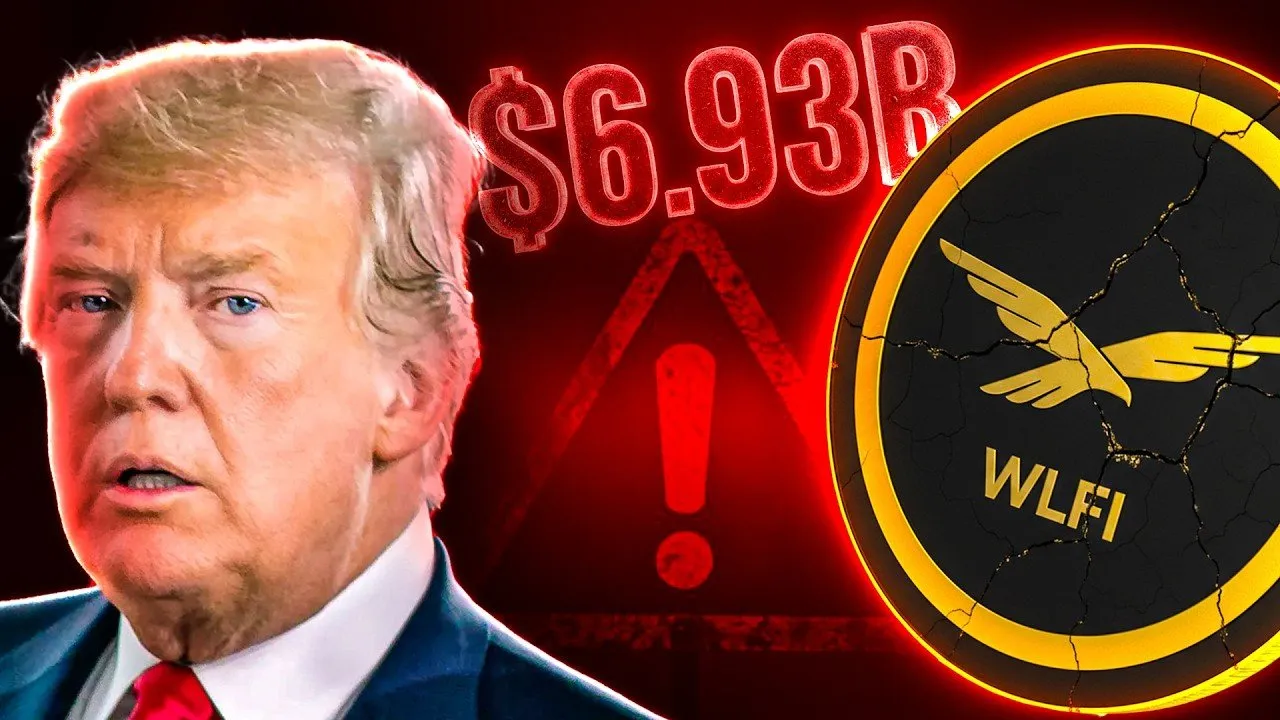
A recent report by data analytics platform Amber Data reveals that World Liberty Financial (WLFI), the decentralized finance (DeFi) protocol associated with the Trump family, may have functioned as a leading indicator for the $6.93 billion cryptocurrency market liquidation event on October 10. The findings suggest that extreme volatility and insider-driven trading volume in the WLFI token preceded Bitcoin’s collapse by more than five hours, highlighting a growing correlation between political tokens and systemic market risk.
Key Points
- WLFI experienced a massive sell-off starting at 3:32 p.m. UTC, providing a 5-hour and 18-minute early warning before the broader crypto market began its descent.
- Trading volume for the token plummeted into a "death spiral" following a 21.7x spike in activity that occurred just three minutes after a major political announcement.
- The protocol’s funding rate reached 2.8% (approximately 131% annualized) in the hours prior to the crash, signaling unsustainable speculative pressure.
- Liquidity within 20 basis points of the market price for WLFI evaporated by over 99% during the crisis, falling from $1.8 million to just $10,000.
The China Tariff Catalyst and Insider Activity
The Amber Data report, titled "Coincidence or Signal? Did WLFI Telegraph Crypto's $6.93 Billion Meltdown?", identifies a specific timeline connecting political rhetoric to market movement. On October 10, at 2:57 p.m. UTC, Donald J. Trump announced via Truth Social that the U.S. would impose 100% tariffs on China. Within three minutes, WLFI’s hourly trading volume skyrocketed from a baseline of $22 million to over $474 million.
Analysts suggest this surge was likely driven by large-scale insiders—including political advisors and affiliated investors—rather than retail participants. This concentrated exit occurred while Bitcoin (BTC) remained stable at approximately $121,000. It was not until 8:50 p.m. UTC that Bitcoin finally succumbed to the pressure, dragging the wider market down. According to the report:
"The October 10th cascade demonstrates that political tokens function as information transmission mechanisms. WLFI's initial sell-off basically gave a 5-hour and 18-minute warning that pain was coming."
Market Microstructure and the "Death Spiral"
While WLFI’s market capitalization is significantly smaller than Bitcoin’s, its impact was amplified through the interconnected nature of cross-margin systems. As WLFI’s price dropped 55%, leverage traders faced immediate collateral devaluation. This triggered margin calls that forced the liquidation of more liquid assets, such as BTC and ETH, to meet maintenance requirements.
The report highlights that WLFI’s realized volatility surged to 671% during the event—nearly eight times higher than Bitcoin’s 84%. This "high beta" characteristic makes political tokens hyper-sensitive to emerging systemic stress. The exhaustion of the order book further exacerbated the decline, as liquidity provision proved asymmetric.
"In interconnected leverage systems, the weakest structural link provides the earliest signal of systematic stress."
Implications for Digital Asset Management
The WLFI event serves as a case study for the risks inherent in tokens with high insider concentration and political ties. The report notes that these assets often operate within "information clusters," where insiders can respond to policy signals minutes before the general public. For institutional and retail investors, monitoring funding rate stress and volatility divergences in these niche tokens may now be a necessary component of risk management.
As the crypto market attempts to stabilize and leverage begins to rebuild, analysts warn that political tensions will likely continue to drive volatility. Investors are advised to treat political tokens not merely as speculative vehicles, but as high-sensitivity barometers for broader market health. Future spikes in volume or sudden liquidity evaporation in these assets may provide the necessary window to reposition before larger "reserve assets" like Bitcoin follow suit.


)