
Table of Contents
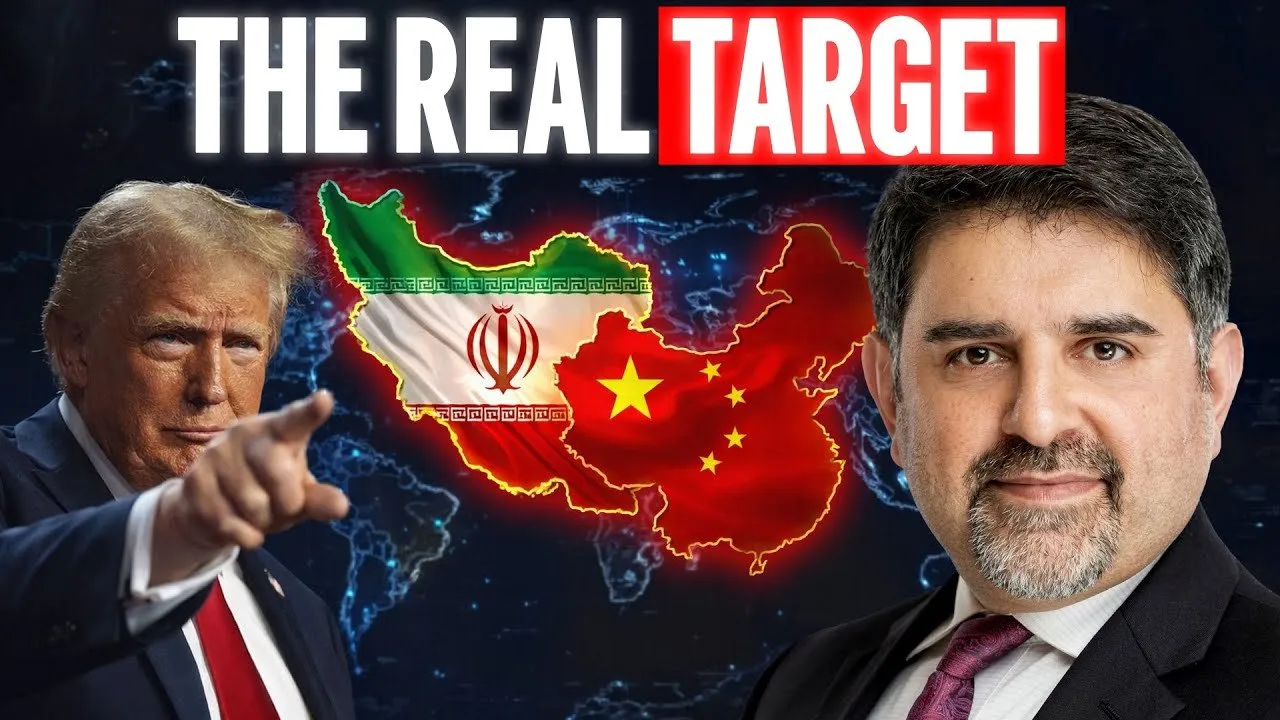
In an era defined by an overwhelming surge of information, our collective ability to analyze complex geopolitical shifts has arguably diminished. We find ourselves increasingly prone to partisan narratives and oversimplified conspiracy theories, even as the global landscape undergoes its most significant transformation since the end of the Cold War. To understand the current trajectory of American foreign policy—specifically regarding Iran, China, and the shifting "New World Order"—we must look beyond surface-level headlines and examine the underlying strategy of retrenchment and burden-shifting.
Key Takeaways
- Strategic Retrenchment: The current U.S. grand strategy focuses on shifting security burdens to regional allies, allowing the U.S. to pivot focus toward the Western Pacific and domestic stability.
- The Iran Equation: Rather than pursuing regime change, the U.S. is utilizing kinetic force to neutralize "irreconcilable" threats, aiming to pressure the Iranian regime into a negotiated settlement.
- China's Complex Role: The U.S.-China relationship remains a delicate balance between zero-sum competition in regional outposts like Venezuela and necessary economic interdependence.
- Moving Beyond Cold War Models: Superpower status in the 21st century requires navigating a multi-polar world where technology—ranging from AI to autonomous drones—has democratized power, shifting the influence of traditional military platforms.
The Logic of U.S. Grand Strategy
There is a persistent, albeit misleading, narrative that current U.S. foreign policy is trending toward isolationism. However, a more accurate characterization is burden-shifting. Following the post-WWII era, the United States served as the primary security guarantor across the Eurasian landmass. Modern strategy, however, recognizes that the United States is fundamentally an oceanic power. By fostering stability through regional partnerships—such as an emerging equilibrium between Israel, Turkey, and Saudi Arabia—the U.S. aims to move away from the "forever wars" model while still protecting its core interests.
Addressing the "Loose Ends"
One cannot simply flip a switch to end foreign entanglements. Before the U.S. can effectively retrench, it must address pre-existing security threats that jeopardize the desired stability. Iran’s nuclear ambitions, ballistic missile proliferation, and extensive proxy networks represent the most immediate "loose ends" in the Middle East. Kinetic operations are not necessarily aimed at toppling the regime, which would lead to unpredictable anarchy, but rather at forcing a recalibration of the regime's behavior to make it more manageable within a new regional order.
The Delicate Balance with Iran
The Iranian situation presents a paradox: the U.S. seeks to eliminate threats without triggering a total collapse of the state. Because Iran is vast and internally complex, a "Venezuela-style" surgical removal of leadership is not feasible. Instead, the U.S. seeks to erode the influence of hardliners while keeping channels open for pragmatic elements within the military and clergy. The goal is to reach a deal that limits nuclear capability and missile proliferation, acknowledging that the regime may never be a friend, but it can be rendered less hostile.
"The goal was to bring forth, keep this regime but change its behavior. How do you change its behavior is partially by getting rid of people who are irreconcilable and partly by working with those who are reconcilable." — Kamran Bokhari
Navigating the China Relationship
The relationship with China is arguably the defining challenge of our time. It is neither purely antagonistic nor purely cooperative; it is a nuanced, shifting dynamic. While the U.S. and China may clash over influence in the Western Hemisphere—such as in Cuba or Venezuela—the two nations are deeply integrated economically. A total economic decoupling would likely be catastrophic for both.
The Constraint Factor
Observers often overestimate the ability of rival powers to challenge the U.S. militarily, failing to account for the internal pressures these nations face. China is currently managing a significant economic correction, including challenges in its housing market and domestic political purges. As geopolitics evolve, the U.S. must carefully calibrate its response, ensuring that Chinese technological advancements do not transition into insurmountable military threats, all while maintaining the global commons.
Geopolitical Realism in a Technological Age
We are currently witnessing a historic shift in how power is projected. While the U.S. continues to rely on legacy platforms like aircraft carriers, these are increasingly vulnerable to low-cost, high-impact technologies like swarming drones. This democratization of military capability means that even middle powers and non-state actors now possess tools that were once the exclusive domain of superpowers.
"Technology is not just the monopoly of the big powers anymore. Those days are long gone. We now have middle powers and even smaller countries... that are also engaging in this technological innovation." — Kamran Bokhari
The Future of Leadership
As the U.S. navigates these transitions, the emergence of figures like Marco Rubio reflects a growing focus on aligning diplomatic, intelligence, and military strategy. Future domestic political landscapes will be shaped by how leaders manage these international pressures alongside voter demands for domestic prosperity. The task for any future administration is to balance these global responsibilities with the realities of a strained federal budget and a public wary of extended foreign commitments.
Conclusion
The path forward for the United States is not found in the binary choice between world police and total isolation. Rather, it lies in a disciplined, pragmatic approach to power management. By resolving regional crises, checking the reach of rival powers, and leveraging the strengths of key allies, the U.S. can navigate the uncertainties of the 21st century. The era of the post-WWII system is evolving, and the coming years will be defined by the ability of policymakers to distinguish between necessary engagements and avoidable traps, all while maintaining the agility required to thrive in a high-tech, multipolar world.

![Bitcoin: An Unfortunate Pattern [Update]](/content/images/size/w1304/format/webp/2026/03/bitcoin-unfortunate-pattern-update.jpg)
![The Last 4 Times This Happened Markets Crashed [History Repeating?]](/content/images/size/w1304/format/webp/2026/03/strait-of-hormuz-oil-market-crash-risk.jpg)
