Table of Contents
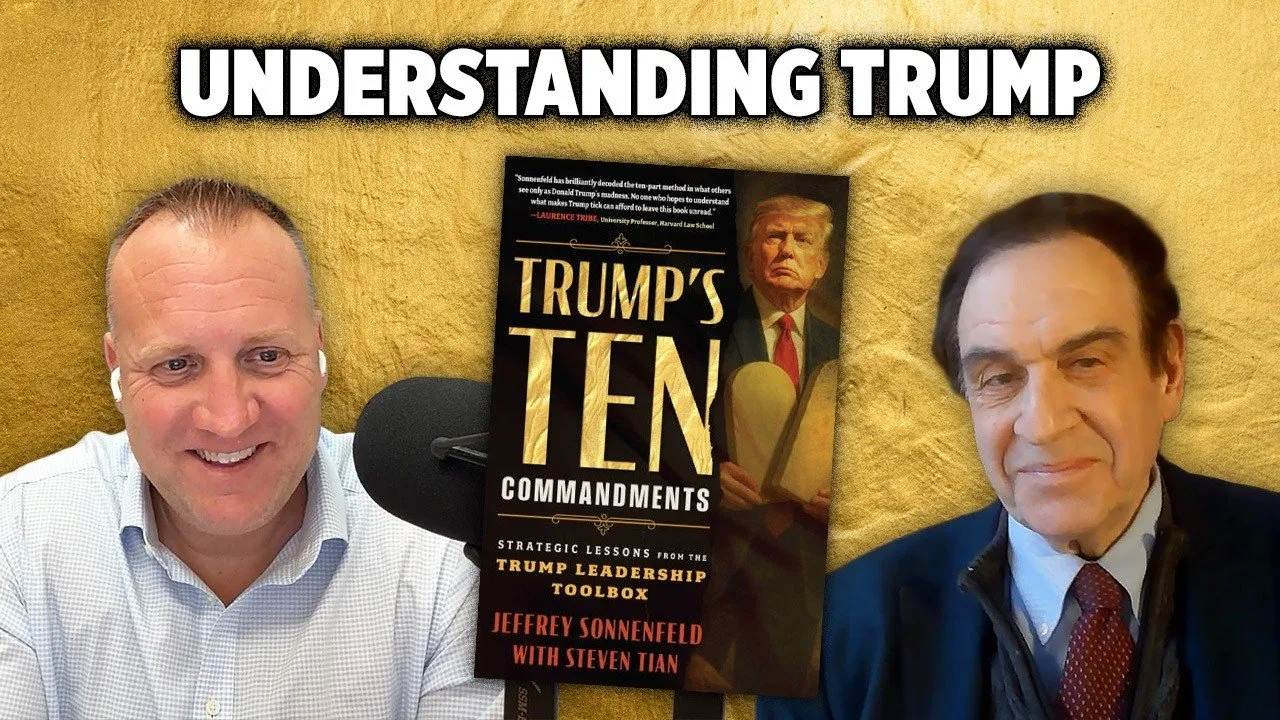
Understanding Donald Trump’s leadership style requires moving beyond the daily cycle of outrage and confusion. While critics often dismiss his actions as chaotic or impulsive, a closer analysis of his long-term behavioral patterns reveals a highly strategic, albeit unorthodox, framework. In his new book, Trump’s Ten Commandments: Strategic Lessons from the Trump Leadership Toolbox, Yale professor Jeffrey Sonnenfeld argues that by decoding the predictable rhythms of Trump's decision-making, both supporters and adversaries can better navigate the political and corporate landscapes he influences.
Key Takeaways
- Patterned Behavior: Trump’s actions are not random outbursts but calculated moves based on a consistent, repeatable leadership playbook.
- The Power of Collective Action: Trump excels at divide-and-conquer tactics; however, organized, unified pushback from industry coalitions has historically proven effective in checking his influence.
- Strategic Pragmatism: Despite his public rhetoric, Trump often shifts positions based on pragmatism, particularly when dealing with individuals or entities that command significant audiences or economic power.
- Understanding the Mythos: Effective opposition requires ignoring personal provocations and focusing on structural counter-messaging rather than getting caught in battles of personality or pride.
The Anatomy of an Unorthodox Leader
For decades, the prevailing narrative surrounding Donald Trump has swung between blind adulation and intense condemnation. According to Professor Sonnenfeld, this binary perspective misses the point. Trump’s leadership is built on a "hub-and-spoke" system, placing himself at the center of all influence and intentionally avoiding traditional bureaucratic hurdles like extensive Senate confirmations. This allows him to maintain a core group of loyalists beholden only to him, effectively dismantling traditional civil service structures.
Moving Past the "Ignorant" Narrative
Critics frequently fall into the trap of assuming Trump’s unorthodox approach stems from ignorance. Sonnenfeld notes that this is a critical tactical error. Even when Trump lacks specific historical or geographical expertise, he displays a fox-like intelligence in navigating power dynamics. His moves—whether they involve trade wars or corporate boycotts—are designed to prevent the formation of power bases that could threaten his control. As Sonnenfeld explains, Trump instinctively understands that the greatest threat to a singular leader is organized, collective action.
"He doesn't like there to be any power bases that can be a threat to him and any bully knows this that your greatest threat aren't the individual players but the collective action."
Strategic Responses for Business and Policy
For corporate leaders and investors, the "Trump factor" represents a unique category of risk. Sonnenfeld suggests that direct, public confrontation rarely works because Trump prioritizes avoiding the loss of face above nearly everything else. When corporations attempt to challenge him in isolation, they often suffer negative consequences. However, the data suggests that when industries act collectively and privately, they can achieve favorable outcomes.
Navigating the Influence of Coalitions
The success of the business community in moderating certain policy decisions—such as visa restrictions or specific tariff implementations—often comes down to presenting factual, high-stakes information to those within Trump’s inner circle. When leaders move away from grandstanding and instead engage in small, private, and unified groups, they can guide the administration toward decisions that align with national interests. The goal is to provide "air cover" for one another, creating a collective bargaining position that Trump respects because it represents a genuine constituency of economic power.
The Art of the "Sleeper Effect"
One of Trump’s most potent tools is what communication scholars call the sleeper effect. By repeating specific messages over time, he manages to embed ideas into the public consciousness, regardless of their factual accuracy. He effectively manages the news cycle, often using dramatic shifts—such as sudden threats of military or economic intervention—to wipe the slate clean when negative headlines threaten to dominate his weekend.
Why Humiliation Fails as a Strategy
Sonnenfeld emphasizes that Trump’s ego is a central driver of his behavior. For leaders looking to manage their relationship with the administration, the advice is simple: avoid public humiliation. Trump views his political and business life as a series of audience interactions. If a person or entity has a large following, he is often willing to overlook past conflicts and engage in a newfound partnership, provided there is a strategic benefit to doing so.
"Nobody ever called Alexander III of Macedonia Alexander the Great until he called himself that. You're not going to puncture the mythmaking that Trump was."
Mastering the Playbook for Future Engagement
Ultimately, the objective of Sonnenfeld’s work is to move the conversation from reactionary emotional responses to informed, strategic engagement. Whether you agree with his policies or oppose them, the reality is that the Trump playbook remains a fixed variable in global affairs. Understanding that these moves are not impulsive, but are instead derived from a long-standing set of "commandments," allows for a more rational approach to policy and business planning.
"If you're a critic of his... you need to understand what is your counter messaging that you want to get out there."
By studying the patterns—the tendency toward bilateral negotiations, the preference for loyalty over expertise, and the deliberate use of populist rhetoric—readers can gain a clearer perspective on what to expect next. As the political landscape continues to evolve, those who take the time to decode the logic behind the noise will find themselves significantly better prepared to anticipate the administration's next move and react with precision rather than panic.