Table of Contents
In a marathon session that blurred the lines between a traditional political address and a high-stakes variety show, the latest State of the Union has left the political establishment and the public alike processing a whirlwind of policy shifts and rhetorical grenades. Spanning nearly two hours, the address attempted to frame a "Golden Age of America" while navigating the turbulent waters of a looming midterm season. From the literal distribution of medals on the House floor to the announcement of a "War on Fraud," the evening was a testament to a presidency that remains as unpredictable as it is polarizing.
Key Takeaways
- A Showman’s Marathon: Clocking in at nearly 120 minutes, the speech utilized guest appearances—ranging from Olympic gold medalists to released political prisoners—to create a "variety show" atmosphere designed for viral social media consumption.
- Economic Populism 2.0: The introduction of "Trump Accounts" for children and the conceptual shift of tariffs potentially replacing income tax signaled a radical reimagining of the Republican economic platform.
- Aggressive Foreign Policy: The President highlighted "Operation Midnight Hammer" against Iran and the capture of Nicolas Maduro, signaling a shift toward direct military interventionism without the rhetoric of "democracy building."
- Domestic Flashpoints: Immigration remained the central theme, with the proposed "Delilah Law" and a renewed focus on criminal aliens serving as a strategic pivot to regain ground lost during recent controversial ICE operations.
The Spectacle of the Union: Showmanship at Scale
The atmosphere in the House chamber was described by observers as "Castroesque" in its length and "UFC-inclined" in its delivery. Rather than a dry recitation of legislative goals, the President leaned heavily into his role as a producer, utilizing the gallery to punctuate his points with emotional highs. The presence of the men’s Olympic hockey team and the awarding of the Congressional Medal of Honor to multiple veterans transformed the evening into a celebration of American exceptionalism.
A Shift in Venue Strategy
Political analysts noted that the speech was clearly designed for the digital age. By backing away from the lectern after "verbal grenades," the President created distinct "blast radii" meant to goad the opposition into outbursts. For the administration, the goal was less about convincing the lawmakers in the room and more about providing "catnip" for the base through cuttable social media clips.
The Rhetoric of Victory
Throughout the address, the President maintained a dual reality: one where the nation is currently winning "so much that we really don’t know what to do about it," and another where it remains under siege by "Somali pirates" and "deranged monsters" allowed in by his predecessors. This contrast served to keep the base motivated while attempting to frame any current economic unease as a remnant of past failures.
"The revolution that began in 1776 has not ended. It still continues because the flame of liberty still burns."
Economic "Golden Age" and the New Fiscal Frontier
The economic portion of the speech was a mix of standard Republican tax-cut celebration and radical new proposals. The President touted a roaring economy with the Dow Jones breaking 50,000, but the real news lay in the specific mechanisms proposed to maintain this momentum. The "War on Fraud," led by Vice President JD Vance, was framed as a way to balance the budget almost overnight by clawing back billions in misspent taxpayer funds.
"Trump Accounts" and Private Investment
A major policy pillar introduced was the "Trump Account"—tax-free investment accounts for every American child. This initiative, partially funded by massive private donations from tech figures like Michael Dell, aims to provide every child with a significant nest egg by age 18. Critics argue this bypasses traditional social safety nets, while supporters see it as the ultimate realization of the American dream through private-public partnership.
The End of Income Tax?
Perhaps the most significant long-term policy hint was the President's suggestion that tariffs could eventually replace the modern system of income tax. By framing tariffs as a "sales tax" paid by foreign countries, the administration is signaling a shift toward a mercantalist trade strategy that puts domestic manufacturing above all else. However, panelists noted that this remains a point of friction with the Supreme Court and swing-state voters concerned about rising costs.
Foreign Policy: Direct Action Over Diplomacy
The foreign policy section was notable not just for what was said, but for what was missing. "Democracy," "liberty," and "human rights" were largely absent from the lexicon. Instead, the focus was on the efficacy of American power. The mention of Operation Midnight Hammer—an Iranian soil strike—served as a stark warning to the Islamic Republic regarding their nuclear ambitions.
The Venezuelan Pivot
The President celebrated the capture of Nicholas Maduro and the installation of a new leadership structure in Venezuela. However, foreign policy experts like Elliot Abrams pointed out a lack of clarity regarding the "legitimate" status of the new government, noting that the President seemed more interested in "working closely" with regime remnants than ensuring a democratic transition.
"I will never allow the world’s number one sponsor of terror to have a nuclear weapon. Can’t let that happen."
The "Iceberg" of 2026: Midterm Implications
With the 2026 midterms looming, the speech served as a de facto campaign kickoff. For Republicans, the challenge remains holding the House in a year where historical trends favor the opposition. Democratic strategists like Brianna Wu argue that the current administration is vulnerable on "kitchen table" issues like housing affordability, despite the President's claims of an economic turnaround.
The Middle Ground and the Resistance
The panel discussed the widening gap between the "resistance" wing of the Democratic party and the moderate voters required to win in states like Texas and Virginia. While the President’s rhetoric on immigration—specifically the "Delilah Law"—is aimed at reclaiming the middle, Democrats are betting on a backlash against what they perceive as executive overreach and the "chaos" of ICE operations in cities like Minneapolis.
The Spanberger Response
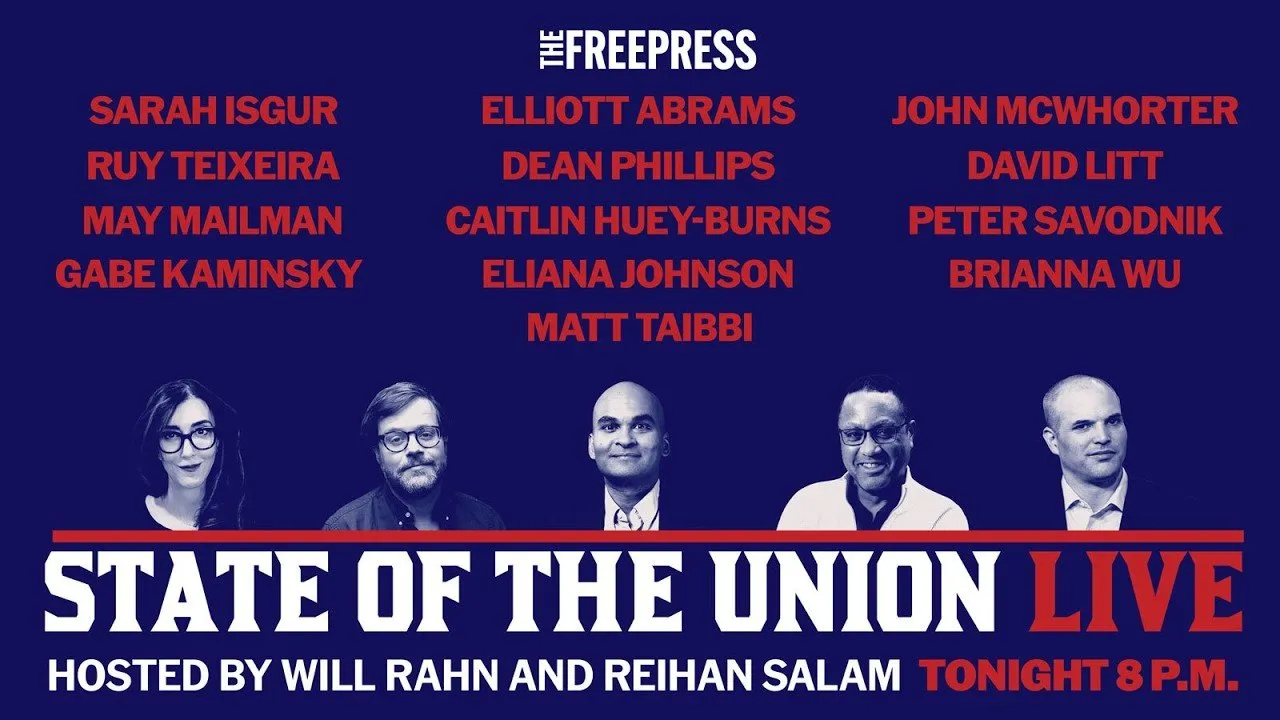
The Democratic response, delivered by Governor Abigail Spanberger, was watched closely as a bellwether for the party’s future. Panelists noted that her ability to strike a "culturally normal" tone—focusing on costs rather than identity politics—will be the key to whether Democrats can capitalize on the President’s polarizing nature.
"The Titanic didn't have a communications problem. The Titanic had an iceberg problem."
Conclusion: A Nation in Stasis
Ultimately, the State of the Union was a study in negative polarization. To the President's supporters, it was an assertive, high-energy defense of American sovereignty and prosperity. To his detractors, it was a 120-minute exercise in bluster and dangerous unilateralism. As the country moves into the 250th anniversary of its independence, the speech made one thing clear: the current administration has no intention of slowing down, preferring to "drill, baby, drill" through both energy reserves and political norms alike.