Table of Contents
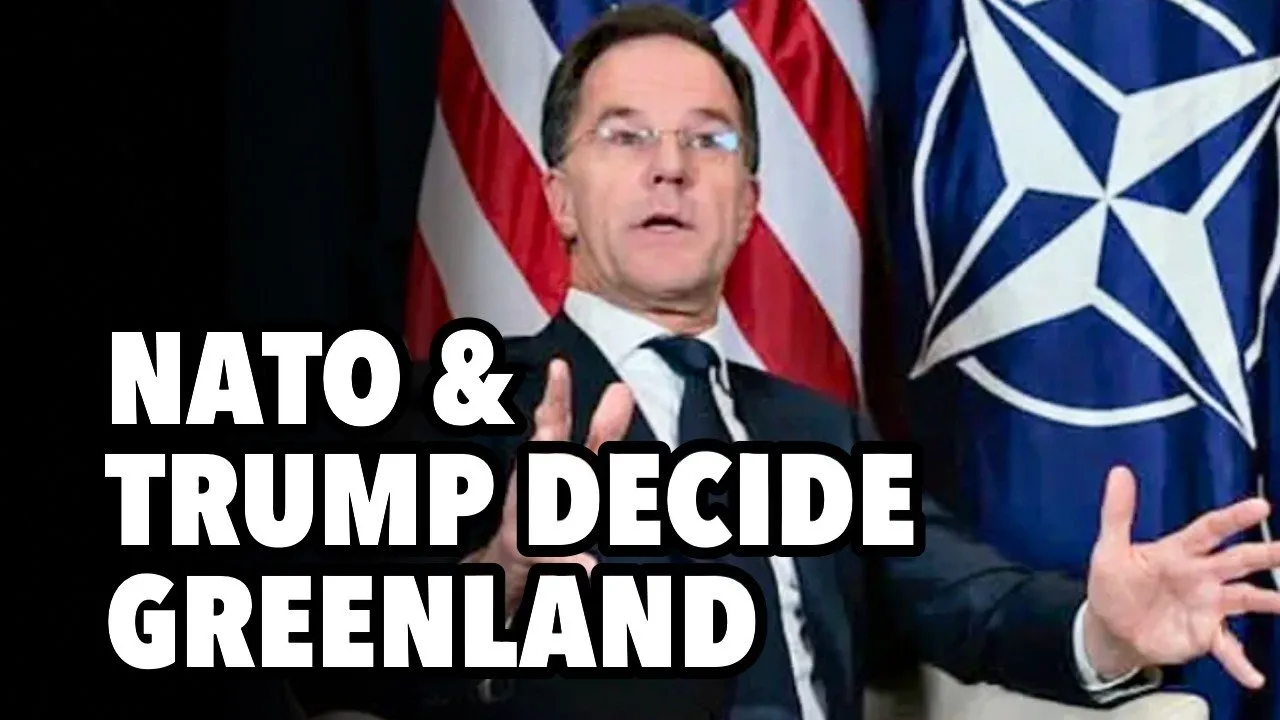
In a geopolitical development that challenges the conventional understanding of national sovereignty, a framework agreement regarding the future of Greenland has reportedly been reached—not between the United States and Denmark, but between President Donald Trump and NATO Secretary General Mark Rutte. Meeting in Davos, the two leaders effectively negotiated the territorial status of Greenland without the presence or consent of the Danish government or Greenlandic representatives. This unprecedented diplomatic maneuver suggests a fundamental shift in how the Atlantic alliance operates, prioritizing bureaucratic consensus and strategic military acquisition over the territorial integrity of its smaller member states.
Key Takeaways
- The "Cyprus Model" Framework: The proposed deal grants the United States sovereign control over specific pockets of Greenland, similar to the British Sovereign Base Areas in Cyprus, effectively fracturing Greenland's territory.
- Diplomatic Exclusion: The agreement was negotiated entirely between the Trump administration and NATO leadership, with Denmark explicitly excluded from the table despite holding sovereignty over Greenland.
- Strategic Trade-offs: Evidence suggests European powers authorized Rutte to negotiate this territorial concession to appease Trump, avoid tariffs, and secure continued US support for NATO and Ukraine operations.
- Erosion of Independence: For the people of Greenland, this deal likely extinguishes hopes for full independence, replacing Danish oversight with a permanent, sovereign American military presence.
The "Cyprus Model": A Fractured Greenland
According to reports from the Telegraph and Axios, the framework agreed upon by Trump and Rutte is modeled directly after the British presence in Cyprus. In that historical arrangement, the United Kingdom retained full sovereignty over specific military base areas (Akrotiri and Dhekelia) even after Cyprus gained independence. Applied to the Arctic, this model implies that specific territories within Greenland would legally become part of the United States.
This is distinct from a standard lease agreement or a visiting forces agreement. Under a "Cyprus model," these areas would possess extraterritoriality. US law would apply, and the Danish government—and by extension, the local Greenlandic government—would have no legal jurisdiction, oversight, or ability to intervene in operations conducted within these zones. It effectively creates a "fractured" Greenland, where the map is redrawn to include sovereign American soil within the island's borders.
While reports indicate that Denmark is pushing back, claiming no signed deal exists, the diplomatic damage is already substantial. The narrative has shifted from if the US will increase its footprint, to which specific territories will be ceded.
Bypassing Copenhagen: The End of Sovereign Respect
Perhaps the most startling aspect of this negotiation is the open dismissal of Denmark's role in the process. Historically, territory is negotiated between sovereign nations. However, in this instance, the NATO bureaucracy acted as the primary negotiator for a member state's territory. When confronted with Denmark's rejection of the framework, President Trump’s response was telling regarding the current hierarchy of the Western alliance.
"I'm dealing with NATO. This guy [Mark Rutte] is more important than Denmark."
This statement underscores a stark reality: for Washington and the NATO Secretariat, the strategic utility of the alliance supersedes the sovereign rights of individual small nations. Denmark, despite being a loyal ally, was treated as a bystander in the disposition of its own geopolitical assets.
For Danish Prime Minister Mette Frederiksen, this is a profound diplomatic humiliation. Even if Copenhagen attempts to veto the deal now, they are negotiating from a position of extreme weakness, isolated by their own European allies who appear to have sanctioned Rutte’s maneuver.
The Geopolitical Trade: Trading Land for Security
Why would Mark Rutte, and by extension the major European powers (France, Germany, the UK), agree to such a violation of a fellow EU member's sovereignty? The answer lies in the desperate need to maintain the transatlantic alliance.
The Ukraine Factor
European leadership is currently paralyzed by the fear of a rupture with the United States, specifically regarding support for Ukraine ("Project Ukraine"). With European economies heavily dependent on the US for security and technology, the priority is to keep the Trump administration engaged with NATO at any cost.
By empowering Rutte to offer Greenlandic territory to Trump, Europe effectively purchased a reprieve. Notably, following these talks, threats of heavy tariffs on European goods were walked back. The major powers in Europe appear willing to sacrifice Danish territorial integrity to preserve the broader NATO structure and economic stability.
Historical Parallels: Diego Garcia and the Chagos Islands
This negotiation bears a haunting resemblance to the 1960s deal between the United Kingdom and the United States regarding Diego Garcia in the Chagos Islands. In that instance, the UK detached the islands from Mauritius to create the British Indian Ocean Territory, subsequently leasing the base to the US. The local population was forcibly expelled, and they had no voice in the transfer of their homeland.
While the British Empire was the architect of the Diego Garcia deal, the Greenland framework represents a new form of imperial management: the "Empire of Brussels." The NATO and EU bureaucracies have evolved into entities that prioritize their own self-preservation and alignment with American power over the democratic rights of their constituent populations. Just as the Chagossians were ignored, the 57,000 residents of Greenland are being bypassed entirely.
The Death of Greenlandic Aspirations
For decades, a significant portion of the Greenlandic population has aspired toward full independence from Denmark. This deal likely renders that dream impossible. Instead of a path to autonomy, Greenlanders face a future where they share their island not just with a distant Denmark, but with a massive, sovereign American military industrial complex.
Once sovereign US bases are established—complete with mining rights, airports, and intelligence infrastructure—the demographic and power dynamics of the island will shift irreversibly. It is not difficult to foresee a scenario where the American presence eventually eclipses the local population, leading to a "creeping annexation" where the remaining Danish or independent authority becomes nominal at best.
Conclusion: A Pyrrhic Victory?
While President Trump can claim a strategic victory by securing territory and mineral rights, the optics are complex. He did not achieve the outright purchase of the entire island, a goal he boldly stated previously. Instead, he secured a fractured compromise. However, for the "Deep State" and military planners, this outcome is arguably preferable: they gain the strategic assets without the administrative burden of governing the entire island.
The long-term consequences of this deal, however, will likely be instability. It creates a festering wound in European relations, breeds resentment among the Danish and Greenlandic populations, and signals to every other "vassal" state that their sovereignty is conditional. If NATO can negotiate away parts of Denmark, no member state's territory is truly sacrosanct.