Table of Contents
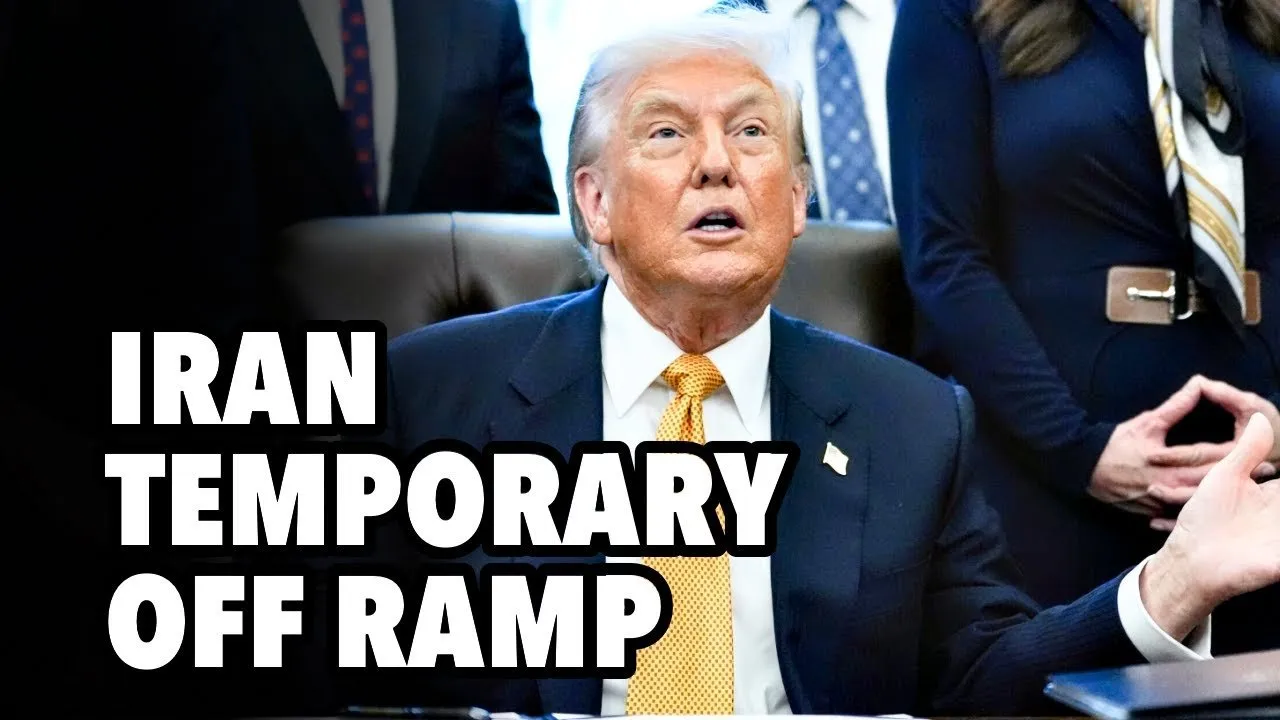
Global attention was fixed on the Persian Gulf earlier this week as reports signaled an imminent United States military strike on Iran. Troop movements in the Gulf States, extraordinary rhetoric, and the closure of Iranian airspace all pointed toward a kinetic escalation. Yet, as quickly as the war drums began beating, the immediate threat appeared to recede. While the rhetoric has softened and commercial flights have resumed, geopolitical analysts warn against interpreting this pause as a permanent cancellation of hostilities.
The situation reveals a complex layer of modern warfare that goes beyond missiles and airstrikes. From the electronic jamming of satellite internet to the economic maneuvering within the BRICS alliance, the conflict between Washington and Tehran has evolved into a high-stakes chess match involving Great Power competition. Understanding why the strike was postponed requires looking past the headlines and examining the strategic failures and technological interventions that occurred behind the scenes.
Key Takeaways
- Tactical Postponement: Evidence suggests a planned US strike was postponed, not cancelled, likely because the internal protests in Iran—a prerequisite for the operation's success—were suppressed.
- The "Knockout" Doctrine: President Trump’s foreign policy favors quick, destabilizing "shock and awe" campaigns to achieve regime change without the long-term "boots on the ground" commitment associated with the Bush era.
- Technological Proxy War: The successful jamming of Starlink terminals in Iran suggests high-level electronic warfare assistance from Russia or China.
- Economic Vulnerabilities: Iran’s failure to leverage its BRICS membership for currency stabilization exposed critical economic weaknesses that the US successfully exploited.
The Anatomy of the Stand-Down
By all conventional military indicators, a strike appeared inevitable. Vulnerable assets were moved out of harm’s way in Qatar and other Gulf nations—a standard precursor to offensive action designed to protect troops from retaliatory fire. Simultaneously, the Iranian Air Force scrambled jets, not necessarily to engage American fighters, but to ensure they were not destroyed on the runway during an initial bombardment.
However, the operation was seemingly paused following a shift in the ground reality within Iran. The US strategy appears to have been predicated on a synchronized effort: external military pressure combined with internal regime collapse driven by mass protests. When the Iranian government successfully broke the back of the protest movement, the internal variable of the equation was removed, leading to a recalibration of US strategy.
The "High Threshold" for Action
Reports surfacing from London and Washington indicate a specific directive from the White House: future strikes would only be authorized if they could guarantee regime change. This places the threshold for military success extraordinarily high.
"Trump says one thing one day, something completely different the next. He gives the impression that things are stabilizing and then he seizes the opportunity when everybody has relaxed in order to attack."
This oscillation is signature Trumpian statecraft—using misdirection to lower an adversary's guard. While the immediate threat has passed, the strategic objective remains the removal of the current government in Tehran. The nuclear enrichment program, once the primary talking point for Western intervention, has largely vanished from the narrative, replaced by an overt focus on regime change.
The Invisible Front: Starlink and Electronic Warfare
A critical, underreported element of this confrontation was the battle for information dominance. The protest movement in Iran relied heavily on Starlink terminals to bypass the government's internet blockade. However, contrary to expectations, Iranian authorities were able to execute a tighter communications blackout than anticipated, successfully jamming satellite signals.
This technological capability raises significant questions. Most analysts agree that Iran lacks the indigenous technological base to effectively jam Starlink on a wide scale. The sophistication required to interfere with these signals points to intervention by a Great Power.
The Russian Connection
While China possesses these capabilities, the geopolitical footprint suggests Russian involvement. Having dealt with Starlink on the frontlines of Ukraine, Russia has developed mobile jamming solutions capable of disrupting satellite internet in localized areas. It is highly probable that Moscow provided technical assistance or direct support to Tehran, effectively neutralizing the communications backbone of the opposition movement.
"It’s a game of cat and mouse. But for the moment at least, the Russians and the Chinese are in the ascendant and they were able to interfere with Starlink sufficiently in Iran."
This highlights the dual role of private technology companies in modern conflict. Elon Musk’s platforms have become integral to US geopolitical operations, blurring the line between commercial enterprise and the military-industrial complex. The defeat of Starlink in this instance represents a significant victory for the burgeoning alliance between Iran, Russia, and China.
Trump’s "Knockout" Doctrine vs. The Long War
To understand the current hesitation, one must distinguish between the neoconservatism of the Bush-Cheney era and the aggressive foreign policy of the Trump administration. The former was characterized by long-term occupation, nation-building, and extended military commitments. The latter seeks immediate results through maximum pressure.
President Trump’s approach can be described as seeking a "knockout blow." The objective is to deliver a shock to the system so severe that the target government collapses quickly, avoiding the political and financial quagmire of a long war. This strategy relies on finding specific weaknesses—whether economic gaps, information vulnerabilities, or compromised officials—and exploiting them ruthlessly.
However, this strength is also a limitation. If a targeted nation can withstand the initial "shock and awe" phase—usually lasting only a few weeks—the US appetite for conflict diminishes rapidly. The "12-day war" model implies that if a quick victory isn't achievable, the administration is likely to pull back rather than commit to a protracted struggle.
Iran’s Economic and Security Failures
Despite surviving this round of escalation, the events exposed glaring weaknesses in Iranian governance. The regime's inability to stabilize its currency provided the fuel for the protests that the US sought to exploit. Analysts argue that Iran failed to utilize its strategic partnerships effectively.
Following a 40% collapse in the currency, Tehran had the option to request emergency liquidity or currency swaps from its BRICS partners, particularly China. A relatively small injection of capital—perhaps $1 billion—would have stabilized the market and signaled strong international backing, likely quelling economic panic before it transformed into political unrest. Instead, a passive approach allowed the economic crisis to fester.
The Internal Security Paradox
Furthermore, the security situation within Iran remains porous. The persistence of high-profile assassinations and sabotage operations indicates that Western intelligence agencies have deeply infiltrated the country. While the government eventually suppressed the recent unrest, the initial response was chaotic and violent, revealing a lack of preparation for organized, tech-enabled dissent.
The reliance on serial executions as a method of restoring order acts as a double-edged sword. While it may temporarily enforce silence, it delegitimizes the state internally and provides Western powers with the moral pretext for further intervention. If Tehran wishes to avoid a future "knockout" attempt, it must professionalize its economy and close the gaps in its internal security apparatus.
Conclusion
The postponement of strikes on Iran is a temporary reprieve, not a peace treaty. The United States remains committed to a policy of regime change, utilizing a strategy of overwhelming, short-term pressure. Iran survived this attempt partly through external technological assistance from Russia or China, but mostly because the US assessment of Iran's internal fragility was premature.
For nations in the crosshairs of this "knockout" doctrine, the lesson is clear: survival depends on economic resilience and the ability to weather the initial storm. As the shadow of Great Power competition lengthens across the Middle East, the conflict has transformed from a regional dispute into a proxy war where algorithms and currency reserves are as critical as fighter jets.