Table of Contents
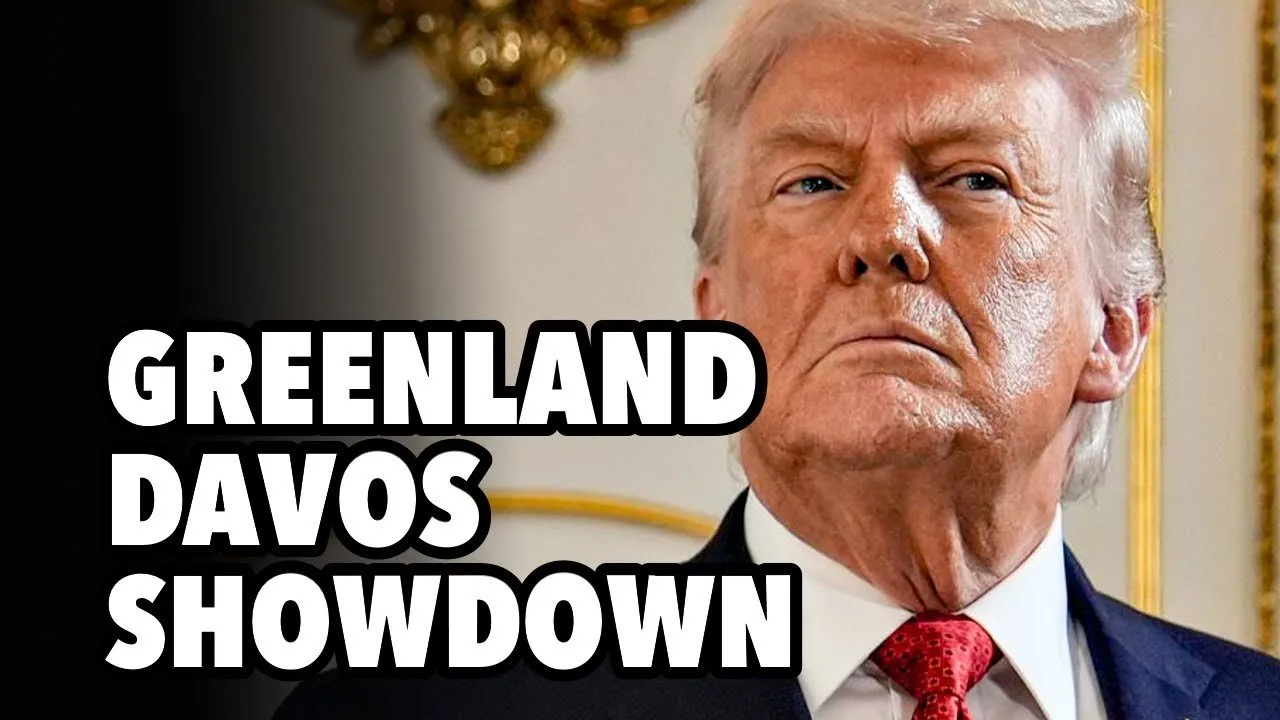
As the World Economic Forum (WEF) convenes in Davos, a distinct shift in geopolitical gravity is occurring. European globalist elites, including figures like Ursula von der Leyen and Emmanuel Macron, likely anticipated a summit focused on securing continued financial and military support for "Project Ukraine." They expected to press the incoming Trump administration for security guarantees and funding. However, the narrative has been forcefully hijacked by a different agenda entirely: the United States' potential acquisition of Greenland.
Donald Trump’s maneuvers, including pointed posts on Truth Social and leaked correspondence to ambassadors, signal that this is no longer a peripheral suggestion from 2019. It is a central policy objective. The dynamic at Davos will not be European leaders chasing Trump for commitments to Kyiv, but rather scrambling to decipher the future of the Arctic. The reality facing Brussels is stark: owing to years of singular focus on Ukraine and a failure to address strategic vulnerabilities, the European Union arrives at the negotiating table with virtually no cards to play.
Key Takeaways
- Trump is serious about full acquisition: Unlike European assumptions, this is not about mineral rights or basing agreements; Trump views acquiring Greenland as a legacy-defining territorial expansion comparable to the Louisiana Purchase.
- Europe’s strategic blindness: EU leadership ignored Trump's initial interest in 2019, focusing exclusively on Ukraine while neglecting to secure Greenland’s political status via a referendum.
- The United States holds the leverage: With Europe dependent on American LNG and military security, the EU lacks the economic or political capital to resist a determined US administration.
- The end of the "Atlanticist" status quo: Trump’s reported disdain for current European leadership suggests he is willing to bypass traditional diplomatic niceties to secure American hemispheric dominance.
The Davos Paradigm Shift: From Kyiv to Nuuk
The expectation among the European elite heading into the WEF was a continuation of the status quo: managing the conflict in Ukraine. Instead, they face a disruptive force. Trump has made it clear through his rhetoric and leaked diplomatic letters—including those linking the Nobel Peace Prize controversy to Nordic relations—that he is operating on a different timeline.
The psychological component of this diplomatic clash cannot be overstated. Over the last decade, and specifically the last year, a profound disconnect has formed between Trump and European leadership. Observers note a palpable sense of loathing from the incoming President toward the EU bureaucracy, whom he views as having actively obstructed his agenda while relying entirely on American power.
"He senses that they've tried to stop him in every conceivable way... He also senses their weakness."
This dynamic suggests that the "school principal" dynamic seen in previous meetings will return. European leaders, having invested heavily in relationships with figures like Kamala Harris, now find themselves unprepared for a transactional administration that views their outrage over Greenland as irrelevant.
Beyond Vanity: The Strategic Rationale
A common error in European capitals has been to dismiss the Greenland proposition as mere vanity or a real estate developer’s fantasy. While the desire to achieve a historic expansion of US territory—the largest since the 19th century—undoubtedly appeals to Trump’s ego, there is a distinct strategic rationale underpinning the move.
Hemispheric Defense and Hegemony
The acquisition aligns with a hemispheric policy advocated by strategists like Elbridge Colby. Securing Greenland is not just about resources; it is about completing a defensive perimeter for North America. This involves:
- Hypersonic Defense: Establishing the necessary infrastructure for "golden dome" air defense systems.
- Arctic Control: Challenging Russian and Chinese influence in the High North.
- Resource Security: Securing rare earth minerals essential for the AI and technology sectors.
While European leaders mock the idea, the Kremlin has reportedly acknowledged the magnitude of such a move, noting that successful acquisition would cement a president's place in history. Trump is not seeking leases or extraction contracts; he is seeking sovereignty.
The European Union’s Strategic Blind Spot
The current crisis over Greenland exposes a catastrophic failure of foresight within the European Union and Danish leadership. Trump first raised the issue of Greenland in 2019. At that time, Ursula von der Leyen and Danish Prime Minister Mette Frederiksen had a window of opportunity to insulate the territory from future acquisition attempts.
Instead of assembling action groups or addressing the issue, the EU allowed it to fade, assuming Trump was an aberration that would not return. Since 2022, the entirety of European foreign policy bandwidth has been consumed by "Project Ukraine." This single-minded obsession resulted in the neglect of other existential risks, including inflation, de-industrialization, and the integrity of EU territory.
The Missed Checkmate
Denmark had a clear "checkmate" move available: a referendum. Had Copenhagen initiated a vote allowing the people of Greenland to decide decisively between independence, the status quo, or integration with Denmark, the legal and moral arguments for a US purchase would have been severely complicated.
"She could have said... 'Let me give the people of Greenland a referendum. Whatever they choose... then the United States is stuck.'"
By failing to act, Prime Minister Frederiksen risks going down in history not as a staunch defender of sovereignty, but as the leader who lost Greenland. The recent scramble to send token military forces to the island serves only to highlight European impotence rather than project strength.
Asymmetric Warfare: Why Europe Has No Leverage
As the debate intensifies, Brussels has threatened retaliatory measures, including activating anti-coercion instruments or levying tariffs. However, a dispassionate analysis of the economic reality suggests these threats are hollow. The United States holds all the cards.
Energy Dependence: following the severance of Russian energy ties and the destruction of Nord Stream, Europe is heavily dependent on American LNG. If a trade war erupts, the US has the capacity to restrict energy exports. With Russian pipelines closed and Qatar unlikely to undermine its US security guarantor, Europe would face an immediate existential energy crisis.
Military Security: The security of the Baltic states, Poland, and Scandinavia relies entirely on US military presence. There is no viable European alternative. If push comes to shove, European nations facing the Russian frontier will ultimately prioritize bilateral security deals with Washington over EU solidarity regarding Greenland.
Technological Deficit: From AI to social media platforms, Europe relies on American infrastructure. The EU has failed to develop competitive alternatives, leaving it vulnerable to technological isolation if relations sour completely.
Conclusion
The Europeans are angry, but anger is not a strategy. The overwhelming likelihood is that after a period of rhetorical resistance and outrage, the reality of power politics will set in. Europe cannot afford an economic or security divorce from the United States while simultaneously engaging in a prolonged conflict with Russia.
Trump’s approach indicates he will not take "no" for an answer. Whether through direct purchase, immense financial pressure, or security leverage, the path is being cleared for a negotiation where the US dictates the terms. Europe, having spent its capital elsewhere and failed to prepare, will likely be forced to treat this as a transaction within the "NATO family," ultimately conceding to the inevitable reconfiguration of the Western map.