Table of Contents
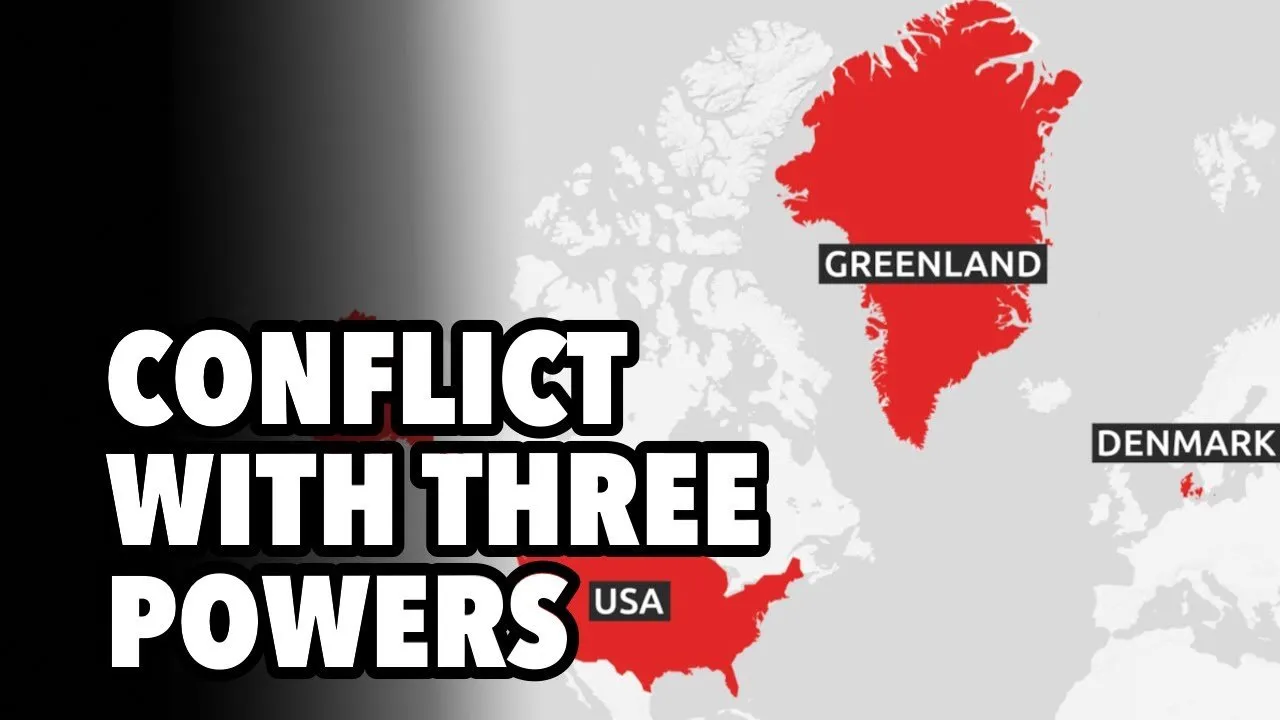
As geopolitical tensions reshape global power dynamics, Donald Trump's renewed interest in acquiring Greenland represents more than territorial ambition—it signals a fundamental shift toward spheres of influence thinking that could redefine America's strategic position against Russia and China. With the appointment of a special envoy and explicit statements about national security needs, this isn't merely campaign rhetoric but a serious policy consideration with far-reaching implications for NATO allies and Arctic dominance.
Key Takeaways
- Trump has appointed a special envoy for Greenland acquisition, signaling serious intent beyond mere political posturing
- The strategy aligns with America's sphere of influence doctrine, viewing the Western Hemisphere as essential to national security
- European Union nations lack leverage to resist, having become economically and militarily dependent on the United States
- Greenland's acquisition would dramatically shift Arctic power balance and secure North Atlantic sea routes against Russian and Chinese influence
- Denmark and the EU face an impossible strategic position, having antagonized all three global superpowers simultaneously
Trump's Greenland Strategy: Beyond Rhetoric to Reality
President Trump's approach to Greenland acquisition has evolved from campaign talking points to concrete policy action. At a recent Mar-a-Lago press conference, Trump was unequivocal about his intentions, stating plainly that America needs Greenland for national security purposes.
"We need it for national security. Plain and simple. It's not about minerals. It's not about any of that stuff. There's Russian ships, there's Chinese ships and we need it for national security."
The appointment of Louisiana's acting governor as special envoy to Greenland demonstrates the administration's commitment to pursuing this objective through diplomatic channels initially. This mirrors the appointment of Keith Kellogg for Ukraine negotiations, suggesting a structured approach to complex geopolitical challenges.
Spheres of Influence Doctrine
This Greenland initiative reflects a broader strategic framework emerging from the Trump administration's recent security strategy review. The doctrine emphasizes spheres of influence rather than global democratic expansion, viewing the entire Western Hemisphere—including Canada and Greenland—as America's natural sphere of control.
From this perspective, allowing Russian and Chinese naval presence near American continental approaches represents an unacceptable security risk that justifies territorial acquisition to ensure long-term strategic dominance.
Arctic Power Dynamics and Strategic Implications
Control of Greenland would fundamentally alter Arctic geopolitics, where Russia currently maintains overwhelming dominance and China increasingly projects influence through Russian partnerships.
Naval and Military Advantages
Acquiring Greenland would provide the United States with:
- Arctic Access: Major power projection capabilities in a region where America has been effectively excluded
- North Atlantic Control: Ability to monitor and potentially restrict Russian and Chinese naval movements
- Strategic Positioning: Forward bases for both defensive and offensive military operations
- Resource Security: Access to rare earth minerals and energy resources, though Trump emphasizes these are secondary considerations
Russian and Chinese Responses
While Russian leadership has occasionally suggested Arctic cooperation with the United States, American control of Greenland would create a significant strategic competitor in Russia's primary sphere of influence. However, Russia's current strong position means they could likely adapt to this new reality.
China's Arctic ambitions, primarily channeled through Russian partnerships, would face new constraints but wouldn't necessarily result in direct confrontation given China's focus on other strategic priorities.
European Union's Impossible Strategic Position
The European Union faces an unprecedented diplomatic crisis, having managed to antagonize all three global superpowers simultaneously while lacking the economic or military capacity to resist American pressure.
Complete Dependency on the United States
Europe's strategic weakness stems from multiple self-inflicted vulnerabilities:
- Energy Dependence: Loss of Russian energy supplies without viable alternatives beyond American sources
- Military Weakness: Inability to project meaningful military power despite rearmament rhetoric
- Economic Fragility: Deep structural problems limiting independent action
- Diplomatic Isolation: Deteriorating relations with both Russia and China eliminate potential counterbalancing partnerships
Denmark's Precarious Position
Danish Prime Minister Mette Frederiksen's public statements about Russian threats ring hollow when Denmark lacks any meaningful response to potential American territorial acquisition. The symbolic nature of European resistance became evident when Estonian Foreign Minister Kaja Kallas reportedly couldn't even secure meetings with incoming Secretary of State Marco Rubio.
"Kallas can't even get a meeting with Rubio. The top diplomat in Europe can't even schedule a lunch with the Secretary of State of the United States."
This diplomatic weakness reflects Europe's broader inability to function as an independent power center capable of resisting American strategic objectives.
Long-term Strategic Consequences
Should Trump succeed in acquiring Greenland, the precedent would reshape global power dynamics far beyond the immediate territorial change.
Permanent Strategic Shift
Any future Democratic administration would be unlikely to reverse Greenland's acquisition, making this a permanent strategic victory regardless of subsequent electoral outcomes. The idea that leaders like Kamala Harris or Gavin Newsom would return Greenland to Danish control appears politically and strategically impossible.
Impact on NATO and Traditional Alliances
NATO's response to American acquisition of a member state's territory would test the alliance's fundamental principles. However, given American military and economic dominance within NATO, meaningful opposition appears unlikely.
The United Nations Security Council provides no effective recourse, as both Russia and China would likely view European diplomatic appeals with skepticism given their own deteriorated relationships with EU nations.
Canadian Implications
Canada would find itself increasingly surrounded by American territory, with the United States to the south, American-controlled Greenland to the east, and Alaska to the west. While Canadian patriotism remains strong, the nation's strategic options for counterbalancing American influence continue to diminish.
Theoretical partnerships with Russia, as suggested by some analysts, remain politically impossible given Canada's current government alignment with broader Western sanctions regimes.
Conclusion: The New Geopolitical Reality
Trump's Greenland initiative represents more than territorial ambition—it exemplifies America's transition toward spheres of influence thinking that prioritizes regional dominance over global democratic idealism. For European allies who have spent decades as willing junior partners in American-led initiatives, this shift demands recognition that their strategic autonomy has eroded to the point where resistance to core American security objectives becomes practically impossible.
The appointment of a special envoy suggests this isn't merely campaign rhetoric but a serious policy objective that could reshape Arctic power dynamics and cement American strategic dominance in the Western Hemisphere. Whether through negotiation, economic pressure, or other means, the path toward American control of Greenland appears to be opening, with few viable options for meaningful resistance from traditional allies who have systematically weakened their own strategic positions.
As global power continues consolidating among three main centers—the United States, Russia, and China—smaller powers and regional blocs face increasingly stark choices about alignment and dependency. Europe's current trajectory suggests a future of deeper subordination to American strategic objectives, regardless of which political party controls Washington.

![What Happens to Crypto Now? [No Reserve. No Clarity. David Sacks Is Out]](/content/images/size/w1304/format/webp/2026/03/what-happens-to-crypto-now-david-sacks-exit.jpg)