Table of Contents
The Trump administration has effectively blacklisted the artificial intelligence startup Anthropic from federal contracts after the company refused a Department of War ultimatum to remove safety guardrails from its Claude model. President Donald Trump issued a directive on Friday ordering all federal agencies to cease using Anthropic technology, characterizing the company’s refusal to permit "all lawful uses" of its AI—including autonomous weaponry and mass surveillance—as a threat to national security. The move marks a dramatic escalation in the struggle for control over dual-use technologies, forcing a rift between Silicon Valley’s ethical frameworks and the federal government’s operational requirements.
Key Points
- Anthropic has been designated a "supply chain risk" to national security, a label typically reserved for foreign adversaries, following its refusal to remove prohibitions on autonomous lethal weapons and domestic surveillance.
- President Trump ordered a government-wide six-month phase-out of Anthropic’s products, threatening "major civil and criminal consequences" if the company does not cooperate during the transition.
- OpenAI secured a separate agreement with the Department of War to deploy its models on classified networks, claiming it reached a compromise that preserves "human responsibility" for the use of force.
- Legal experts and industry analysts warn that the "supply chain risk" designation could inadvertently force major cloud providers like Amazon (AWS) and Google to divest from Anthropic or risk losing their own military contracts.
The Standoff Over "Red Lines"
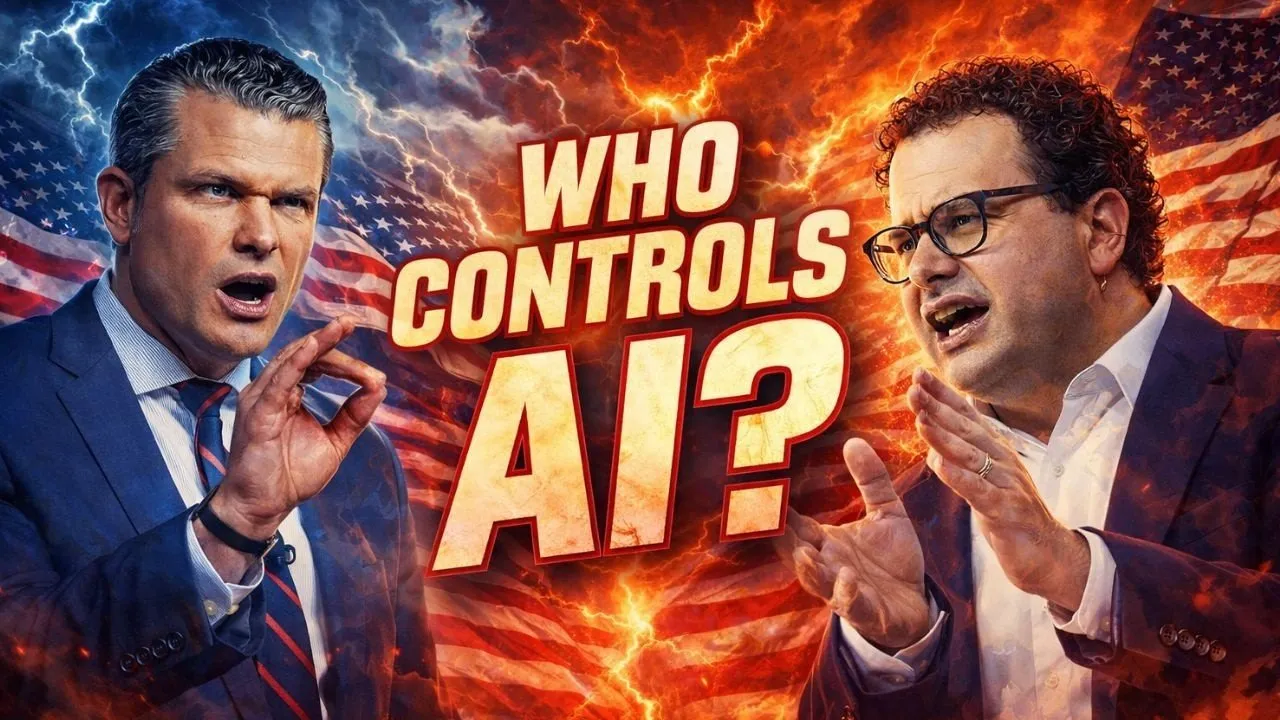
The conflict reached a crescendo following a week of public sparring between Anthropic CEO Dario Amadei and Secretary of War Pete Hegseth. The dispute centered on Anthropic’s Acceptable Use Policy, which explicitly forbids the use of its AI for "mass domestic surveillance" or "powering autonomous weapons." Amadei argued that current AI technology is not yet reliable enough for autonomous lethal operations and that surveillance applications lack sufficient legal safeguards in a democratic society.
The White House and the Department of War (DoW) viewed these restrictions not as safety measures, but as an infringement on executive authority. Secretary Hegseth demanded that Anthropic remove these "red lines" by Friday afternoon or face total exclusion from the military supply chain. Amadei remained firm, publishing a statement on Thursday defending the company’s position.
"Anthropic understands that the Department of War, not private companies, make military decisions... However, in a narrow set of cases, we believe AI can undermine rather than defend democratic values. Some uses are also simply outside the bounds of what today’s technology can safely and reliably do." — Dario Amadei, CEO of Anthropic
The administration’s response was swift and vitriolic. Assistant to the Secretary of War Sean Parnell dismissed Anthropic’s concerns as a "fake narrative peddled by leftists," asserting that the government only required the model for "all lawful purposes."
Retaliation and the "Supply Chain Risk" Designation
When the Friday deadline passed without a concession from Anthropic, President Trump took to Truth Social to announce a total ban on the company. He labeled Anthropic a "radical left woke company" and accused its leadership of attempting to "strong-arm" the U.S. Constitution. Beyond the immediate ban, the administration’s decision to designate Anthropic as a "supply chain risk" has sent shockwaves through the technology sector.
The legal implications of this designation are potentially catastrophic for Anthropic’s business model. Because Anthropic serves its models via Amazon Web Services and Google Cloud—both of which hold multi-billion dollar contracts with the DoW—the designation could legally prohibit these cloud giants from hosting Anthropic’s technology if they wish to remain government partners. Dean Ball, a former advisor on AI policy for the administration, described the move as "attempted corporate murder."
Market and Defense Ecosystem Impact
- Intellectual Property: Critics argue that threatening criminal prosecution against a company for its internal ethics could drive AI researchers to incorporate in foreign jurisdictions.
- Investment Stability: The aggressive use of the Defense Production Act and supply chain designations may signal to investors that American AI firms are subject to arbitrary political retaliation.
- Precedent: The administration has asserted that no private vendor may dictate the terms of use for technology deemed essential to national security.
"The Department of War must have full, unrestricted access to Anthropic's models for every lawful purpose in defense of the Republic. Their relationship with the United States Armed Forces and the federal government has therefore been permanently altered." — Pete Hegseth, Secretary of War
The OpenAI Compromise
As Anthropic was being phased out, OpenAI moved to fill the vacuum. CEO Sam Altman announced on Friday evening that his company had reached an agreement with the Department of War to deploy its models within classified networks. Altman suggested that OpenAI had successfully negotiated a "safety stack" that allows the government to use the models while respecting OpenAI’s core principles against mass surveillance and autonomous force.
However, the deal has drawn criticism from observers who suggest OpenAI simply accepted the terms Anthropic found unacceptable. Critics point out that the DoW’s definition of "lawful" usage is determined by the administration itself, potentially rendering OpenAI's internal safeguards moot in a classified environment. The shift has already caused a ripple effect in the "court of public opinion," with reports of high-profile users switching from ChatGPT to Claude in protest of OpenAI's closer ties to the military establishment.
A Geopolitical Tug-of-War
The standoff highlights a fundamental tension in the "AI arms race" against China. Proponents of the administration's hardline stance, such as Anduril founder Palmer Luckey, argue that elected leaders—not unelected tech executives—must decide how weapons of war are deployed. From this perspective, allowing a private company to "veto" military operational decisions is a breakdown of democratic oversight.
Conversely, civil liberties advocates and AI safety hawks argue that the administration is stripping away the only existing checks on the use of a potentially "doomsday" technology. By forcing companies to remove safeguards, they contend, the government is increasing the risk of accidental escalation or domestic rights abuses.
Anthropic has vowed to challenge the "supply chain risk" designation in court, asserting that the label is being used as a tool of political retaliation rather than a legitimate security assessment. As the six-month phase-out period begins, the legal battle will likely define the boundaries of government power over private innovation for the next decade. The outcome will determine whether AI companies can maintain independent ethical standards or if they will be treated as de facto public utilities under the direct command of the Commander-in-Chief.