
Table of Contents
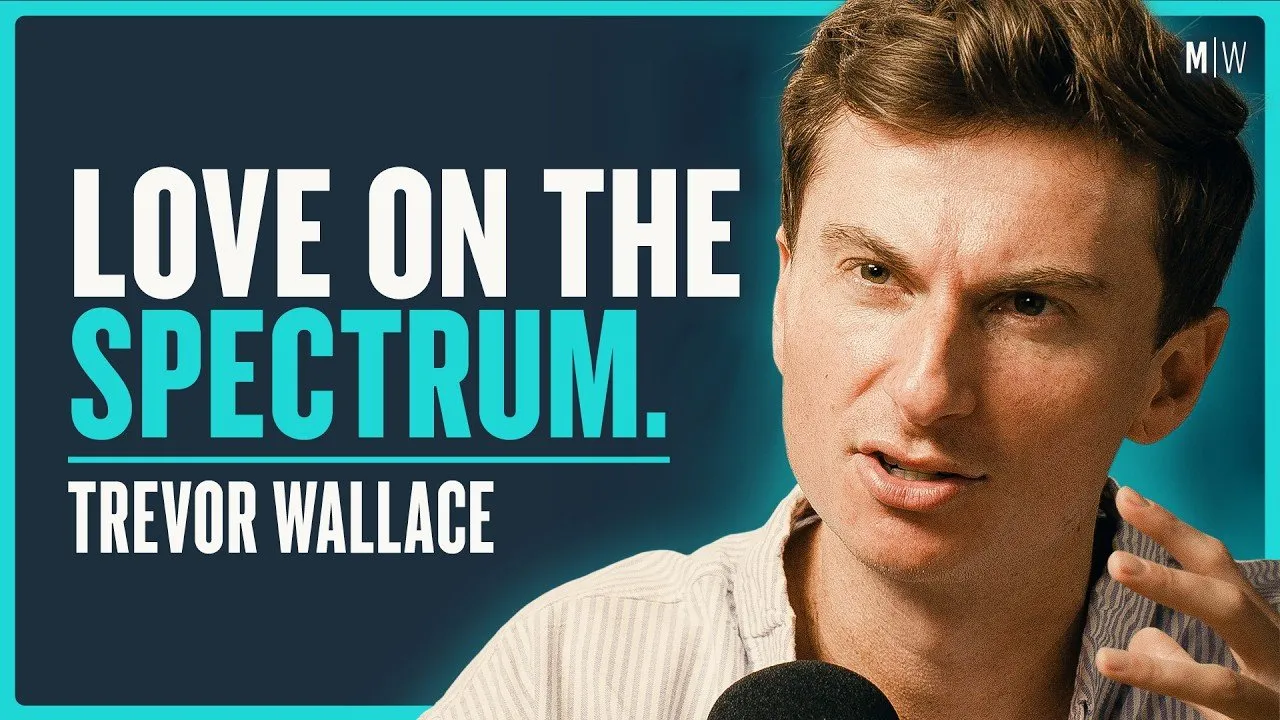
In the evolving landscape of modern dating and social identity, few topics have sparked as much debate as the sudden cultural embrace of neurodivergence. Comedian Trevor Wallace, known for his incisive cultural commentary, recently joined the Modern Wisdom podcast to dissect a strange new phenomenon: the fetishization of autism on dating apps and the broader implications of "stolen valor" in the mental health space.
Beyond the cultural critique, the conversation evolved into a masterclass on the creative process. Wallace and host Chris Williamson explored the dark side of ambition, the necessity of obsession over work-life balance for early success, and the psychological trap of never realizing you are living in your "golden years" until they are long gone.
Key Takeaways
- The "Stolen Valor" of Neurodivergence: There is a growing trend of self-diagnosing autism or fetishizing "a touch of the 'tism" on dating apps to appear more interesting or quirky, often minimizing the actual struggles of the neurodivergent community.
- Obsession Beats Balance: For those in the building phase of their careers, work-life balance is often a mirage. True escape velocity requires an obsession where you simply "cannot not do the thing."
- You Can't "White Knuckle" Creativity: Unlike administrative tasks, creativity cannot be forced through sheer will. It requires rest, environmental changes, and the removal of "admin brain."
- Signal vs. Noise in Success: obsessively checking social media metrics creates anxiety (noise). Success should be measured over long timelines (signal), not hour-by-hour view counts.
- The "Golden Years" Paradox: We rarely recognize our peak moments while we are in them because we are too distracted by the anxieties of the future.
The Fetishization of Neurodivergence on Dating Apps
A peculiar trend has emerged on platforms like Hinge and Tinder: the romanticization of autism. Wallace notes that "swaths of men" are now explicitly stating they are looking for a woman with a "touch of the 'tism." While some argue this is simply a search for a passionate partner who hyper-fixates on hobbies, Wallace suggests it often crosses the line into fetishization or a misunderstanding of the condition.
Autism as a "Quirk"
The conversation highlights a dichotomy in modern identity politics. On one hand, genuine neurodivergence presents real, daily struggles. On the other, the "meme-ification" of conditions like autism has led to what Wallace calls "stolen valor"—people adopting the label to give themselves a personality or an excuse for social awkwardness that stems from being chronically online rather than neurodivergent.
"I feel bad for people who are generally autistic right now because I think there's a lot of stolen valor out there. I think there's a lot of people who are claiming it 'cause they want to have something... I wanted to be different so bad in my classroom. I told people I was color blind... I wanted to have a thing."
This "cop-out" allows neurotypical individuals to rebrand standard social anxiety or shyness as a medical condition, effectively diluting the experiences of those who actually live with the diagnosis.
Obsession vs. Work-Life Balance
One of the most recurring questions young professionals ask is how to maintain work-life balance while building a career. Wallace and Williamson argue that this is the wrong question for the early stages of success. The "work-life balance" narrative is often pushed by those who have already made it, concealing the intense grind that got them there.
Model the Rise, Not the Result
When you look at successful figures—whether comedians like Joe Rogan or tech moguls—they may preach balance now, but their rise was defined by an inability to turn off. This state isn't just discipline; it is obsession. Discipline is telling yourself to do the work; obsession is the inability to stop doing the work.
For Wallace, this manifested in a relentless schedule: working a 9-to-5, driving to open mics every weeknight, shooting sketches on Saturdays, editing on Sundays, and posting on Mondays. This wasn't sustainable forever, but it was necessary for the breakthrough.
"Creativity is a rare feeling and you have to strike on it when it hits... If you're feeling creative, make that video. Don't be like, 'Well, I'll make it tomorrow morning when I have more free time.' No, because you're going to get to the next morning and you're going to be like, 'What was that?'"
The Mechanics of Creativity
A critical distinction made during the discussion is the difference between "admin work" and "creative work." You can force yourself to answer emails or edit a spreadsheet ("white knuckling"), but you cannot force a funny idea or a creative breakthrough.
The Necessity of "Un-Focusing"
Wallace admits that his worst creative blocks come when he tries to schedule creativity between administrative meetings. The brain requires a shift in mode. His solution involves changing environments—going to a mall, an airport, or simply driving without music. These low-stakes environments allow the subconscious to scavenge for ideas in a way that staring at a blank screen does not.
"Cold Barring" in Comedy
In weightlifting, "cold barring" refers to attempting a maximum lift without warming up. Williamson applies this analogy to crowd work in comedy. You cannot walk on stage and immediately attempt high-stakes improvisation. You have to warm up the room and your own mind. This parallels the creative process: you need to let the "bar" warm up before attempting to lift the heavy creative load.
The Toxicity of Metrics and "Signal vs. Noise"
For content creators and entrepreneurs, the feedback loop is immediate and often brutal. A video posting is a moment of high vulnerability. If it performs well, the dopamine hit is fleeting; if it performs poorly, it can ruin the creator's self-esteem for days.
The Casino Effect
Social media algorithms operate like slot machines. A viral video feels like a jackpot, but it creates a dangerous precedent. The creator immediately fears they cannot replicate that success, leading to analysis paralysis. Wallace notes that the higher you climb, the more you have to lose, transforming what used to be a fun hobby into a high-pressure stakes game.
Distinguishing Signal from Noise
Williamson introduces the concept of financial trading to explain mental health management for creators. If you check a stock price every minute, you see volatility (noise). If you check it annually, you see the trend (signal). Creators often suffer because they live in the noise of minute-by-minute analytics rather than the signal of their year-over-year growth.
"If you check it every half an hour, it's almost all noise... The only way that you can really select out noise and select for signal is to reduce how frequently you check and to do it at bigger chunks of time."
The "Golden Years" Fallacy
Perhaps the most poignant part of the conversation revolved for the concept of the "Golden Years." We often look back at the early days of struggle—the cheap apartments, the grinding in coffee shops, the first small victories—as the best times of our lives. Yet, while living through them, we are usually filled with anxiety and a desperate desire to "make it."
Wallace admits to currently selling out theaters and touring the world—objectively his "dream" scenario—yet he often finds himself stressing about the next ticket sale rather than soaking in the moment.
Deferred Happiness Syndrome
This is the psychological trap of believing your real life hasn't started yet, and that your current reality is just a prelude to a future idyll. The tragedy, as noted by author Morgan Housel, is that the "Golden Years" only exist in the past. When you are in them, they feel like stress. Recognizing this requires a conscious effort to stop looking over the shoulder of the present moment.
Scaling and The "Lonely Chapter"
As careers advance, the tools that got you to the dance—micromanagement, doing everything yourself, obsessive control—often become the very things that hold you back. This transition is known as the "lonely chapter," where you must shed old habits to survive the new level of success.
Wallace utilizes the analogy of a boat. You need a boat to cross the river (the early struggle). But once you hit land (success/scaling), carrying the boat on your back only slows you down. You must leave the boat behind.
Steps to overcome the fear of delegation:
- Accept Imperfection: A hire might only be 80% as good as you at a specific task, but they free up 100% of your time.
- Inventory Buffers: Create content in advance so you aren't posting in "desperation mode."
- Detach from the Button: Allowing someone else to physically post content creates a necessary emotional barrier between you and the immediate metrics.
Conclusion
The journey from an open mic comic to a sold-out theater act, or from a startup founder to a CEO, is rarely a straight line of happiness. It is a series of obsessions, anxieties, and retrospective appreciations. Trevor Wallace’s insights reveal that while we cannot fully eliminate the neuroticism that drives high performance, we can learn to manage it.
Whether it is recognizing that a "touch of the 'tism" isn't a personality accessory, or understanding that you are likely living through your golden years right now, the goal is to remain present. Success requires obsession, but longevity requires the ability to occasionally put the boat down and realize you have already crossed the river.




)