
Table of Contents
Account-torching breakdowns that suddenly reverse are where most traders get trapped. While retail traders see clean setups that reverse against them, professional traders identify these reversals 3-5 bars before they happen. Understanding these patterns transforms how you read market psychology and position for high-probability reversals.
Key Takeaways
- Reversals require three elements: key location (support/resistance), exhaustion patterns, and a clear power shift between buyers and sellers
- The failed follow-through new low pattern offers the highest win rate when combined with VWAP reclaim entries
- Breaking hourly death spiral downtrends creates explosive short covering rallies that can last multiple days
- Rubber band reversals work best when stocks flush into higher timeframe support levels after extended selling
- Bad news getting bought at key support levels signals institutional accumulation and sets up powerful continuation moves
The Anatomy of Professional Reversals
Professional reversal trading centers on three critical components that separate winning patterns from random price action. Every successful reversal contains these elements in sequence.
Location Matters Most
Reversals never occur randomly. They develop at specific locations where institutional players have previously shown interest. Higher timeframe support and resistance levels, VWAP confluences, and intraday channel boundaries create the foundation for reversal setups. Without proper location, even the most dramatic price action lacks follow-through.
Exhaustion Signals the Turn
True reversals require climactic selling or buying that stretches price beyond sustainable levels. This exhaustion manifests as accelerated moves into key levels, high-volume flushes, or multiple consecutive bars in the same direction. The exhaustion phase clears out weak hands and sets up the power shift.
Power Shift Confirms the Reversal
The most crucial element involves identifying the exact bar where control transfers from one group to another. This power shift appears as failed continuation attempts followed by immediate reclaim of key levels. Professional traders focus on this transition moment rather than trying to catch falling knives.
Pattern One: Failed Follow-Through New Low
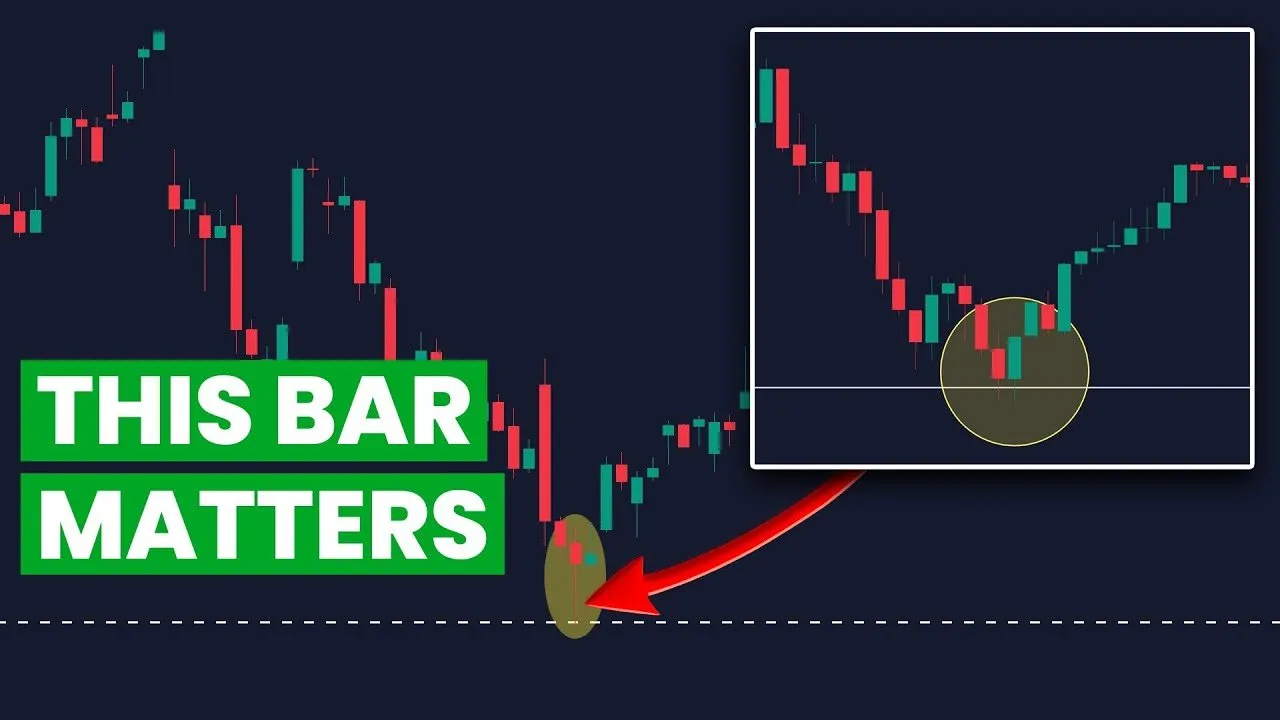
This pattern delivers the highest win rate among professional reversal setups. The setup develops when stocks appear to bottom, fail to hold the bounce, then flush to new lows without momentum.
The Setup Development
The pattern begins with what appears to be a bottoming attempt on day one. Day two opens with renewed selling pressure that looks like a clean breakdown. The stock makes new lows but fails to generate follow-through selling. This failure creates the first signal that something has changed.
The stock attempts to break down, puts in a new low, but there's no momentum behind it, and it reclaims that prior low.
Entry and Management
The optimal entry occurs when the stock reclaims the prior low and clears the highs of the flush candle. Using five-minute or two-minute charts provides clear entry signals. The pattern works especially well when it holds two-day VWAP during the flush.
Position management involves targeting high-of-day as the minimum objective. Since this pattern often develops in oversold conditions, the reward profile justifies holding for larger moves. Traders can scalp around the position using VWAP continuation patterns while maintaining the core reversal position.
Pattern Two: Hourly Death Spiral Break
When stocks develop persistent hourly downtrends that appear terminal, breaking these patterns creates explosive reversal moves. Short covering accelerates once the downtrend breaks, leading to powerful multi-day moves.
Identifying the Death Spiral
The hourly death spiral appears as a clean downtrending line on the hourly timeframe. Each bounce gets sold aggressively, creating lower highs and lower lows. The pattern looks hopeless, suggesting the stock will decline indefinitely.
The setup triggers when the stock gaps above this downtrend line, typically on news or market-wide strength. However, the initial gap often fails, creating volatility that shakes out both longs and shorts before the real move begins.
Professional Entry Technique
Rather than chasing the initial gap, professionals wait for the volatility to settle. The entry signal comes when the stock reclaims VWAP after the initial failure. This provides better risk-reward and avoids the emotional whipsaw of the opening action.
Management involves using the 21 EMA on the five-minute chart as a trailing stop. Strong trending moves hold above this level, providing confidence to hold for larger targets. When momentum accelerates away from the 21 EMA, trim positions by 5% at a time into the strength.
Pattern Three: Rubber Band Reversal
Rubber band reversals develop when stocks accelerate into key support levels after extended selling. The pattern creates high-probability entries with tight risk-reward ratios.
The Accelerated Flush
This pattern requires prior weakness followed by aggressive morning selling. The stock must flush into a significant higher timeframe support level with at least five consecutive red bars. The selling appears relentless and final.
The reversal signal occurs when the stock snaps back from the support level, taking out the prior candle high. This creates the "rubber band" effect that gives the pattern its name.
Multiple Attempt Strategy
The first reversal attempt often fails, and that's acceptable. The pattern frequently requires two attempts before establishing a sustainable reversal. The second attempt typically provides better entry conditions and higher probability of success.
A lot of times you're actually going to have to give it two attempts.
Targets focus on higher timeframe objectives rather than simple VWAP reclaims. The pattern sets up swing positions and intraday continuation opportunities. Use the first VWAP pullback as a potential re-entry point for additional position size.
Pattern Four: Oversold Hitchhiker Break
When markets turn risk-on, oversold stocks that hold up well create powerful breakout opportunities. This pattern capitalizes on forced short covering and rotational buying.
Market Context Requirements
This pattern requires three specific conditions: the stock must be oversold on higher timeframes, the broader market must show strength, and the stock must consolidate rather than decline with its sector. The consolidation creates a coiled spring effect.
The entry signal comes when the consolidation breaks to new highs on increased volume. This often occurs mid-morning when other stocks have already moved, forcing late participants to find alternatives.
Short Covering Dynamics
The power behind this pattern comes from institutional short covering. Portfolio managers cleaning up their short books don't focus on price - they simply want the positions closed. This price-agnostic buying creates sustainable moves with limited pullbacks.
Position management involves using the consolidation low as the stop loss. The pattern typically runs for the entire session as covering continues throughout the day.
Pattern Five: Bad News Gets Bought
The most powerful reversal pattern occurs when genuinely negative news gets absorbed at key support levels. This signals that all sellers have been exhausted and institutional accumulation has begun.
Setup Requirements
The stock must gap down on legitimate bad news into a significant higher timeframe support level. The news should be material enough to justify the gap, but the support level must be strong enough to attract buyers.
The early morning reversal provides the first signal. When the initial selling gets immediately bought, it traps shorts who expected continued weakness. This creates the foundation for the reversal.
Two-Stage Entry Process
The pattern offers two distinct entry opportunities. The first comes with the initial reversal signal in pre-market or early regular hours. The second, often more powerful entry, develops when the stock consolidates its gains and breaks to new highs.
The second move is a lot of times where the real capitulatory chase to the upside occurs.
The second leg creates the most explosive moves as shorts realize the news won't generate the expected selling. This recognition forces rapid covering and attracts momentum buyers.
Implementation and Execution
Successfully trading these patterns requires disciplined execution and proper expectation management. Most traders recognize the setups but fail to capitalize on their full potential.
Timeframe Integration
While these patterns trigger on intraday charts, their power comes from higher timeframe implications. Don't limit targets to simple intraday levels. These reversals often signal multi-day moves and should be managed accordingly.
Use intraday charts for entry timing but maintain awareness of daily and weekly levels for profit targets. The best reversals create both immediate scalping opportunities and longer-term position trades.
Risk Management Principles
Each pattern provides clear invalidation levels. Honor these stops religiously, as failed reversals often lead to accelerated moves in the original direction. However, don't hesitate to re-enter if the pattern sets up again with better conditions.
Position sizing should reflect the higher probability nature of these setups. When all three elements align - location, exhaustion, and power shift - increase position size relative to typical trades.
Conclusion
These five reversal patterns provide a systematic approach to identifying high-probability turning points in any market condition. The key lies in waiting for all three components - proper location, clear exhaustion, and definitive power shift - before committing capital.
Professional traders succeed with these patterns because they understand the underlying market psychology driving each setup. Rather than hoping for reversals, they identify the specific conditions that force reversals to occur. Master these patterns, and you'll find yourself positioned ahead of the market rather than reacting to it.
Remember that recognition is only the first step. The greatest profits come from proper execution and management once the pattern triggers. Trail stops appropriately, scale out into strength, and always maintain awareness of the higher timeframe picture these reversals often signal.




)