Table of Contents
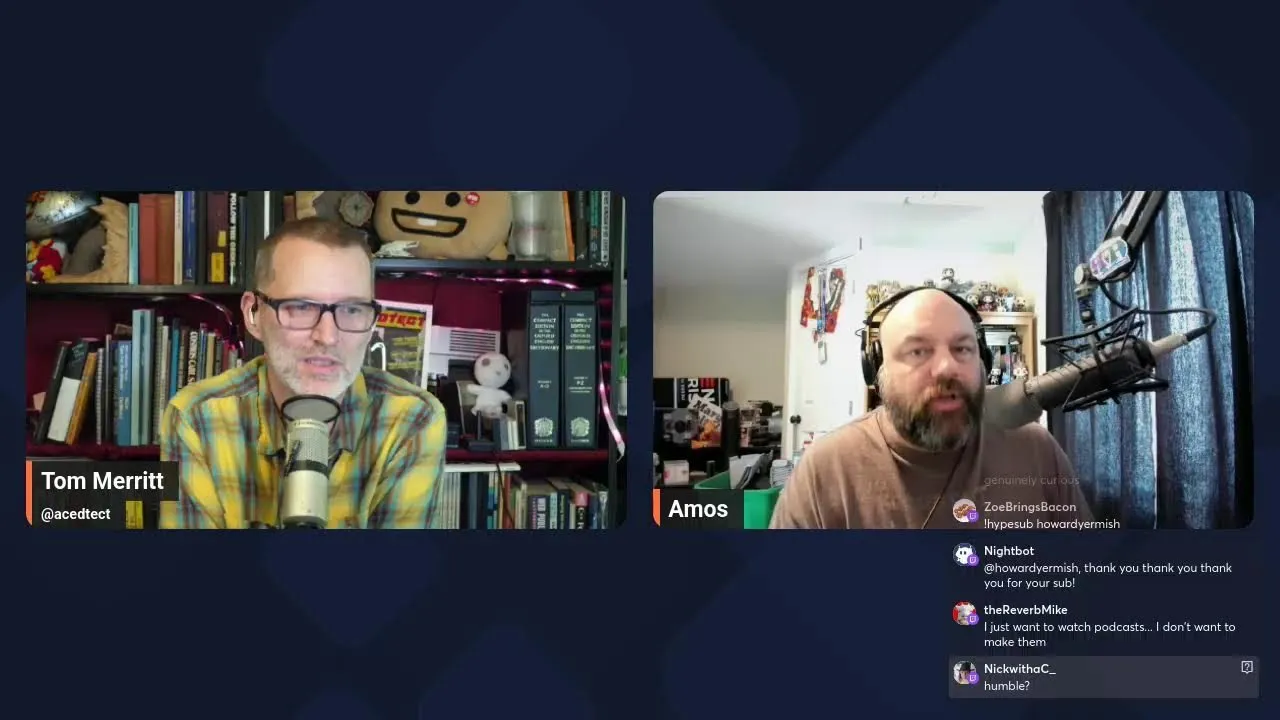
Veteran technology journalist and Daily Tech News Show host Tom Merritt analyzed the shifting landscape of hardware upgrade cycles and connectivity standards during a broad-ranging "Office Hours" session on Monday. Merritt highlighted the diminishing returns of frequent PC upgrades due to silicon maturity and argued the industry has reached a "watershed moment" regarding USB-C adoption, necessitating a new approach to peripheral management.
Key Points
- Hardware Longevity: The durability and performance of Apple’s M1 chips have significantly lengthened the upgrade cycle for professionals, pushing PCs toward "commodity status."
- Connectivity Inflection Point: The market has entered a transitional "USB-C Era" where users now require adapters to fit modern USB-C peripherals into legacy USB-A ports.
- Voice Assistant Features: Hidden "Harry Potter" commands within Apple’s Siri demonstrate evolving voice interaction capabilities.
- Community Engagement: DTNS is launching a "Tech Tournament" bracket system to debate and rank historical technology and retailers.
The Stagnation of the PC Upgrade Cycle
Merritt discussed the growing resilience of modern laptops, specifically citing the longevity of the Apple M1 MacBook Pro. Despite the allure of unannounced future silicon—speculatively referred to as the M5—Merritt noted that current hardware is outlasting previous replacement schedules. This trend correlates with broader market data showing stagnating PC sales.
According to Merritt, the personal computer has reached "commodity status," behaving more like a household appliance than a rapidly depreciating tech gadget. However, he advised that when upgrades become necessary, consumers should prioritize purchasing early in a product's lifecycle to hedge against inflation.
"I have often been a fan of future-proofing... It is my opinion that it's better to buy early and then keep it as long as possible because inflation always happens."
The "USB-C Era" and the Dongle Dilemma
A significant portion of the discussion focused on the current state of physical connectivity. Merritt identified a shift in the "dongle" economy. For years, users required adapters to plug legacy USB-A devices into modern USB-C ports. Now, the industry has reached an inflection point where the reverse is true: users increasingly own USB-C native peripherals but encounter legacy USB-A ports in environments like hotels, airports, and older workstations.
This ubiquity of USB-C devices has created a niche market for adapters that convert a USB-C cable to fit a USB-A port. Merritt posits that while USB-C is positioned as the "endgame" connector, the transition period remains chaotic.
"We are at an inflection point where we're going to need these less and less and we're going to need [legacy adapters] more and more... Until we don't. Is USB-C the endgame? Is this physical form factor... is that it?"
Software Curiosities and Community Initiatives
Beyond hardware, the session touched on hidden functionalities within Apple's ecosystem. Merritt demonstrated specific voice commands for Siri based on Harry Potter lore, including "Lumos" to turn on the flashlight and "Nox" to turn it off. He also noted that commands like "Accio" can launch specific applications, such as Instagram.
Looking ahead, Daily Tech News Show is preparing to launch a "Tech Tournament" segment. This bracket-style competition, tentatively scheduled to begin in March, will allow the community to vote on various technology categories, potentially starting with defunct software and electronics retailers like Babbages and Circuit City.
Merritt anticipates further clarity on Apple's laptop release schedule by late February or early spring, which will likely serve as a litmus test for his theory on hardware longevity and pricing strategies regarding RAM upgrades.