Table of Contents
The intersection of traditional finance and blockchain technology has moved beyond theoretical whitepapers into high-stakes implementation. As global financial value—projected to reach a quadrillion dollars by 2030—begins its migration on-chain, the infrastructure supporting it must evolve. The narrative is shifting from retail speculation to institutional utility, specifically regarding how major clearing houses settle trillions in assets.
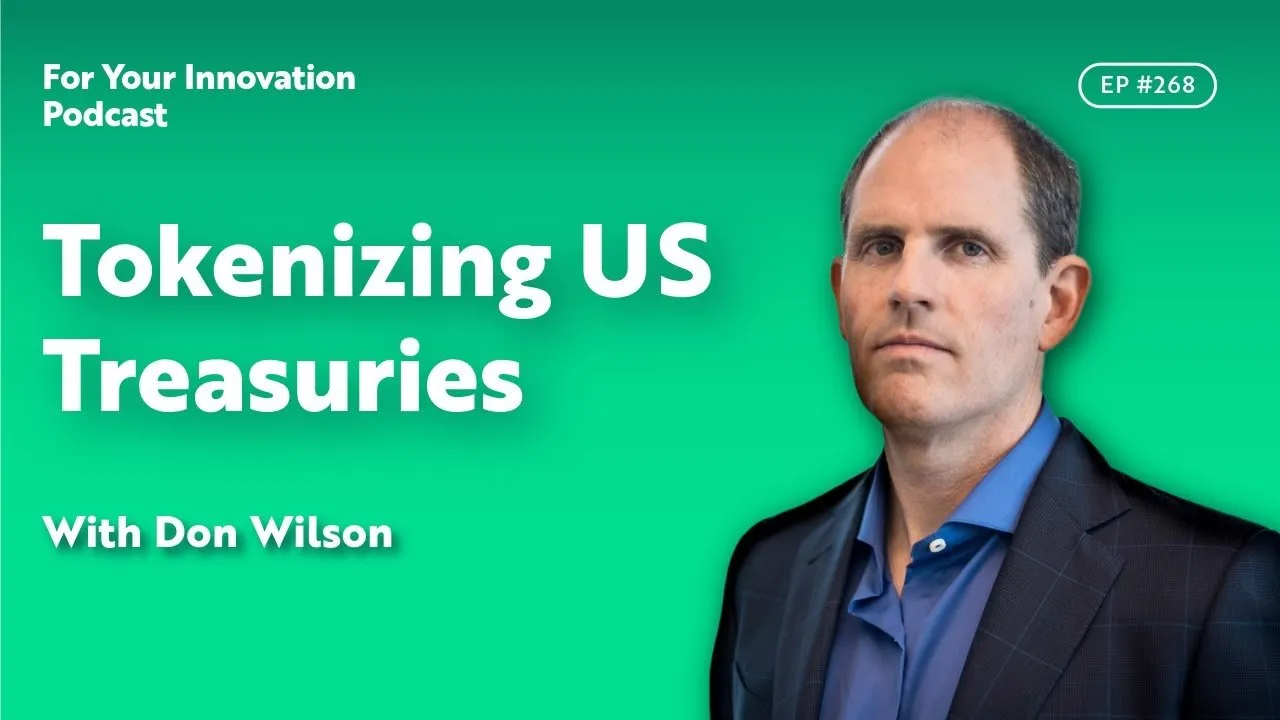
In a recent discussion, ARK Invest CEO Cathie Wood sat down with Don Wilson, founder of DRW and Cumberland, to dissect the launch of the Canton Network and its adoption by the Depository Trust & Clearing Corporation (DTCC). Their conversation illuminates a critical turning point where the efficiency of blockchain meets the regulatory requirements of Wall Street, signaling a new era of 24/7 collateral mobility and capital efficiency.
Key Takeaways
- The DTCC goes on-chain: The entity responsible for settling nearly $100 trillion in securities has begun tokenizing US Treasuries on the Canton Network, providing a massive "seal of approval" for the technology.
- Privacy is the institutional unlock: Large asset managers cannot use fully transparent public chains due to the risk of information leakage; configurable privacy is the prerequisite for institutional adoption.
- Collateral never sleeps: Tokenization transforms static assets into active capital, allowing institutions to convert Treasuries to cash and back again during weekends and non-banking hours.
- MEV is not PFOF: Wilson argues that Miner Extractable Value (MEV) in crypto markets is fundamentally different from Payment for Order Flow (PFOF), likening the former to illegal front-running.
- The shift to "Strong Hands": Despite recent market volatility, on-chain analytics suggest a transfer of Bitcoin ownership from speculative short-term holders to long-term institutional custodians.
The DTCC and the End of Financial Silos
For decades, the settlement of US securities has relied on a centralized, database-driven architecture managed by the DTCC. While effective, this system operates within rigid banking hours and creates friction in capital mobility. The announcement that the DTCC is using the Canton Network to tokenize specific US Treasuries represents a paradigm shift.
Unlike previous attempts by banks to build private blockchains—which often resulted in fragmented "walled gardens"—Canton operates as a network of networks. It is a public, permissionless chain designed specifically for institutional interoperability. By tracking ownership on a decentralized ledger rather than a static database, the DTCC is laying the groundwork for a market where assets can move seamlessly between counterparties without the traditional multi-day settlement lag.
"The DTCC holds about a hundred trillion dollars of assets... what they announced is that they are going to tokenize some of the most liquid treasuries on Canton. That is a really big deal."
The implication is that the DTCC is not merely testing the waters but is preparing for a future where a majority of the $100 trillion in assets they hold could eventually migrate on-chain.
Solving the Privacy Paradox for Institutions
A primary barrier preventing institutions from embracing public blockchains like Ethereum or Solana is radical transparency. While transparency is a virtue for decentralized ethos, it is a liability for a market maker moving millions of dollars. If a large institution broadcasts an intent to sell a significant block of equities, the market reacts instantly, causing slippage and front-running that destroys value.
Don Wilson emphasizes that the "sandbox" phase of private, permissioned chains (like the early R3 consortium efforts) is over. However, institutions still require control. Canton’s architecture offers a unique hybrid: it is decentralized and permissionless to join, yet it offers configurable privacy. This allows participants to prove the validity of a transaction to the network without revealing sensitive trade data to the entire world.
This nuanced approach allows major players—including heavyweights like Goldman Sachs, BlackRock, and BNY Mellon—to leverage blockchain efficiency without compromising their proprietary trading strategies.
Unlocking Capital: The 24/7 Collateral Revolution
The true utility of tokenization lies in collateral mobility. In the current financial system, a US Treasury bond held on a Friday evening is essentially illiquid until markets open on Monday morning. In a globalized economy that operates 24/7, this capital inefficiency is a significant drag.
Tokenization solves this by enabling atomic swaps between assets and cash (such as stablecoins) at any time. Wilson illustrated this with a practical example: an institution could tokenize a Treasury bill, lend it out to receive USDC on a Saturday morning to fund a trade, and unwind the position by Saturday afternoon. This capability reduces the total amount of capital required to sit idle in margin accounts, effectively allowing the same dollar to do more work.
ARK Invest estimates that financial intermediaries currently capture roughly 3% of global financial value in gross revenues. By moving settlement to optimized blockchain rails, this friction could be reduced to near 1%, returning immense value to the real economy and asset owners.
Controversy in Market Structure: MEV vs. PFOF
As institutional infrastructure matures, it clashes with the chaotic nature of current crypto market structures, specifically regarding Miner Extractable Value (MEV). In the crypto ecosystem, validators often reorder transactions in a block to profit from arbitrage opportunities or liquidate positions—a practice known as MEV.
Some industry observers equate MEV to Payment for Order Flow (PFOF) in traditional equities, arguing it is a standard market mechanism. Wilson strongly rejects this comparison. PFOF is a regulated practice where brokers are paid to route orders but are legally bound to provide "best execution" for the client. In contrast, MEV often involves observing a pending buy order and inserting a transaction ahead of it to force a higher price—a practice Wilson identifies as front-running.
"The definition of MEV on the Coinbase website is front running. Front running is clearly illegal and is very different than payment for order flow."
This distinction highlights why regulated institutions may hesitate to deploy capital on chains where MEV is rampant, further bolstering the case for privacy-enabled networks where transaction intent is not broadcast to predatory validators.
The Future Landscape: Private Credit and Institutional Accumulation
Beyond government treasuries, the tokenization wave is set to reshape private markets. Private equity and private credit are notoriously illiquid and operationally inefficient. By migrating these asset classes to a blockchain, issuers can streamline the complex workflows of capital calls and distributions, while simultaneously opening up secondary liquidity for investors.
This structural evolution is happening against a backdrop of shifting Bitcoin market dynamics. While the notorious "four-year cycle" suggests a bull market, recent price action has been volatile. However, on-chain data suggests that current selling pressure is driving a rotation of assets from short-term speculators to long-term institutional holders. This "strong hand" accumulation creates a higher floor for the asset class, suggesting that while volatility remains, the market infrastructure is hardening.
Conclusion
We are witnessing the dial-up internet era of digital finance transitioning into broadband. The involvement of the DTCC and the development of privacy-centric chains like Canton signal that blockchain is graduating from an experimental asset class to the foundational plumbing of the global financial system. By solving the trifecta of privacy, identity, and 24/7 mobility, the industry is paving the way for the tokenization of the world's most valuable assets.