Table of Contents
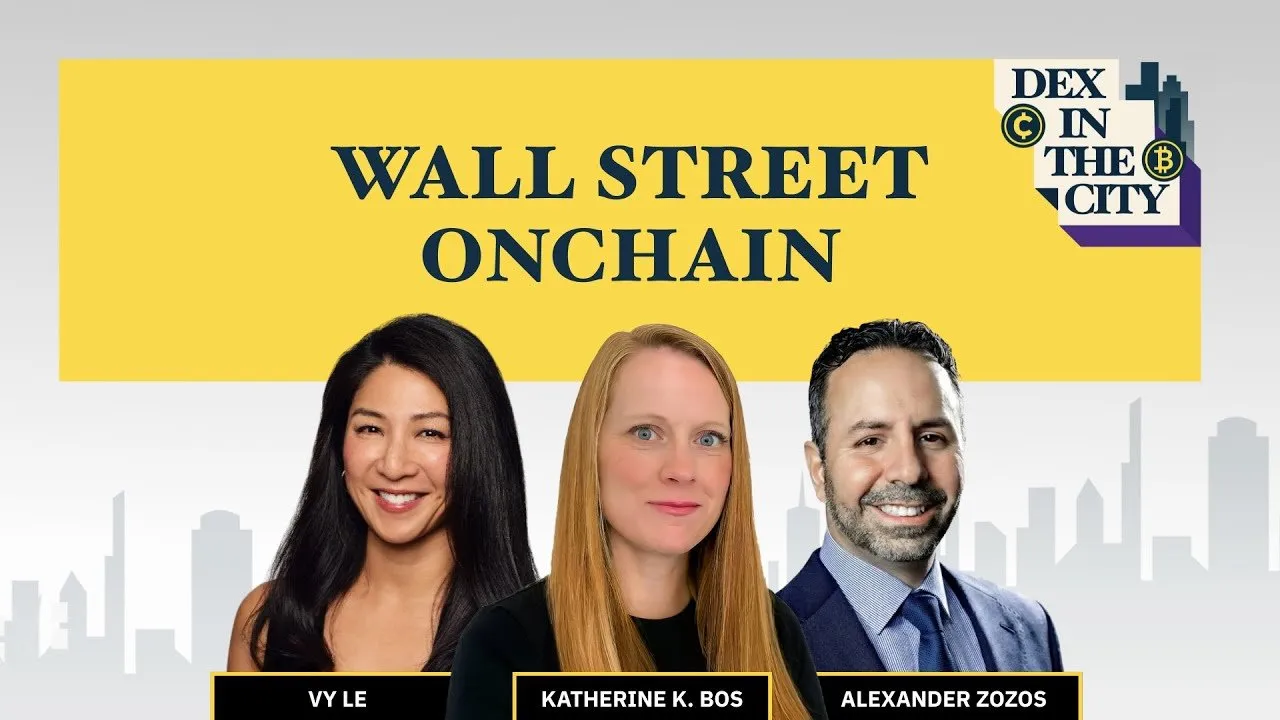
The intersection of traditional finance and blockchain technology is no longer a theoretical debate; it is an active construction site. As Wall Street giants and crypto-native builders race to modernize the capital markets, the regulatory plumbing that underpins the global economy is being reimagined. In a recent discussion on Decks in the City, hosts KK and V sat down with Alex Soosos, General Counsel at Superstate and a former veteran of the SEC’s Trading and Markets division. Their conversation offered a rare glimpse into the mechanics of tokenization, the entry of incumbents like the NYSE, and the evolving regulatory philosophy in Washington.
Soosos brings a unique dual perspective to the table. Having navigated the corridors of the SEC and now building at the forefront of the asset management industry, he understands both the rigid history of securities laws and the fluid potential of onchain finance. The result is a pragmatic look at how equities are moving onchain, why "Project Crypto" might actually be about broader deregulation, and why the future of finance likely involves parallel systems rather than an overnight revolution.
Key Takeaways
- The Plumbing Matters: Understanding the SEC’s Division of Trading and Markets is crucial for tokenization, as it oversees the infrastructure (clearing, settlement, and transfer agents) that blockchain aims to disrupt.
- Utility Over Novelty: The drive to tokenize isn't just about faster settlement; it is about "crypto superpowers" like programmability, self-custody, and lending utility in DeFi protocols.
- The Superstate Model: Unlike offshore "receipt" tokens, Superstate and Galaxy are leveraging transfer agents to create regulatory-compliant, onchain ownership of US equities.
- Incumbents Are Awake: Major entities like the DTC and NYSE are actively entering the space, signaling a shift from skepticism to existential adaptation.
- Regulation as Competition: "Project Crypto" may fundamentally be a push for market-based competition and deregulation, utilizing blockchain as a tool to reduce the need for heavy-handed intermediaries.
The Plumber’s View of the SEC
To understand the friction between crypto and regulators, one must understand the internal architecture of the SEC. While the Division of Enforcement often grabs headlines, the real work regarding market structure happens in the Division of Trading and Markets. This division oversees the "plumbing" of the US capital markets—the exchanges, broker-dealers, and clearing agencies that facilitate the movement of value.
Soosos, who spent nearly six years at the SEC, describes the challenge as applying Great Depression-era laws to digital-age realities. The securities regime in the United States is primarily built on the 1933 and 1934 Acts. These laws were designed to regulate a paper-based system that, in many ways, predates modern technology by nearly a century.
The Legacy of Self-Regulation
The US market structure relies heavily on Self-Regulatory Organizations (SROs) like FINRA and the exchanges themselves. This structure acknowledges that the markets existed before the regulators. However, as technology evolves, the reliance on centralized intermediaries creates bottlenecks.
"I figured out... that the plumbing was pretty antiquated and that the SEC had a lot of power. And so that kind of drove me to go work at the SEC."
The current push for tokenization is essentially an attempt to upgrade this plumbing. By moving from a centralized ledger to a distributed one, builders are challenging the necessity of the intermediaries that the SEC has spent decades regulating.
Beyond Speed: The Real Case for Tokenization
A common question from traditional finance skeptics is simple: "Why tokenize?" Current settlement times are already fast (T+1), and trading is relatively cheap. However, the value proposition of tokenization extends far beyond mere speed or cost efficiency.
The primary benefits lie in programmability and risk reduction. When an asset is tokenized, it gains what Soosos calls "crypto superpowers." This includes the ability to use the asset as collateral in DeFi lending markets, atomic settlement to eliminate counterparty risk, and increased transparency in corporate governance.
Derisking the System
From a policy perspective, tokenization offers a path to systemic resilience. The current market structure relies on massive centralized points of failure. If a primary clearinghouse goes down, the entire market halts. A decentralized, onchain system introduces redundancy.
"Whenever you have a single point of failure... you still always have risks and challenges to the extent that that infrastructure itself goes down or fails... creating resiliency and redundancy within the system also derisks the market structure."
By allowing assets to settle on a distributed ledger, the market can theoretically operate with greater stability, even if individual nodes or participants encounter failure.
The Superstate and Galaxy Partnership
One of the most significant developments in this sector is the partnership between Superstate and Galaxy to tokenize Galaxy’s NMS (National Market System) stock. This initiative represents a "Back to the Future" moment for equity ownership.
In the past, before the centralization of depositories like the DTC, transfer agents played a critical role in tracking who owned shares. The industry eventually moved toward "street name" registration—where your broker holds the shares—for efficiency. Superstate is reverting to the direct ownership model but upgrading it with blockchain technology.
Direct Ownership vs. Receipt Tokens
It is vital to distinguish between true tokenized equities and the "receipt token" models often seen in offshore markets. In many international jurisdictions, companies issue a token that acts as a claim on a share held elsewhere—similar to an American Depositary Receipt (ADR). This introduces counterparty risk; you own a receipt, not the asset.
The model employed by Superstate utilizes the blockchain as the record of truth for the transfer agent. If an investor transfers a token to another whitelisted wallet, the transfer agent’s ledger is automatically updated. The investor holds the actual security, not a derivative claim. This approach required significant engagement with the SEC to ensure compliance within the existing regulatory perimeter.
Wall Street’s Giants Enter the Ring
The "evolve or die" mantra is becoming a reality for traditional financial institutions. The Depository Trust Company (DTC), which clears the vast majority of US equity trading, and the New York Stock Exchange (NYSE) have both signaled major moves into the tokenization space.
The DTC recently secured a no-action letter to experiment with a sandbox environment for digital securities. For an entity whose entire business model relies on centralized clearing, blockchain technology presents an existential threat. However, history suggests that incumbents rarely vanish overnight; they adapt.
"The fact that a technology exists or an operating model exists doesn't mean it will completely displace or destroy something... I think there's going to be parallel systems that are going to exist."
We are likely entering a period of parallel systems. Issuers may soon have the choice to list on a traditional exchange, a fully native onchain exchange, or a hybrid model. The market will eventually determine which rails provide the best liquidity and utility.
Project Crypto: A Philosophy of Deregulation
The conversation concluded with a compelling theory regarding "Project Crypto" and the broader regulatory outlook under leadership figures like Chair Atkins. The theory posits that the push for crypto-friendly regulation isn't about crypto specifically—it is about a broader philosophy of market competition.
Regulatory bodies often utilize "blunt instruments" to control risks. For example, broker-dealers are heavily regulated because they hold customer funds and have inherent conflicts of interest. However, if a customer is self-custodying assets on a blockchain and executing peer-peer transactions, those specific risks evaporate. Therefore, the heavy-handed regulation becomes unnecessary.
Blockchain serves as a technological enabler for this deregulatory vision. By replacing trusted intermediaries with verifiable code, the market can rely on competition and software to mitigate risks that previously required government oversight. As these technologies mature, we may see a shift from prescriptive rules to a system where regulation is "form-fitted" to the actual risks present in the transaction.
Conclusion
The tokenization of real-world assets is moving from the "experimental" phase to the "deployment" phase. With former regulators helping to build compliant pathways and legacy institutions building their own onchain infrastructure, the convergence of TradFi and DeFi is accelerating. While legal hurdles remain, the trajectory points toward a future where equities are programmable, settlement is instant, and the plumbing of the global economy is finally upgraded for the digital age.