Table of Contents
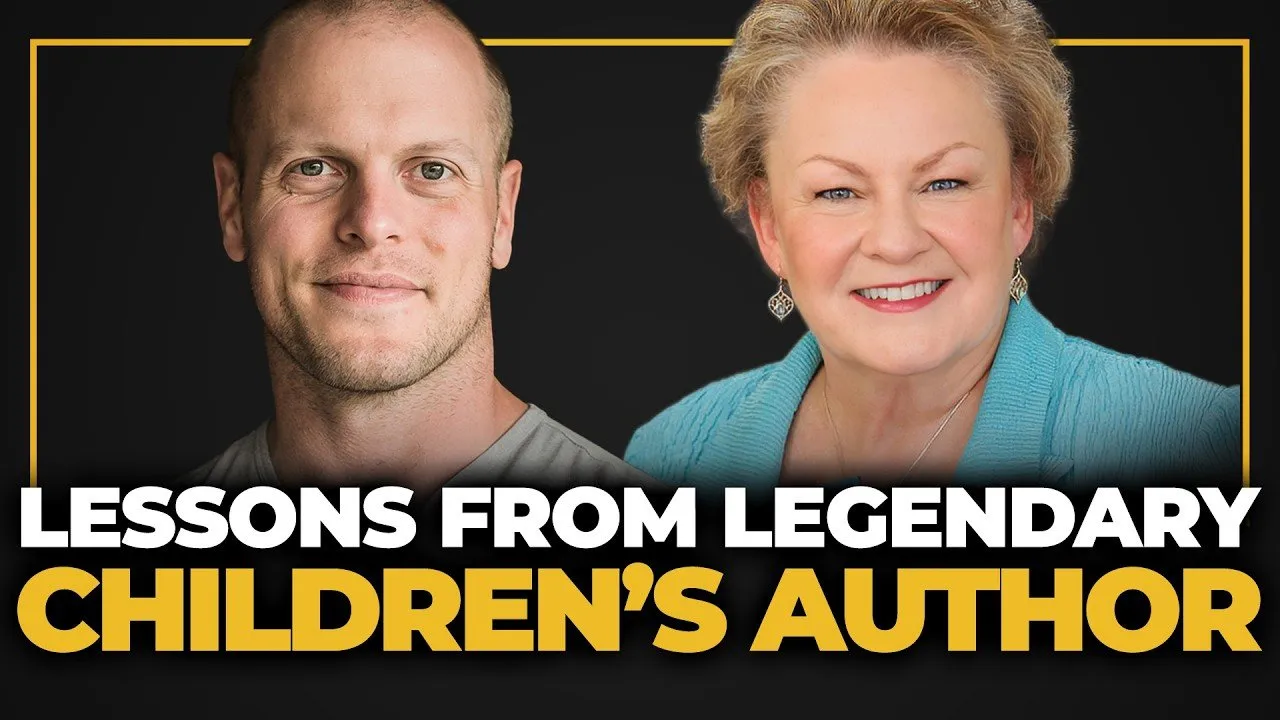
Tish Rabe isn't just a prolific author; she's a cornerstone of modern children's literature, having penned over 200 books that have sold more than 11 million copies. Her journey, however, didn't begin with a dream of Dr. Seuss but rather an ambition to grace the opera stage. From singing alongside Jim Henson's Muppets on Sesame Street to becoming a trusted voice in the Dr. Seuss universe and ultimately launching her own mission-driven publishing company at 71, Rabe's career is a testament to creativity, adaptability, and an unwavering commitment to enriching young minds.
Key Takeaways
- Unexpected Path to Children's Books: Tish Rabe initially trained as an opera singer but found her calling in children's entertainment through an unlikely entry point at Sesame Street.
- Sesame Street's Creative Powerhouse: Working on Sesame Street immersed Rabe in a highly creative, research-backed environment that prioritized educational content, innovative humor, and structured storytelling (writing endings first).
- Becoming a Dr. Seuss Legacy Author: A fortuitous rejection of her own rhyming manuscript led to the unprecedented opportunity to write new science-themed books for the iconic Dr. Seuss series, requiring adherence to strict rhythm and pure rhyme schemes.
- Entrepreneurship at 71: Rabe launched Tish Rabe Books to publish mission-driven stories, including books promoting dialogic reading, supporting military families, and fostering kindness.
- The Enduring Power of Rhyme and Music: Her work consistently leverages rhyme and incorporates music (often to public domain melodies) as powerful mnemonic devices and comforting tools for children's learning and development.
From Opera Dreams to Sesame Street
Long before her name became synonymous with beloved children's characters, Tish Rabe harbored a different dream. "I started out to be an opera singer," she recalls, detailing her four-year degree in opera with a minor in jazz. Yet, a dual passion for both singing and writing, nurtured since high school, hinted at a broader creative destiny.
Singing Her Way In
The pivotal turn in Rabe's career came with an unexpected question. Arriving in New York City for auditions, a chance encounter with her former high school music teacher, now assistant music director for Sesame Street Season 2, led to an offer. "He asked me if I could type," Rabe recounts, "And I said yes, I can sing and I can type." This led to her first job as a music production assistant, a role she quickly transformed.
Her vibrant energy and constant singing eventually caught the attention of her colleagues. After a year, they suggested, "Would you like to sing on Sesame Street with the Muppets?" Rabe enthusiastically agreed, lending her voice to countless songs and specials, including a memorable duet with Oscar the Grouch: "I Love Trash."
A Creative Crucible
Working at Sesame Street in its nascent years was an immersive experience in boundless creativity. Rabe describes it as "the most creative environment anyone could ever be in." Despite initial concerns that a show featuring a six-foot yellow bird, a cookie-eating monster, and a grouch in a trash can might "bomb," the creators were given remarkable freedom.
The show's groundbreaking approach included rigorous educational research, with each season guided by specific learning objectives, from numbers and letters to compassion. A key lesson Rabe learned from the Sesame Street writers, which she still employs today, was to "always write my last page first." This method, inspired by the structure of classic comedy routines, ensures a clear destination for the narrative. Additionally, Sesame Street pioneered "double-level humor," crafting content that entertained children while also engaging their parents, enhancing the learning experience.
The Accidental Children's Author
Rabe's transition from performer and production assistant to published author at Sesame Street was organic, born from the show's need for ancillary materials as it became a massive hit.
Pitching and Perseverance
When the staff was invited to pitch ideas for books, Rabe, embracing a "nothing to lose" attitude, shared a personal story about breaking her great-grandmother's teapot. After a moment of "dead silence," an editor asked, "Could you make it a story for Bert?" This led to her very first book, Bert and the Broken Teapot, which subtly conveyed the message that friendship triumphs over material possessions.
This initial success opened doors, and Rabe continued to write for various publishers while simultaneously building a career as a producer for educational television shows like Big Bird in China and 3-2-1 Contact, where she also honed her songwriting skills, creating science-themed songs.
The Seuss Connection: A Fortuitous Rejection
In 1991, while working as Director of Video at Random House, Rabe submitted a rhyming manuscript about a brachiosaurus who loved broccoli, titled Morris Aurorus Brachiosaurus. The response was initially disheartening. "We cannot publish Morris Aurorus Brachiosaurus," she was told, "because we are the rhyming home of Dr. Seuss."
However, this bad news swiftly turned into an extraordinary opportunity. The editor continued, "How would you like to write a new series for Dr. Seuss?" Dr. Seuss himself had intended to create a science series for early readers but passed away before completing the first one. Recognizing the perfect rhythm and pure rhyme scheme in Rabe's rejected manuscript, Random House tasked her with developing two books in just four months. This moment marked the beginning of her prolific career as a Dr. Seuss legacy author, starting with books like Is a Camel a Mammal? and If I Ran the Rainforest.
Crafting Rhyme and Rhythm: The Seuss Legacy
Writing within the Dr. Seuss universe came with specific, non-negotiable guidelines, demanding a mastery of rhythm and rhyme that Rabe, thanks to her musical background and innate talent, was uniquely prepared to deliver.
The Art of Simplification and Rhyme
Rabe emphasizes two core tenets for writing Dr. Seuss books: "The rhythm had to be perfect... and the end rhymes are pure." To achieve this, she developed a meticulous research strategy. For her subsequent books, she would visit the children's department of her local library, pulling every book on a given topic. This ensured the information was already simplified for young readers. She would then meticulously extract facts, always searching for words with rhyming potential.
Her "proudest" example of this process came when writing about birds: "When birds want to go on a winter vacation, they all take a trip and they call it migration." When faced with a challenging rhyme, Rabe, like Ted Geisel himself, would occasionally make up a word. In her book Oh, the Pets You Can Get!, she created "Gerlatz" as a town name that rhymed, in homage to Seuss's clever linguistic innovations.
A notable commission came from Audrey Geisel, Dr. Seuss's widow, who requested a book referencing all 41 of Ted Geisel's original works for expectant parents to read in utero. The result was the bestselling Oh, Baby, the Places You'll Go!, for which Rabe famously penned a witty, rhyming bio: "Tish Robbie is a mom who thinks that it's cool to be home rhyming rhymes while her kids are at school."
Breaking the Mold: The Genius of "Being Green"
While strict adherence to rhyme and rhythm was usually paramount, Rabe shared a fascinating anecdote about Joe Raposo, the legendary composer for Sesame Street. Asked by the executive producer how Kermit felt living on such a "crazy street," Raposo composed "Being Green."
It's not easy being green, having to spend each day the color of the leaves when it would be nicer to be red or yellow or gold or something much more colorful like that.
Remarkably, the song contains not a single end rhyme, a bold departure from conventional children's songwriting. This creative risk, born from a deep understanding of character and emotion, became a mega-hit, demonstrating the innovative spirit that permeated Sesame Street.
Empowering Through Entrepreneurship: Tish Rabe Books
At 71, Tish Rabe embarked on a new, ambitious chapter, launching her own publishing company, Tish Rabe Books. This decision stemmed from a desire to publish books with specific educational and social messages that traditional publishers might overlook.
A New Chapter at 71
Living in Mystic, Connecticut, with her husband (an avid fisherman), Rabe found herself with time and a wealth of ideas. "I really felt that I had some ideas for books that the other publishers weren't doing," she explains. This conviction fueled her decision to become an independent publisher, a move that came with a steep learning curve but immense satisfaction.
One of her proudest early independent works is Love You, Hug You, Read to You, a board book designed for "dialogic reading," which encourages interaction between parent and child through embedded questions. "I couldn't get anyone to let me write a book for them," Rabe says of the concept, "So, I finally said, 'Well, then I'll just do it myself.'"
Books with a Mission
Rabe's independent venture has allowed her to focus on passion projects with profound social impact. Inspired by her father, a World War II POW, she wrote Sometimes a Part, Always in My Heart, a book for military children. She extensively interviewed service members and their families to authentically capture their experiences, offering comfort and understanding.
Another impactful project is Sweet Dreams, developed in collaboration with the Pajama Program (now Beyond Bedtime). This book, which includes tips for parents and a lullaby set to the tune of "Twinkle, Twinkle Little Star," aims to help children facing adversity establish healthy bedtime routines. Rabe passionately advocates for the power of a parent's voice: "The only voice your child wants to hear is yours."
Her upcoming works continue this mission, including Kindness is Caring, Friendship is Sharing, written with international Rotary Clubs, and a book about Central Park, for which she is crowdfunding to provide free copies to underserved communities in New York City. Her commitment to literacy and access is clear: "I am on this lifetime mission of trying to get free books to kids who don't have any."
The Craft of Independent Publishing
Venturing into independent publishing has meant embracing every aspect of book production, from finding illustrators and printers to managing shipping and sales. Rabe's background in music and writing, however, continues to inform her approach. Her self-published books often include songs, leveraging public domain melodies to make them accessible and memorable for both children and parents.
She also shared a humorous challenge from her Dr. Seuss solar system book when Pluto was "demoted." Rabe had to quickly revise her mnemonic rhyme: "Mallerie Valerie Emily Mitz just served up 999 pizzas" became "Mallerie Valerie Emily Mckles just showed us 999 nickels," requiring only a minor art adjustment.
Adventures and Lessons from a Lifetime of Storytelling
Tish Rabe's career is dotted with remarkable experiences, offering profound lessons in adaptability, problem-solving, and the sheer joy of creation.
Big Bird in China: A Pioneering Expedition
One of the most extraordinary chapters in Rabe's producing career was Big Bird in China in 1982. This groundbreaking project marked the first time a Western film crew was permitted to shoot extensively in China. The logistical challenges were immense, from communicating with a five-year-old lead actress who spoke no English to coping with heavy rains that threatened Big Bird's hand-dyed costume. "It poured the first 13 days," Rabe recalls, describing how they would rush Carol Spinney (Big Bird's puppeteer) out for quick lines between downpours. The crew also faced the unexpected challenge of a complete lack of coffee, a staple for any film set.
Despite the adversities, the 90-minute special won an Emmy, a testament to the crew's perseverance and ingenuity in a truly unprecedented environment.
Overcoming Creative Hurdles
Even a seasoned writer like Tish Rabe encounters creative blocks. Her strategy for "writer's block" is pragmatic: "If they say we have to have your first draft by April 1st, okay, April, I write in it's due February 15th." This buffer allows her to step away and work on other projects when an idea isn't flowing, preventing the self-consuming cycle of being stuck. She learned early on the importance of having multiple projects, or "balls in the air," as she calls it, to keep creativity flowing.
A prime example of turning a challenging assignment into a success was a request from the American Academy of Pediatrics for a Dr. Seuss book promoting healthy habits. Rabe initially found the concept "boring" and risked sounding "preachy." Her solution? To propose creating new Dr. Seuss-style characters like the "Zing Singing Xans who loves washing her hands." Though this audacious idea initially faced resistance, it was ultimately approved by Audrey Geisel and became a huge bestseller, later expanded with additional pages funded by Michelle Obama.
Conclusion
From an aspiring opera singer to a trailblazing author and independent publisher, Tish Rabe's journey is a vibrant tapestry woven with creativity, resilience, and an unwavering belief in the power of stories and songs. Her career, spanning from the innovative early days of Sesame Street to carrying on the legacy of Dr. Seuss, exemplifies how passion, combined with an openness to unexpected opportunities, can lead to a profoundly impactful life.
Her commitment to children, particularly those facing adversity, shines through every project, whether it's fostering dialogic reading or supporting military families. When asked what message she would put on a billboard for the world to see, Tish Rabe's answer is simple yet profound:
Remember that children are our most precious gift.
She emphasizes that children are the future, deserving of our utmost care and investment. Tish Rabe's work is a living embodiment of this philosophy, constantly reminding us of the joy and transformative power found in a good book and a gentle song. As she often says, encouraging young and old alike: "Reading and writing both are so exciting. Read a book or write a story. Start right now. That's how we close."