Table of Contents
The early internet was defined by a sense of boundless optimism—a freewheeling ecosystem of creativity, entrepreneurship, and connection. Yet, over the last decade, that digital utopia has curdled. For many, social media now feels less like a town square and more like a prison yard we cannot bring ourselves to leave. This shift wasn't an accident; it was a fundamental transformation in how economic power is wielded.
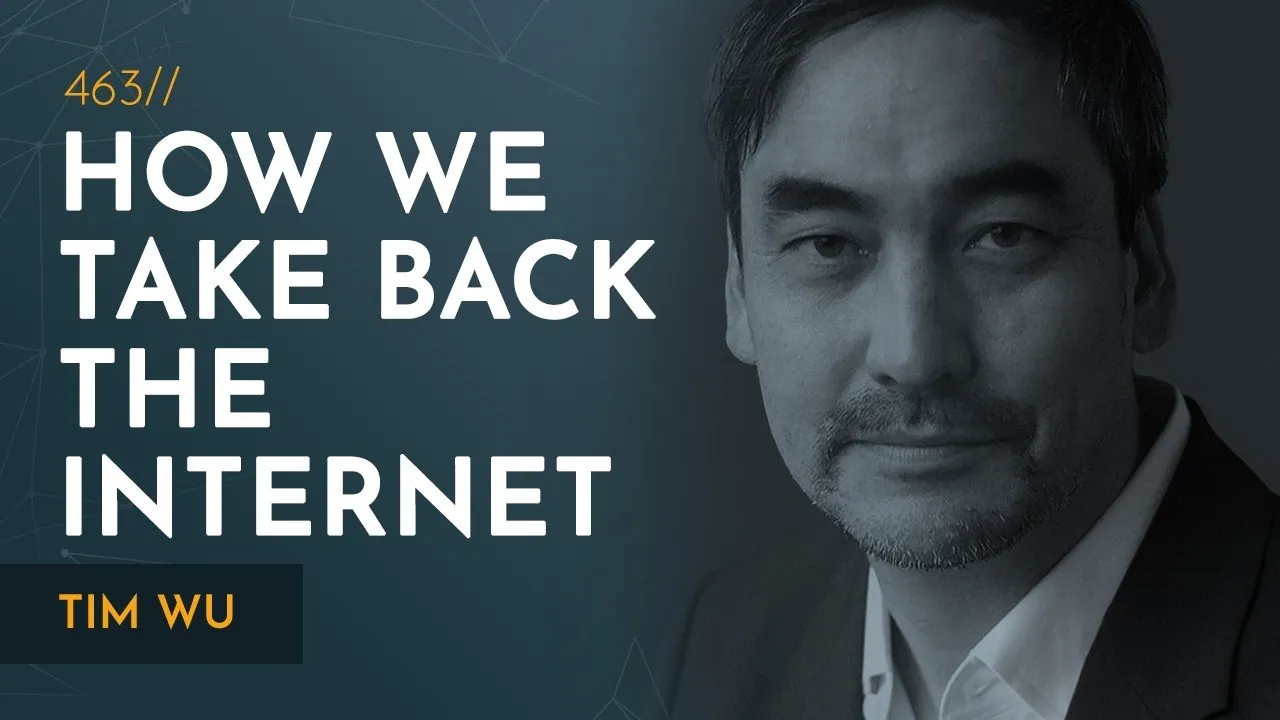
Tim Wu, a professor at Columbia Law School and the architect of "net neutrality," argues that we have entered a new era: The Age of Extraction. In a recent conversation with Demetri Kofinas on Hidden Forces, Wu details how major technology companies have pivoted from creating value to capturing it, treating users less like customers and more like livestock to be harvested for data and attention. This evolution of platform power has become the defining economic event of the last half-century, reshaping everything from our psychology to the stability of our democracies.
Key Takeaways
- Platform Power is the New Industrial Power: Just as land defined the agrarian economy and factories defined the industrial age, control over digital intermediaries defines modern economic dominance.
- The Turning Point was 2013: The acquisition of Waze by Google marked the end of the competitive internet and the beginning of unchecked consolidation.
- The "Casino" Business Model: Platforms have shifted from neutral utilities to engagement traps designed to harvest the finite resource of human time.
- The AI Threat: The zero-marginal-cost economy, accelerated by AI, threatens to flood the internet with low-quality content, causing a collapse in user attention.
The Evolution of Economic Power
To understand the current dysfunction of the internet, we must first understand the historical trajectory of power. Tim Wu views The Age of Extraction as the third installment in a trilogy that includes his previous works, The Master Switch and The Attention Merchants. His central thesis is that the source of economic leverage has fundamentally shifted.
Two centuries ago, economic power was synonymous with land and agriculture. By the 20th century, power had transferred to the industrialists who controlled the means of production—the factories and supply chains that built the modern world. Today, however, we are witnessing the ascendancy of platform power.
The transformation of the economy to one in which platform power has become central in tech and other industries show signs of being the signal economic event of the last half century.
Platforms act as the ultimate intermediaries. Whether matching buyers with sellers or speakers with listeners, they control the bottlenecks of the economy. In the early days, platforms like Main Street or even early internet protocols were neutral. Today, however, tech giants have realized that by controlling the infrastructure, they can dictate the terms of commerce and communication, extracting tolls at every step.
The Death of Competition
When exactly did the dream of the 90s die? Wu points to a specific, symbolic date: June 11, 2013.
This was the day Google acquired Waze. At the time, Waze represented a genuine competitor to Google Maps—a "people's map" built on user contributions, distinct from Google's centralized approach. In a healthy market, antitrust regulators would have blocked a merger to monopoly. Instead, the deal was allowed to pass without challenge.
The Failure of Regulation
The rationale for allowing this consolidation reveals the intellectual bankruptcy of that regulatory era. Wu recounts a conversation with an antitrust staffer who explained the prevailing logic: Google Maps is for finding where you are, while Waze is for finding where you are going. Therefore, they weren't competitors.
This failure to enforce competition laws allowed tech giants to adopt the tactics of 19th-century monopolists like John D. Rockefeller: simply buying out anyone who threatens your dominance. The result is an ecosystem where disruptive innovation is stifled, and incumbents are free to degrade their product without fear of losing users.
From Connection to Extraction
The core business model of the internet has shifted from facilitating transactions to harvesting attention. Wu describes this as a move toward a "casino" model. The goal is no longer to provide a useful service that you finish using efficiently; the goal is to keep you on the platform for as long as possible, regardless of the psychological cost.
Platforms have effectively weaponized their code against their users. By feeding on the "lowest human emotions" and optimizing for addiction, they extract value from the user base much like industrial farming extracts value from livestock.
The Loss of "Taste"
A critical aspect of this decline is the abandonment of editorial responsibility. Major platforms act as media companies—curating what we see and amplifying specific messages—yet they refuse to accept the responsibilities of an editor.
Unlike a newspaper that makes conscious decisions about what is important, platforms operate without "taste." They view content merely as a conduit for paid advertising. This lack of curation has turned spaces like Twitter (now X) into hostile environments where the user experience is sacrificed on the altar of engagement metrics.
The AI Tsunami and the Scarcity of Time
As we look to the future, the extractive model faces a new existential threat: Artificial Intelligence. The internet economy has long been based on zero marginal costs—it costs nothing to replicate software or digital content. AI is pushing this to its breaking point.
We are facing a tsunami of content where non-human actors can produce infinite amounts of text, video, and audio. Even if this content is high-quality, the sheer volume creates a crisis of scarcity.
The limiting factor in almost everything with humans... is time. The fact is 24 hours is what we got. The day does not expand.
If platforms become flooded with AI-generated noise, the "human user" may eventually opt out entirely. The extractive model relies on human attention, but by polluting the ecosystem with infinite content and aggressive monetization, platforms risk triggering a collapse where the effort required to find value simply isn't worth the squeeze.
Conclusion
The rise of platform power is not just a technological issue; it is a societal one. The current model drives economic inequality, fosters political instability, and degrades our public discourse. We have allowed a handful of private actors to capture the digital public square, and the damage is evident in the polarization and resentment that defines modern politics.
Fixing this requires more than just deleting an app. It requires a systemic approach to reclaiming the internet—through antitrust enforcement, utility rules, and the development of alternative business models that do not rely on the extraction of human attention. The dream of an open, optimistic internet may be dormant, but acknowledging the mechanics of its capture is the first step toward waking it up.
To listen to the full conversation with Tim Wu, including the second hour focused on solutions and policy changes, visit the Hidden Forces website.