Table of Contents
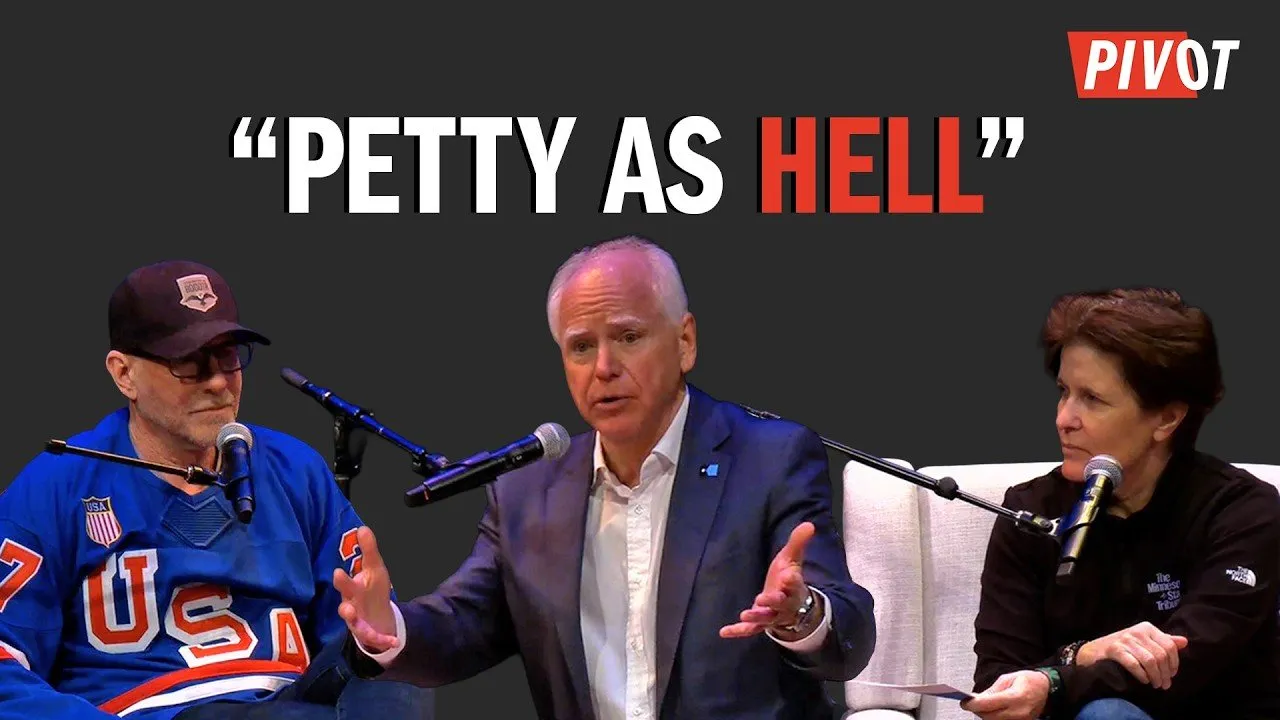
In a powerful and candid live event at the Pantages Theater in Minneapolis, Governor Tim Walz joined hosts Kara Swisher and Scott Galloway to discuss the state of modern democracy, the necessity of local resistance, and the urgent need for corporate accountability. The conversation, recorded for the Pivot podcast, centered on how citizens and leaders can effectively push back against institutional erosion by leveraging the power of collective action and economic pressure.
Key Takeaways
- The Power of Non-participation: Economic strikes—specifically unsubscribing from services or boycotting corporations that enable harmful political agendas—serve as a potent, underutilized weapon in modern capitalism.
- Community-Led Resistance: Governor Walz highlighted that the most effective political movements are organic and local, often outpacing and out-strategizing traditional elected officials.
- Demanding Corporate Accountability: There is a growing consensus that large corporations must be held to higher ethical standards, and leaders should resist the urge to provide "spin" when "spine" is required.
- The Role of Personal Responsibility: The speakers emphasized that maintaining democracy requires active participation, including consistent voting, local organizing, and a commitment to protecting the rights of marginalized communities.
The "Petty as Hell" Stance Against Political Misconduct
Governor Walz didn’t mince words when asked about the departure of former Secretary Kristi Noem. While he admitted to a moment of introspection regarding his own sense of "pettiness," he ultimately framed his frustration as a necessary response to the blatant disregard for the rights of Minnesotans. For Walz, the issue extends far beyond individual political figures; it is a systemic critique of those who prioritize fealty to Donald Trump over the welfare of their constituents.
"This was not mistakes. This was a blatant violation of human constitutional rights of Minnesotans." — Governor Tim Walz
Walz argued that accountability must be the primary objective, suggesting that if investigations reveal illegal activity, the path should lead directly to indictments and trials. He emphasized that the common political defense of "just following orders" has no place in a system governed by the rule of law.
Organizing Local Resistance
When reflecting on the presence of federal agents in Minneapolis, Walz noted that the eventual withdrawal of those forces was not the result of high-level political maneuvering. Instead, it was the result of "organic leadership on the streets." Parent-teacher organizations, community members surrounding schools, and neighbors protecting neighbors provided the true resistance that forced the federal presence to retreat.
Lessons for Future Activism
Walz offered advice for mayors and local leaders facing similar challenges: prioritize local autonomy and ensure that state resources remain focused on serving citizens rather than coordinating with federal efforts that may conflict with local values. He noted that the most powerful response is to stay in your lane, maintain the integrity of local programs, and protect the community from outside interference.
Corporate Spine vs. Corporate Spin
Scott Galloway turned the conversation toward the corporate sector, specifically calling out the "missed opportunity" of leaders like Target's CEO to stand up for their employees. Galloway argued that CEOs are too often paralyzed by expensive communications consultants who dilute messages until they mean nothing.
"The opportunity for someone to push back was enormous. And quite frankly, the CEO of Target missed an enormous opportunity because right now what this city deserves is spine, not spin." — Scott Galloway
Galloway proposed that for CEOs to truly lead, they need "cloud cover"—collective action where multiple Fortune 500 companies take a stand together. By forming a coalition to push back against unethical government mandates, they could effectively safeguard the business-government separation that has made the U.S. economy a global powerhouse.
The Weapon of Economic Strikes
Galloway’s "Resist and Unsubscribe" initiative is built on the premise that in a consumer-driven economy, the most radical act is non-participation. He detailed how small, individual actions—such as canceling a subscription to a service that facilitates government surveillance or harmful political influence—can cause significant shifts in market capitalization when done at scale.
Quantifying the Impact
The strategy focuses on the "soft tissue" of major tech companies: their subscription numbers. By making it easier for users to navigate the often-complicated process of unsubscribing, the movement aims to impose a financial penalty on companies that fail to align with democratic values. Galloway urged participants to view these actions not as isolated gestures, but as part of a sustained campaign to rewire corporate incentives.
Conclusion
The evening at the Pantages Theater concluded with a call for renewed civic engagement and a rejection of apathy. Whether through voting, community volunteering, or conscious consumer choices, the message from both Walz and Galloway was clear: the survival of democratic norms depends on the courage of individuals to act. By embracing the responsibility to stand up for one another and demanding accountability from both elected officials and corporate giants, citizens can ensure that the country remains "equal to the moment."