Table of Contents
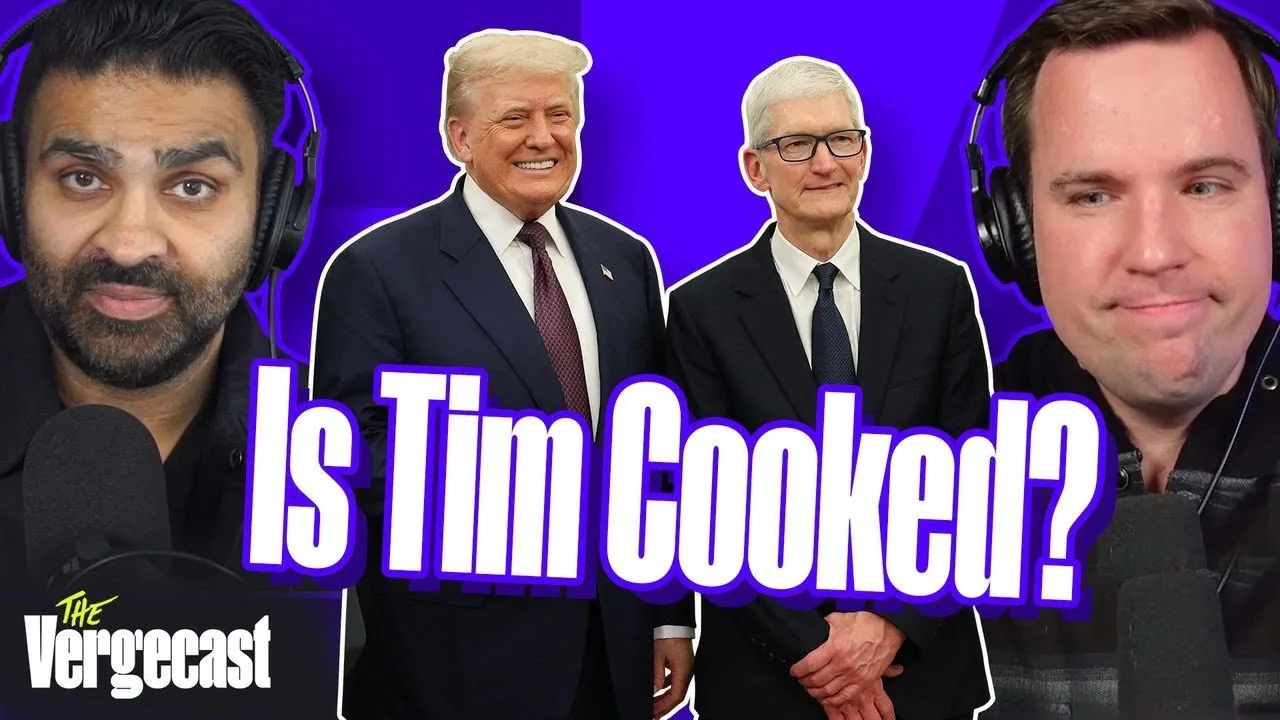
Apple CEO Tim Cook faced intense scrutiny this week for his attendance at a White House event amid social unrest, signaling a definitive shift in Silicon Valley’s approach to the incoming administration. During the latest episode of The Vergecast, hosts Nilay Patel and David Pierce analyzed how this move reshapes Apple’s corporate legacy while dissecting broader industry disruptions, including TikTok’s chaotic infrastructure transition and Tesla’s strategic pivot away from its flagship vehicles.
Key Points
- Apple's Political Pivot: Tim Cook's attendance at a Melania Trump documentary screening underscores a strategy of appeasement to navigate potential tariffs, drawing criticism for conflicting with Apple’s stated company values.
- Platform Trust Crisis: TikTok experienced a "catastrophic system failure" following its integration with Oracle, exacerbating user distrust regarding data privacy and content moderation.
- Tesla Discontinues Flagships: Elon Musk announced the end of the Model S and Model X production lines to focus resources on autonomous robotics, signaling a shift away from traditional automotive manufacturing.
- AI Moves to Utility: The rise of "agentic" AI, such as Moltbot (formerly Claudebot), marks a transition from generative content creation to autonomous software engineering and problem-solving.
The Erosion of Corporate Neutrality
The traditional separation between Silicon Valley leadership and partisan politics appears to be dissolving as major technology CEOs adjust to the realities of the new administration. The focal point of this shift was Tim Cook’s attendance at a White House screening for a documentary about Melania Trump—a project reportedly acquired by Amazon for $40 million, significantly above market value.
Critics argue that Cook’s presence at the event, which coincided with significant civil unrest in Minneapolis involving federal agents, represents a betrayal of the values Apple has historically championed. While Apple employees expressed concern internally, Cook issued a memo regarding a conversation with the President about "deescalation," which The Verge Editor-in-Chief Nilay Patel characterized as a strategic capitulation rather than effective leadership.
"I think [Tim Cook] is trashing whatever legacy he thought he was going to have... Tim Cook cashed in his legacy and his values to Trump at a moment when it was very clear to hardware store owners in Minnesota what their values should be."
The analysis suggests that large technology monopolies, including Apple and Amazon, feel compelled to engage in "nonsense theater" to protect their supply chains from tariffs and regulatory retribution. However, this pragmatic approach risks alienating a workforce and customer base that expects consistency between corporate messaging and executive action.
Infrastructure Failures and the Trust Deficit
Beyond the political arena, the technology sector faced significant operational failures this week. TikTok’s transition to Oracle-controlled infrastructure in the U.S. resulted in a massive outage, described by the company as a "catastrophic system failure." Reports indicate the failure occurred because a backup link to a Singapore data center—which was supposed to be severed for compliance reasons—was broken, causing the U.S. system to collapse.
This technical failure compounds a growing crisis of trust across social platforms. Users have become increasingly suspicious of algorithmic manipulation, interpreting technical bugs as malicious censorship. For example, a glitch that blocked the word "Epstein" in TikTok DMs and an Instagram bug affecting story view counts fueled immediate conspiracy theories.
"We’ve hit this point now where... perfectly reasonable technical explanations for why view counts wouldn’t be going up... everybody immediately leaps to conspiracy theory. Once you’ve inspired that immediate connecting of dots in people's brains, you can't undo it."
The hosts noted that as centralized platforms like TikTok and Meta lose credibility, there is a burgeoning interest in the "open social web" and alternative platforms where users feel they have more transparency and control.
The Pivot to Autonomous AI and Hardware Shakeups
On the innovation front, the industry is witnessing a "turn" in artificial intelligence from generating passive content to active utility. The discussion highlighted "Moltbot" (originally Claudebot), an AI agent capable of writing and executing its own code to solve complex tasks on a user's local machine. This represents a significant evolution in software, where users can prompt AI to build bespoke applications for niche problems, such as integrating incompatible smart home devices.
Simultaneously, the hardware market is seeing drastic changes. Tesla confirmed it will discontinue the Model S and Model X, the vehicles that established the company as a luxury EV leader. Elon Musk stated the company must focus on autonomy and robotics, effectively turning Tesla away from being a pure car manufacturer despite two consecutive years of declining sales.
In the mobile sector, Samsung released its Galaxy Z Trifold, priced at $2,899. Notably, the device went on sale without review units being distributed to press—a highly unusual move for a flagship product. This lack of transparency raises concerns about the device's durability and value proposition in an increasingly crowded foldable market.
As 2024 progresses, the technology sector appears to be entering a period of friction where corporate survival strategies clash with user expectations, and experimental AI utilities begin to challenge traditional software development models. The success of these pivots will likely depend on whether companies can rebuild the trust that has eroded due to political acquiescence and platform instability.