Table of Contents
In a significant shift regarding user autonomy and digital privacy, major technology firms are recalibrating their artificial intelligence strategies in early 2026, moving away from forced integration toward optionality. While software giants retreat to rebuild user trust, the hardware sector sees massive ambition as SpaceX files regulatory paperwork for an unprecedented orbital data center network, and cybersecurity firms uncover a months-long state-sponsored compromise of a ubiquitous development tool.
Key Points
- Mozilla Firefox will implement a complete "AI kill switch" in version 148, launching February 24, allowing users to disable all current and future AI features.
- Microsoft is reportedly reviewing its AI integration, walking back Copilot buttons in core apps and reconsidering the controversial "Recall" feature.
- SpaceX has filed with the FCC to launch 1 million satellites to function as orbital data centers, coinciding with its acquisition of xAI.
- Notepad++ developers confirmed a six-month security compromise by a Chinese state-affiliated hacking group targeting government infrastructure.
- Apple has overhauled its online purchasing process for Macs and introduced granular location privacy controls in iOS 26.3.
The Pivot: Tech Giants Rethink AI Integration
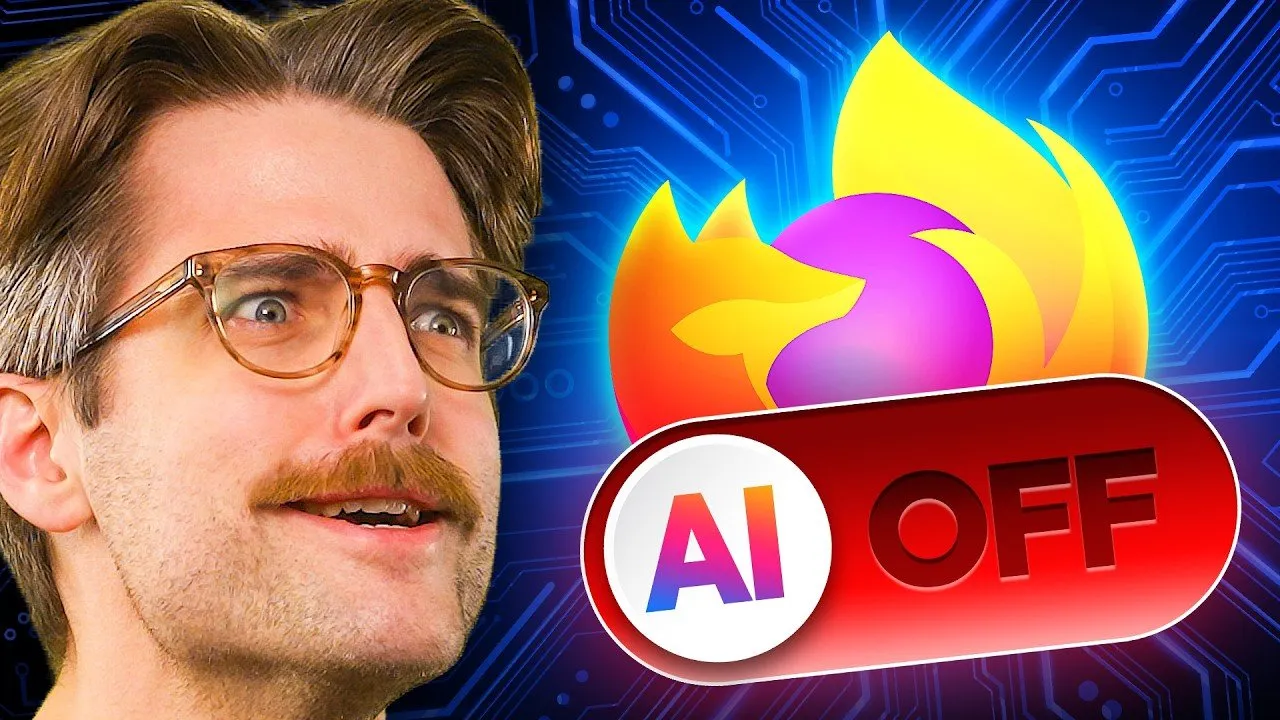
Facing mounting user pushback, two of the industry's most influential software organizations are reversing course on aggressive AI implementation. Mozilla has officially confirmed that Firefox version 148, scheduled for release on February 24, will introduce a dedicated "AI controls" section in settings. This feature includes a toggle to "block AI enhancements," effectively disabling all generative AI integrations within the browser.
This development follows Mozilla's strategic pivot late last year to position Firefox as a modern AI browser, a move that sparked significant community criticism. However, the organization is not abandoning AI entirely. Mark Surman, President of the Mozilla Foundation, is reportedly orchestrating a broader strategy to counter the dominance of Big Tech.
"The goal is to make AI more open and trustworthy and build a mainstream open-source AI ecosystem by 2028."
Mozilla is not alone in this retreat. Following statements from Windows President Pavan Davuluri that 2026 would focus on "rebuilding trust," reports from Windows Central indicate that Microsoft is actively scaling back its AI push. The company is currently reviewing the inclusion of Copilot buttons in native applications like Notepad and Paint. Furthermore, the company is re-evaluating the "Recall" feature, which has been widely criticized by privacy advocates and users alike, marking a rare moment of contraction in the industry's AI boom.
Infrastructure and Security: Orbit and Exploits
SpaceX's Orbital Data Centers
While software providers contract, SpaceX is pursuing an aggressive expansion of physical infrastructure. The company has filed a request with the FCC to launch up to 1 million satellites intended to serve as orbital data centers for artificial intelligence. For context, there are currently only 15,000 satellites orbiting Earth, the majority of which are already Starlink units.
These new satellites would orbit between 500 and 2,000 kilometers above Earth, utilizing laser communication and radiating heat directly into the vacuum of space—a method designed to mitigate the environmental impact on ground-based water systems. This filing aligns with SpaceX's recent announcement that it is acquiring xAI, consolidating Elon Musk’s rocket manufacturing, satellite network, social platform X, and the Grok AI model under a single corporate entity ahead of a projected $1 trillion IPO.
Notepad++ Supply Chain Attack
In the cybersecurity sector, a significant supply chain attack has been remediated. Developers of the popular text editor Notepad++, in conjunction with cybersecurity firm Rapid7, revealed that the software's hosting infrastructure was compromised during the latter half of 2025. The attack is attributed to Lotus Blossom, a Chinese state-affiliated hacking group.
The attackers hijacked the update system to selectively redirect specific high-value targets—primarily government and infrastructure entities in Southeast Asia and Central America—to malicious servers. The breach persisted from June 2025 through December 2025, largely due to unrotated stolen credentials. The vulnerability has been patched in version 8.8.9, which introduces rigorous certificate and signature checks.
Consumer Hardware and Policy Updates
Apple has quietly revolutionized its online retail experience. The pre-configured model selection process has been replaced with a component-by-component builder, allowing customers to specify display, chip, memory, and storage individually with real-time pricing updates. On the software front, the upcoming iOS 26.3 will introduce a privacy toggle allowing users to limit cellular carrier tracking to a rough geographic area rather than precise coordinates, balancing privacy with signal integrity.
Amazon is taking a harder stance on ecosystem control. The company has begun blocking the installation of apps flagged for unlicensed content on Fire TV devices, displaying an "app installation blocked" message that cannot be bypassed. This move is seen as a precursor to the rollout of Vega OS, a new operating system expected to eliminate sideloading capabilities entirely.
Meanwhile, Motorola has drawn scrutiny over its support lifecycle for the new Moto G17. Despite EU regulations mandating five years of updates, the manufacturer has utilized a loophole: the law applies only if a company chooses to provide OS updates. Motorola has opted not to provide OS version upgrades for the G17, committing only to the mandatory two years of security patches, which will remain downloadable for five years.
Future Technology
In a breakthrough for wearable technology, researchers at Fudan University in Shanghai have successfully developed a computer chip integrated into a fiber thinner than a human hair. The technology packs approximately 100,000 transistors per centimeter into a flexible strand capable of withstanding extreme heat, heavy pressure, and standard washing machine cycles. The innovation is targeted at next-generation smart textiles and brain-computer interfaces.
As 2026 progresses, the tension between user control and technological advancement remains the central theme, with consumers gaining ground on software autonomy while hardware manufacturers push the boundaries of physical and legal limits.


![Fidelity Just EXPOSED Crypto's Biggest Secret [Not What You Think]](/content/images/size/w1304/format/webp/2026/02/fidelity-2026-crypto-outlook-revenue-sharing.jpg)