Table of Contents
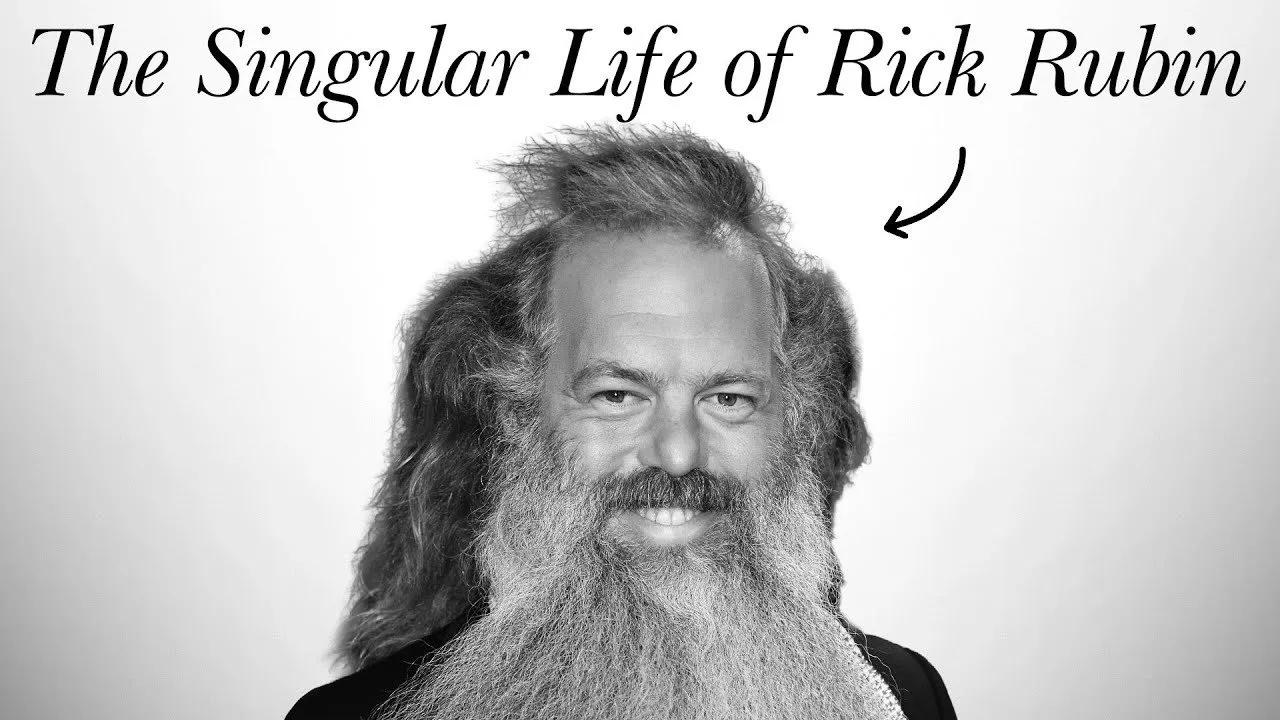
There is perhaps no greater enigma in the modern music industry than Rick Rubin. His career is a study in range and contradiction: he co-founded Def Jam Records in an NYU dorm room, legitimized hip-hop as a commercial force, defined the sound of thrash metal with Slayer, and then stripped Johnny Cash’s sound down to its bare bones for one of the most poignant comebacks in music history. Rubin is not a technical producer in the traditional sense; he doesn't turn knobs or engineer sound waves. Instead, he operates as a creative spiritual guide, maintaining a singular focus on the essence of the art itself. By analyzing his decades-long career, we can uncover a framework for creativity that applies just as much to business and innovation as it does to a recording studio.
Key Takeaways
- Production by Reduction: Great work often comes from stripping away the non-essential "chaff" to reveal the "wheat," prioritizing minimalism over complex additions.
- Discovery Over Invention: Like Steve Jobs and Edwin Land, Rubin views the creative process as discovering a product that already exists in the ether, rather than inventing something from scratch.
- The Holistic Observer: The leader’s role is to act as the member of the band with no personal agenda, caring only that the final output reaches its highest potential.
- The Volume Strategy: Simplicity is the result of immense effort; artists must be willing to create hundreds of iterations to find the few that truly resonate.
The Philosophy of Production by Reduction
In a world obsessed with adding features, layers, and noise, Rick Rubin built a legendary career on the opposite principle: minimalism. When he began producing in the early 1980s, the trend was excess. Rubin countered this by focusing entirely on the essence of the music. His early credits on albums famously read "Reduced by Rick Rubin" rather than "Produced by Rick Rubin."
This approach is rooted in the belief that the most powerful connection between an artist and an audience happens when there are no barriers. Rubin’s goal is to record music in its purest form—all wheat, no chaff. This philosophy posits that bells and whistles often serve to distract from a lack of substance. By removing the extraneous, you force the core idea to stand on its own merits.
It’s still a natural part of me not to have a lot of extra stuff involved that doesn't add to the production and try to get to the essence of what the music is. You want to feel like you have a relationship with the artist when you're done listening to their record.
This "production by reduction" is reminiscent of Leonardo da Vinci’s famous maxim that "simplicity is the ultimate sophistication." whether you are building a software product, writing a book, or recording an album, the discipline lies not in what you can add, but in what you are brave enough to remove.
Visionary Discovery: The Steve Jobs Connection
One of the most profound parallels in Rubin’s methodology is his similarity to visionaries like Steve Jobs and Edwin Land, the founder of Polaroid. These figures did not view themselves as inventors in the traditional sense, but rather as discoverers. They believed that the perfect product—the Macintosh, the Polaroid camera, or the perfect song—already existed in the universe. Their job was simply to clear the fog and make it visible to everyone else.
Rubin describes the production process as hearing the finished product in his head first, then working backward to manifest it physically. It is an act of "reverse carpentry."
Once you hear it in your head, it's like being a carpenter, trying to build the thing when you already know what it is.
The Role of the Non-Technical Founder
This mindset explains how Rubin can produce masterpieces across incompatible genres without being a technical virtuoso. If the creative act is one of discovery rather than technical construction, the specific tools matter less than the vision. This mirrors the famous dialogue between Steve Jobs and Edwin Land, where both admitted they couldn't ask consumers what they wanted because consumers couldn't envision what didn't yet exist. The creator must hold the vision of the "finished state" and guide the team toward it.
The Producer as the "Fifth Beatle"
When Rubin enters a studio, he effectively joins the band, but he plays a distinct role that no other member can fulfill. In any creative collaboration, individual contributors often have micro-agendas: the bass player wants the bass to be louder; the drummer is focused on the rhythm; the vocalist is worried about their range. These competing interests can dilute the final product.
Rubin acts as the neutral observer—the "founder" of the project who has no ego attached to specific components.
I'm the only member of the band that doesn't care about any of those particulars. I just care that the whole thing is as good as it can be. My goal is to just get out of the way and let the people I'm working with be the best versions of themselves.
This detachment allows for honest feedback. It is the role of the editor, the curator, and the guardian of quality. By removing his own ego from the equation, he creates a safe space where the artist can be vulnerable and, consequently, authentic.
Informed Applause and the Obsession with Quality
Rubin is notoriously selective. He adheres to a strict binary: he either falls in love with a project, or he walks away. He refuses to work on anything mediocre, believing that true greatness requires an obsessive commitment to quality. This mirrors the investment philosophy of Warren Buffett and Charlie Munger, who spent decades studying business to develop what Buffett calls "informed applause."
Buffett and Munger note that because they have observed so much business performance, they can distinguish between a lucky success and a "virtuoso performance." Similarly, Rubin has spent 40 years listening to music. When he offers praise or criticism, it isn't based on a whim; it is based on a massive database of pattern recognition.
The Practice in Private
However, achieving this level of quality requires a hidden mountain of work. Rubin emphasizes that the public only sees the final result, but the process often involves "fishing" for ideas for years. To get 10 perfect songs, an artist might need to write 50, 100, or even 1,000 songs.
You can't say that you'll catch a fish today, but you show up and fish every day and your chances get better.
This highlights a critical truth about creative work: you cannot sacrifice quality for speed, partners, or ego. The public praises people for what they practice in private. The "magic" of a Rick Rubin record is actually the result of relentless diligence—the willingness to discard the "good" in search of the "great," and the patience to wait until the true essence of the work reveals itself.
Conclusion
Rick Rubin's longevity is not an accident. It is the result of a philosophy that values the timeless over the trendy. By focusing on reduction, viewing creativity as discovery, and maintaining an unwavering standard of quality, he has remained relevant while entire genres have risen and fallen around him. For entrepreneurs and creators, the lesson is clear: true leverage comes not from doing more, but from seeing clearly, stripping away the noise, and committing entirely to the integrity of the final product.