Table of Contents
Building a sales organization capable of keeping pace with a hyper-growth AI unicorn requires more than just standard commission structures; it demands a radical rethink of culture, accountability, and incentive alignment. Carles Reina, regarding the growth engine at ElevenLabs, outlines a strategy that is undeniably intense, explicitly "ruthless," and highly effective. By rejecting traditional SaaS norms in favor of aggressive quotas and public accountability, ElevenLabs has constructed a sales machine where 80% of representatives hit targets that would seem impossible elsewhere.
For founders and sales leaders, the ElevenLabs playbook offers a provocative alternative to the "praise in public, criticize in private" status quo. It prioritizes speed, alignment, and raw performance over comfort, using friction as a tool to sharpen the team.
Key Takeaways
- The 20x Quota Rule: ElevenLabs sets quotas at 20 times the base salary—significantly higher than the SaaS industry standard of 6-10x.
- Double Compensation for Alignment: To prevent friction between hunters and farmers, both Account Executives (AEs) and Customer Success Managers (CSMs) are fully compensated on upsells.
- Public Accountability: Performance reviews are conducted in front of the entire regional team to foster pressure, transparency, and rapid learning.
- Conservative Forecasting: The team aggressively sandbags pipeline numbers to build trust with the board and force higher activity levels.
- The "SDR in Chief" Mentality: Leadership actively participates in outbound sales, mandating a culture where everyone—regardless of seniority—is a hunter.
Aggressive Quotas and Incentive Alignment
At the heart of the ElevenLabs sales engine is a quota structure that defies typical industry benchmarks. While most SaaS organizations expect a return of 6x to 10x on a salesperson’s base salary, Reina implemented a 20x multiplier from day one. If a representative earns a $100,000 base salary, their annual quota is set at $2 million. This is not a target designed for the average salesperson; it is a filter intended to identify high performers.
Despite the steep climb, Reina reports that over 80% of the team hits this quota. The philosophy is simple: maintain a smaller, elite team that maximizes earnings through accelerators rather than a bloated team of average performers.
Solving the AE vs. CSM Conflict
One of the most persistent challenges in sales organizations is the friction between Account Executives (who close the deal) and Customer Success Managers (who manage the relationship). When an upsell opportunity arises, organizations often struggle to decide who gets paid, leading to turf wars and poor customer experiences.
ElevenLabs solves this by paying double. When an account expands, the AE continues to accrue quota retirement and commission, while the CSM is simultaneously compensated on Net Revenue Retention (NRR). While this increases the cost of sale, it ensures absolute alignment.
"I'm paying double but I don't care. It makes perfect sense because then I have these two people busting their ass to make sure that they actually can make more money, which is fantastic for me as a company."
The "Ruthless" Approach to Talent Management
The term "ruthless" appears frequently in Reina's description of the culture. This manifests most clearly in how the company handles hiring and firing. The organization operates with a binary view on performance: you either fit the culture of "product expertise and aggression," or you are exited quickly. To mitigate the personal impact of this approach, the company offers generous severance packages (2–3 months of base salary), acknowledging that a lack of fit is often the company's responsibility, not just the employee's failure.
Distinguishing Bad Hires from Long Cycles
However, ruthlessness does not equal blindness. A critical nuance in Reina’s strategy is the ability to distinguish between a rep who is failing and a rep who is building a complex enterprise pipeline. He cites an example of a hire from AWS who missed quotas for an extended period, leading investors to suggest termination. By diving deep into the data, leadership recognized the rep was cultivating massive enterprise deals rather than failing to work.
That patience paid off when the rep eventually delivered over 200% of their quota. This highlights the necessity of "looking under the hood"—analyzing conversations, relationships, and activity metrics—rather than making decisions based solely on lagging revenue indicators.
Radical Transparency and Public Accountability
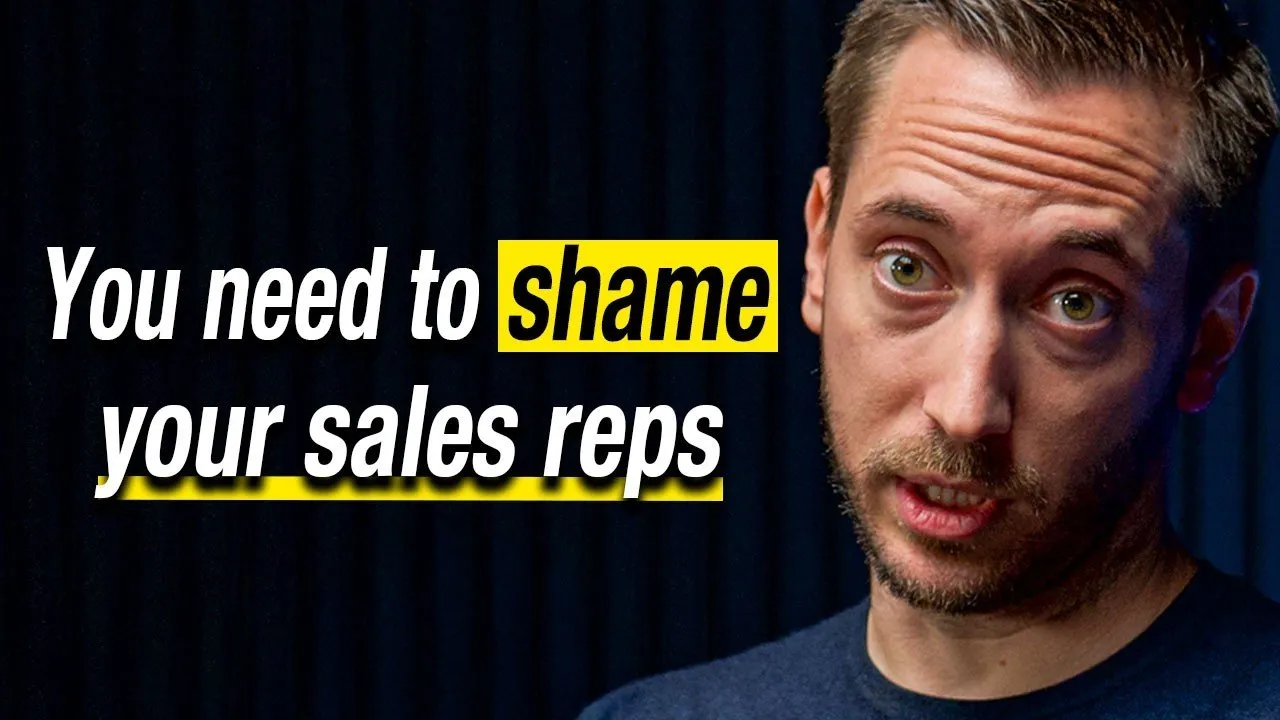
Perhaps the most controversial aspect of the ElevenLabs culture is its rejection of the management adage "praise in public, criticize in private." Reina conducts monthly pipeline review sessions where AEs and CSMs present their numbers, wins, and blockers in front of their peers.
During these sessions, leadership grills representatives on the details of their deals. If a pipeline appears inflated or a rep has hit their number through luck rather than skill, it is called out publicly. The goal is not merely to shame, but to enforce a standard of excellence where the entire team learns from the mistakes and successes of others.
"If someone hasn't done their job... you need to actually publicly tell them so that they understand they haven't done their job and everyone else knows."
This method utilizes social pressure as a forcing function. When a rep sees a colleague criticized for "getting lucky" on a deal without doing the underlying work, it signals that process matters as much as the outcome. Conversely, when blockers are identified, they are aggregated and solved at an organizational level, turning individual friction points into systemic improvements.
Forecasting and the Shift to Outbound
In a hyper-growth environment, the temptation to inflate pipeline numbers to impress the board is strong. ElevenLabs takes the opposite approach: extreme conservatism. If a deal has the potential to be $500,000, reps are instructed to forecast it at the lowest probable value, such as $24,000. This "under-promise, over-deliver" mechanism serves two purposes:
- Trust Capital: It prevents the loss of credibility with investors that occurs when "sure thing" whales fail to close.
- Activity Driver: By devaluing the pipeline, reps are forced to generate more opportunities to hit their number, effectively doubling their work ethic to ensure safety.
The "SDR in Chief"
As the company scaled, Reina noticed a dangerous reliance on inbound leads. To combat this, he set a mandate to shift the revenue mix to 50% outbound. To drive this cultural shift, leadership did not just issue orders; they led from the front.
Reina positions himself as the "SDR in Chief," personally outbounding prospects and setting up meetings for the team. This sets a tone where no one is too senior to do the groundwork. Salespeople who rely solely on virtual meetings are viewed with skepticism; the culture demands "road warriors" who are physically present with customers, whether in London, Tokyo, or San Francisco.
Conclusion
The sales culture at ElevenLabs is not designed for everyone. It requires high autonomy, thick skin, and a willingness to operate under intense public scrutiny. However, for a company scaling at the speed of AI innovation, this ruthless efficiency eliminates the ambiguity and complacency that kill growth. By aligning incentives through double compensation, enforcing strict performance standards, and leading by example in the trenches, ElevenLabs has built a sales culture that matches the velocity of its product.