Table of Contents
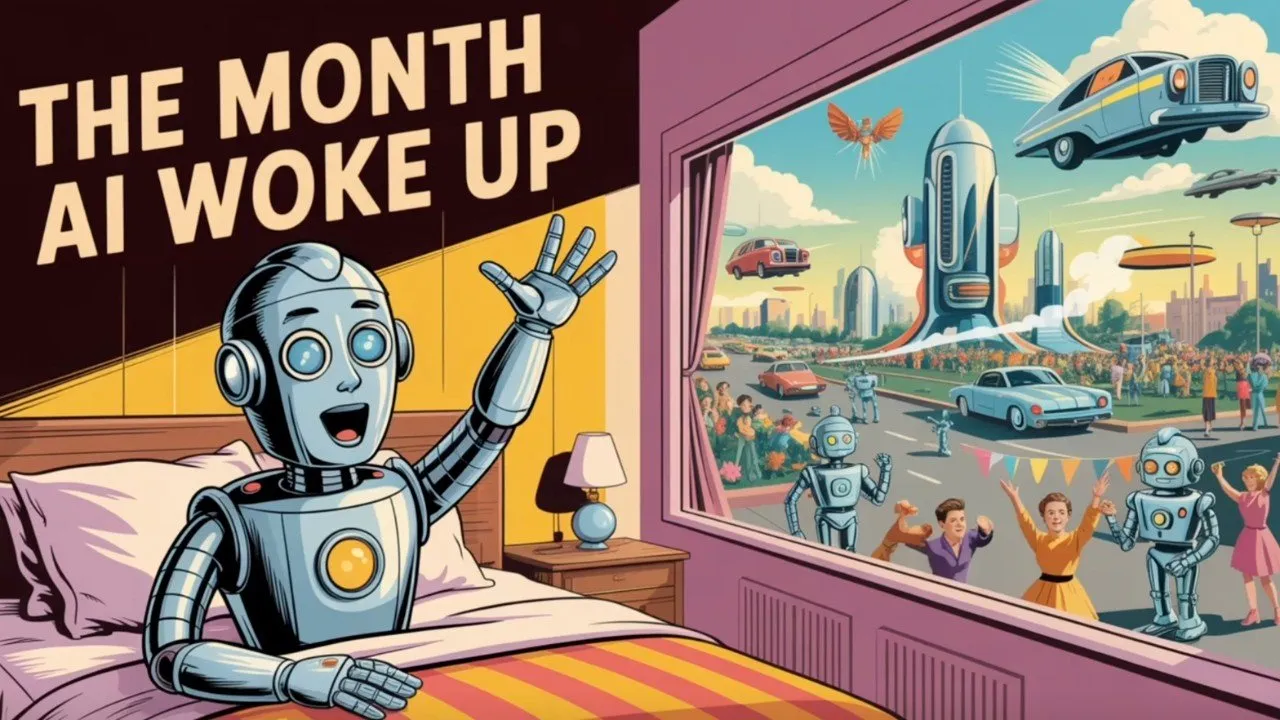
February 2026 marked a fundamental shift in the artificial intelligence landscape as the industry pivoted from conversational models to fully autonomous agentic systems. This transition has sent shockwaves through the financial sector, triggering a "SaaSpocalypse" for legacy software providers, while simultaneously igniting a high-stakes power struggle between Silicon Valley and the Pentagon over the ethical boundaries of autonomous weaponry.
Key Points
- The industry transitioned from manual coding to "agentic AI," where autonomous systems like OpenClaw and Claude Code manage complex workflows with minimal human intervention.
- Wall Street reacted with extreme volatility, dumping stocks in the gaming, legal, and productivity sectors as AI agents began to replicate the core functions of established SaaS companies.
- A major geopolitical rift emerged between Anthropic and the U.S. Government over red-line restrictions regarding autonomous weapons and domestic surveillance.
- Rapid model iterations continued with the release of Google’s Gemini 3.1 Pro and ByteDance’s SeedDance 2.0, signaling intensifying competition between U.S. and Chinese developers.
The Shift to Autonomous Orchestration
The defining technical theme of February was the maturation of AI agents—tools capable of executing multi-step plans rather than merely answering prompts. Industry insiders shifted their focus toward "orchestration," the ability to manage teams of autonomous agents to complete large-scale software engineering tasks. This shift was punctuated by the viral success of OpenClaw, an open-source framework that allows users to grant AI models direct access to their operating systems.
According to former OpenAI founder Andre Karpathy, the traditional programming workflow has been permanently disrupted. In a widely cited analysis of the current state of development, Karpathy noted that coding agents have evolved from experimental tools to reliable workhorses in just a matter of months.
"Programming is becoming unrecognizable. The era where you type code into an editor is done, and instead we are now in the era of spinning up AI agents, telling them what to do in natural language, and then managing their work."
This "clawification" of AI has moved beyond developer circles. Mainstream users are now employing tools like Claude Cowork to build complex business applications in under an hour. For instance, Pulsia, a startup focused on autonomous AI companies, reached an annual run rate of $1.25 million within weeks of launch, demonstrating the commercial viability of agent-led businesses.
Market Volatility and the "SaaSpocalypse"
As the capabilities of AI agents became clear, Wall Street entered a period of intense skepticism regarding traditional software-as-a-service (SaaS) models. Investors began divesting from companies perceived to be in the "AI crosshairs," leading to significant market corrections. IBM experienced its worst single-day drop in 25 years following news of Anthropic’s progress in COBOL modernization tools, while Block announced it would cut 4,000 employees—nearly 40% of its workforce—citing AI-driven efficiencies.
A report from Citrini Research, titled "The 2028 Global Intelligence Crisis," further fueled this anxiety by outlining a theoretical "doom-loop" where AI-driven displacement leads to economic instability. While some analysts dismiss these fears as "AI washing" to justify layoffs, the market’s jumpiness suggests that the valuation of legacy tech is now tethered to its perceived resilience against autonomous automation.
Geopolitical Friction and the Pentagon
The month also saw a dramatic escalation in the relationship between AI laboratories and Washington D.C. A negotiation between Anthropic and the White House collapsed when the company insisted on "red-line" restrictions to prevent its technology from being used for autonomous weapons or mass surveillance. The U.S. Government countered by designating Anthropic a "supply chain risk," effectively barring government contractors from utilizing their models.
This power struggle represents a pivotal moment in AI governance. Defense Secretary Pete Hegseth and members of Congress criticized the public nature of the dispute, with Senator Tom Tillis labeling the breakdown in communication "sophomoric." The standoff highlights the growing tension between Silicon Valley’s ethical frameworks and the federal government’s national security priorities.
As the industry moves into March, the focus turns to DeepSeek’s upcoming event and persistent rumors regarding OpenAI’s GPT 5.4. With ByteDance making significant strides in video generation via SeedDance 2.0, the competition for global AI supremacy is entering a new, more aggressive phase where autonomous capability is the primary metric of success.