Table of Contents
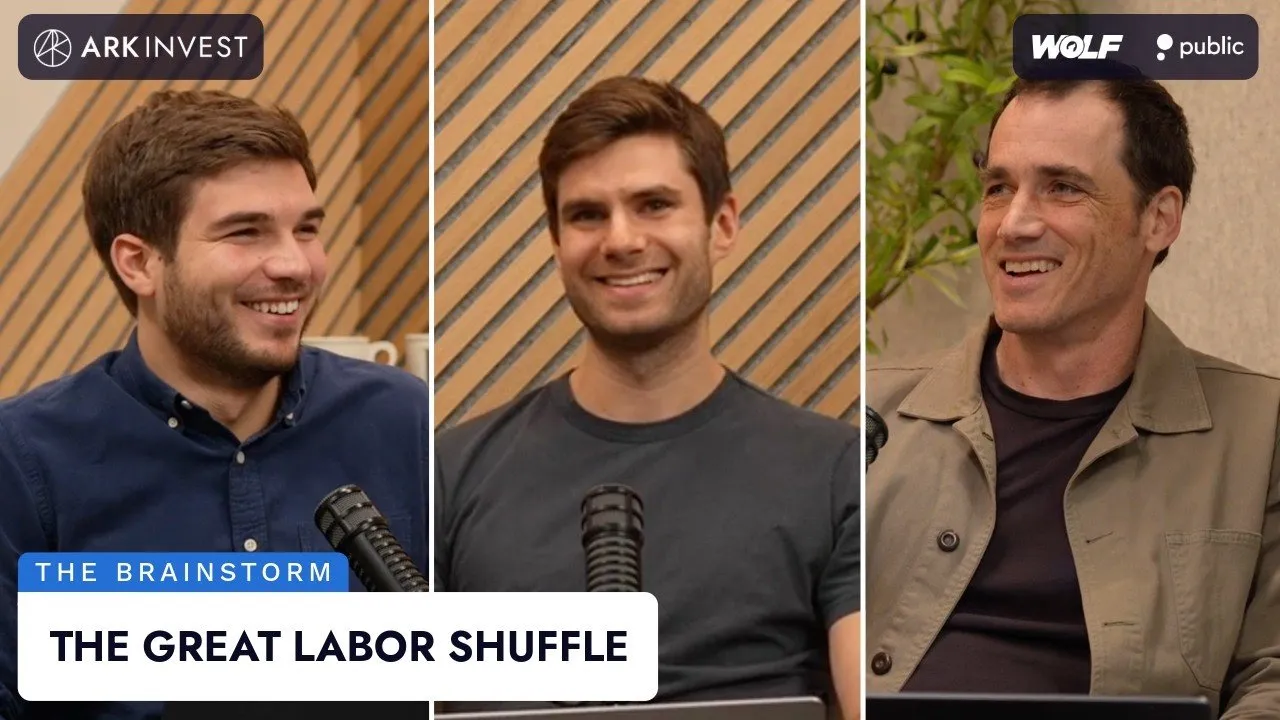
The modern workforce is undergoing a seismic shift, often described as the "Great Labor Shuffle." As companies like Block lead the charge with significant staff reductions, the debate over whether this is driven by corporate bloat, AI integration, or a mix of both has reached a fever pitch. At the center of this conversation is the potential for artificial intelligence to act as a catalyst for unprecedented economic productivity, fundamentally altering how we define work, employment, and the future of the firm.
Key Takeaways
- AI as a Productivity Multiplier: Rather than just cutting costs, companies are leveraging AI to enable smaller, leaner teams to deliver more value than ever before.
- The Evolution of Roles: While fears of automation persist, history suggests that new technologies create entirely new industries and job categories, often paying higher wages than the roles they displace.
- The Integrity of Prediction Markets: Prediction markets provide unique insights into future outcomes, but their utility depends heavily on transparent rules and the mitigation of risks like insider trading.
- Corporate Sovereignty: As AI labs and tech giants negotiate with governments and influence global infrastructure, we are entering an era where companies may increasingly function as quasi-sovereign entities.
The Shift Toward AI-Native Organizations
Recent high-profile layoffs at companies like Block have sparked intense scrutiny. Some analysts argue this is a defensive move to combat over-hiring; others see it as a deliberate pivot toward an AI-first strategy. Notably, Block’s revenue per employee has risen following these structural changes, suggesting that a leaner workforce paired with advanced AI tools can achieve superior operational efficiency compared to traditional, bloated models.
The core question remains: are these layoffs a temporary correction, or the beginning of a long-term trend? Critics of the "Catrini" thesis—which predicts a collapse in consumption due to AI-driven unemployment—argue that such a scenario ignores the massive economic growth and wealth creation that AI enables. When a human knowledge worker is 50% more productive with AI today, and potentially 1,000% more productive by 2030, the economy is poised for explosive growth rather than contraction.
"There is a resource shift; as a core non-AI software company loses share to AI companies, the people getting fired will go into the AI industry and find jobs there."
Reframing the Automation Narrative
It is common to view AI as an existential threat to white-collar jobs. However, this mirrors past technological anxieties, such as the disruption of travel agents by the internet. While the number of traditional agents declined, the broader travel industry—bolstered by platforms like Expedia and Airbnb—exploded, creating more value and higher-paying roles than existed in the pre-internet era.
The Role of Agentic Systems
We are moving beyond AI as a simple productivity tool toward autonomous agentic systems. These systems are being designed to handle entire job functions rather than isolated tasks. While this creates a short-term transition period that may feel uncomfortable for the current workforce, it also clears the path for individuals to transition into higher-leverage roles, such as AI orchestrators and system architects.
Prediction Markets and the Future of Information
Prediction markets have become a focal point for forecasting everything from geopolitical events to corporate milestones. While they offer a powerful mechanism for surfacing information that traditional analysts might miss, they are also prone to controversy. Recent issues involving Iran-related markets highlighted the importance of reading the "fine print" in contracts, as these markets often exclude outcomes like assassination or violence to comply with regulatory standards.
"Prediction markets provide a way for people who know something to express that via dollar terms, without explicitly stating what they know."
For prediction markets to mature into legitimate tools for hedging and capital allocation, they must operate within established regulatory frameworks. Long-term, these markets will likely thrive by surrounding highly regulated industries—such as the automotive or fintech sectors—where existing rules regarding insider trading and market integrity are already well-defined and enforceable.
Companies as Future Sovereign Entities
The boundary between the private sector and government is blurring. When tech companies like Anthropic, OpenAI, or XAI provide critical infrastructure or software to national security apparatuses, they become more than just vendors—they become participants in the sovereign landscape. This "company-as-sovereign" model echoes the era of the East India Company, where corporate entities managed significant aspects of global commerce and governance.
Balancing Neutrality and Influence
Public-facing AI companies face a strategic dilemma: how to remain neutral in an era of hyper-polarized politics. History shows that companies leaning into political stances risk alienating large segments of their consumer base. The most sustainable path forward likely involves maintaining a focus on product utility and technological advancement, rather than becoming entangled in the four-year cycles of political administrations.
Conclusion
The "Great Labor Shuffle" is not merely about job cuts; it is a fundamental reconfiguration of the global economy. By embracing AI, organizations are not just optimizing for the current moment—they are preparing for a future where human output is scaled by intelligent agents. While challenges regarding market integrity and corporate influence remain, the shift toward an AI-native economy presents a unique opportunity for individuals to shed static roles and pivot toward a new, higher-productivity frontier. Investors and workers alike should look past the short-term noise and focus on the structural, long-term shifts currently rewriting the rules of the game.