Table of Contents
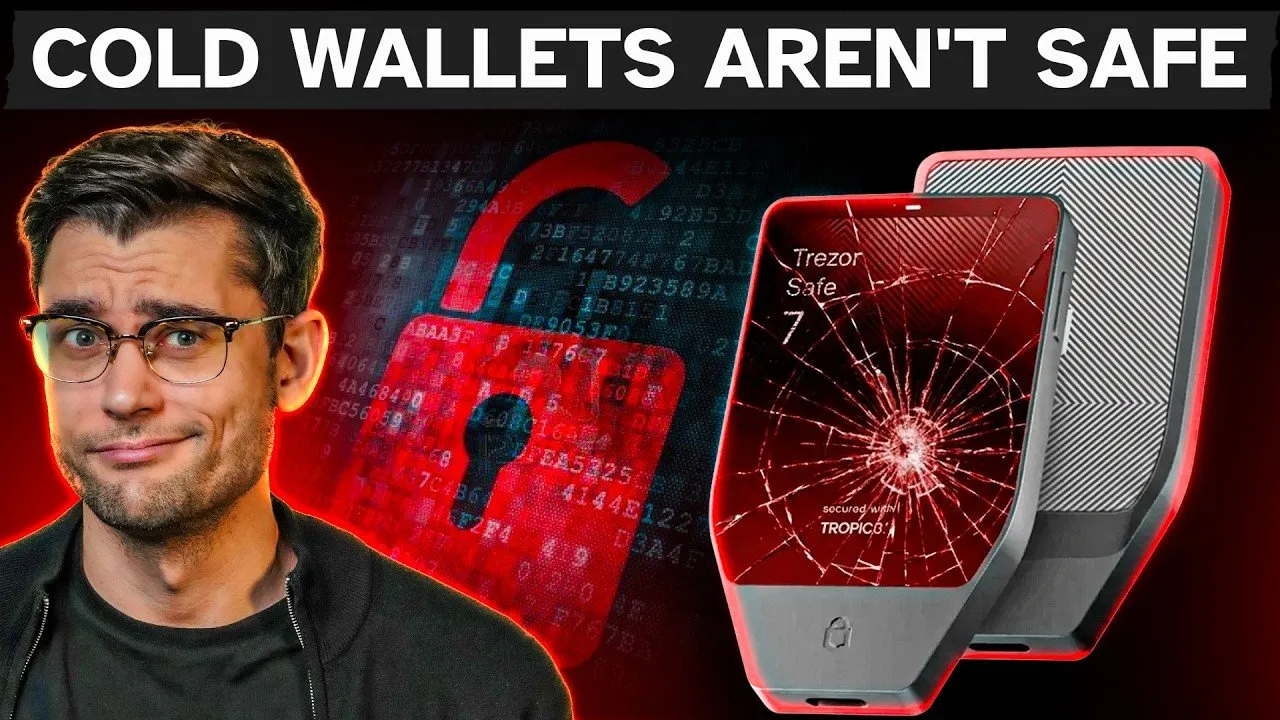
A recent incident in the United Kingdom, where an individual allegedly lost $176 million in Bitcoin after a seed phrase was captured on CCTV, has ignited a fierce debate over the long-standing "cold wallet" security model. While the cryptocurrency industry has long championed the use of hardware wallets as an impenetrable shield against exchange collapses, the reality of modern security threats—ranging from physical coercion to sophisticated supply chain attacks—suggests that the "lone wolf" approach to self-custody is becoming a dangerous liability.
Key Points
- Human Error and Loss: According to Chainalysis data from 2025, between 2.3 million and 3.7 million Bitcoin are permanently lost, largely due to mismanagement of single-signature recovery phrases.
- Rising Physical Threats: Security expert Jameson Lopp reported that physical attacks on cryptocurrency holders increased by 169% in the first half of 2025, with "wrench attacks"—coercive physical theft—surging by 75%.
- Supply Chain Vulnerabilities: Sophisticated actors, such as the Lazarus Group, are increasingly targeting software interfaces rather than cryptographic algorithms, proving that hardware wallets are only as safe as the software interacting with them.
- The Shift to Multi-Sig: Industry standards are shifting toward multi-signature (multi-sig) and Multi-Party Computation (MPC) architectures, which distribute risk by requiring multiple, geographically separated keys to authorize transactions.
The Fragility of Single-Signature Security
The traditional narrative of the "Cipher Punk" ethos suggests that true financial freedom requires becoming your own bank. This typically involves generating a 24-word recovery seed, storing it offline, and relying on a single hardware wallet for signing transactions. However, this model creates a catastrophic single point of failure. If the physical hardware is compromised, the backup paper is destroyed, or the user is coerced into revealing their keys, the assets are irrecoverable.
The alleged theft in the UK illustrates a shift in attack vectors: adversaries are bypassing advanced encryption entirely by exploiting human behavior and physical proximity. Even when the technology holds, the user interface remains a primary target. In February 2025, the Lazarus Group exploited the front-end interface of a wallet provider to siphon $1.5 billion, demonstrating that users can be manipulated into signing fraudulent transactions despite possessing "secure" hardware.
"The mainstream financial press loves to focus on cryptographic vulnerabilities, but the reality is that the most devastating attacks completely bypass the cryptography altogether."
Institutional-Grade Resilience
As retail investors manage increasingly large portfolios, the industry is pivoting toward solutions that replace "perfection" with "redundancy." Vitalik Buterin, co-founder of Ethereum, has been a vocal proponent of moving away from the single seed phrase model, advocating instead for ERC 4337 account abstraction. This allows for "social recovery," where trusted guardians can assist in account recovery, removing the absolute dependency on a single piece of paper.
For those holding substantial wealth, professional-grade multi-sig configurations—typically a "two-of-three" setup—have become the gold standard. By distributing keys across a home safe, a bank vault, and a collaborative custody partner like Unchained Capital or Casa, users can ensure that no single theft or disaster results in total loss. Furthermore, institutional players leverage Multi-Party Computation (MPC), a method that shards private keys across geographically isolated servers, ensuring a full key never exists in a single location.
Evolving Your Security Architecture
The era of extreme, isolated independence is proving insufficient for the current threat landscape. As data suggests, users relying on regulated, distributed custody architectures face 70% fewer security breaches than those using standard single-signature setups. Moving forward, individual investors should treat their security as a system of checks and balances rather than a single physical object to be hidden.
Investors must evaluate whether their current setup accounts for the physical and supply-chain realities of 2026. Transitioning to multi-signature or advanced backup methods like Shamir’s Secret Sharing is no longer just a technical luxury; it is a necessary step to protect generational wealth against an increasingly sophisticated array of digital and physical threats. The future of self-sovereignty lies in intelligent redundancy, not the fragile hope that a single piece of paper remains hidden forever.