Table of Contents
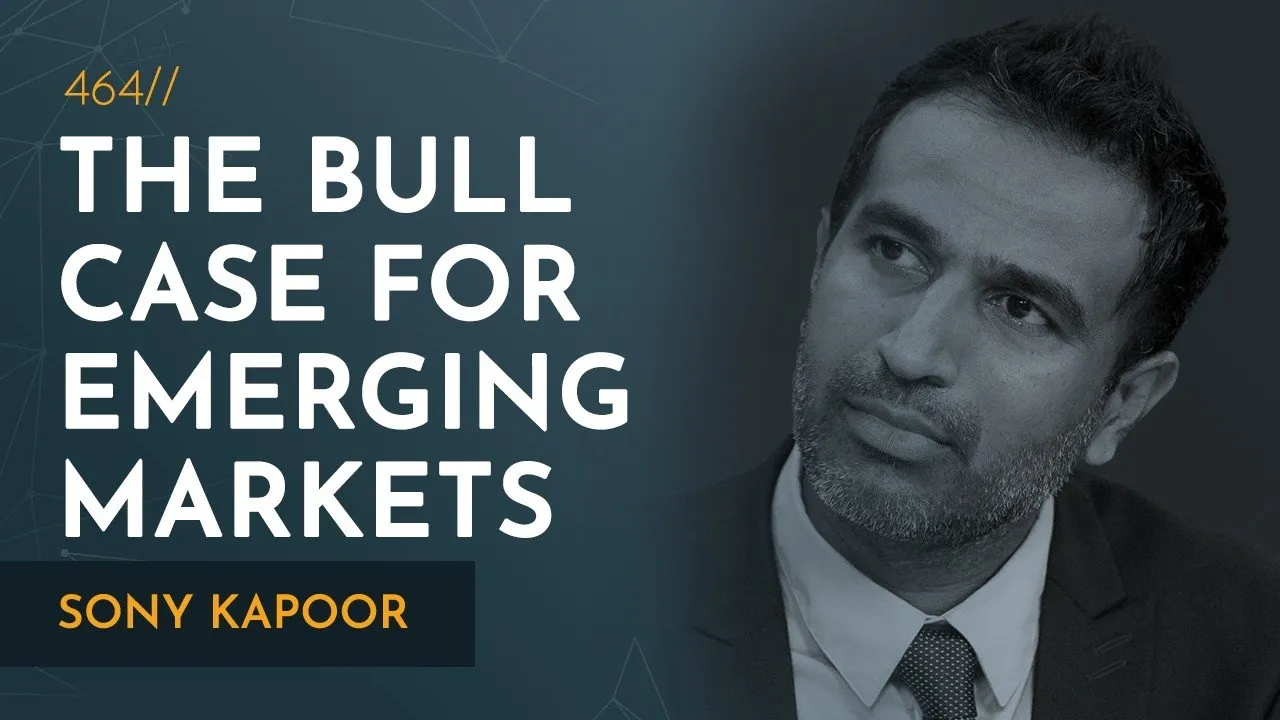
For decades, the global investment narrative has been dominated by a single, unwavering theme: the exceptionalism of the United States. Driven by deep capital markets, massive technological innovation, and a seemingly unstoppable dollar, the U.S. has sucked in the lion’s share of international capital. However, we may have reached a tipping point. As political volatility increases and market concentration reaches historic levels, the argument for a "Great Rebalancing" is moving from the fringes to the mainstream. Economist and policy adviser Sony Kapoor argues that the current overexposure to American assets represents a dangerous single point of failure for global investors.
Key Takeaways
- The Rebalancing Necessity: Moving away from U.S. assets isn't about "selling America" entirely; it is about correcting an unsustainable portfolio concentration that ignores emerging global risks.
- Converging Risks: The traditional safety gap between developed and emerging markets is narrowing as U.S. policy becomes more erratic and fiscal discipline wanes.
- The India Opportunity: India is emerging as a massive domestic-consumption powerhouse, leveraging a "China-style" focus on infrastructure while maintaining democratic resilience.
- Sentiment as a Metric: A profound psychological divide has opened between the "declinism" of the West and the pervasive energy and optimism found in emerging economies.
The End of Passive American Dominance
The outsized performance of U.S. financial assets over the last decade was not merely a result of corporate ingenuity. It was fueled by a "virtuous cycle" of massive capital inflows, the growth of passive indexation, and a consistently strengthening dollar. This has led to a situation where the U.S. share of global equity and bond markets is now completely disproportionate to its contribution to global GDP or growth.
The "Single Point of Failure" Risk
Investors who once viewed the U.S. as the ultimate safe haven are now grappling with the reality of idiosyncratic political risk. Kapoor notes that the erratic nature of modern U.S. policy—ranging from sudden tariffs to attacks on institutional independence—has made it impossible to ignore the dangers of over-concentration.
"It became impossible for any half-rational person to fail to address... more than half of their portfolios are exposed."
When a portfolio is more than 50% exposed to the whims of a single administration or a handful of mega-cap tech stocks, it ceases to be a diversified investment strategy and becomes a massive bet on a single outcome. The goal for global allocators is now to diversify at the margins, shifting from a 20% exposure in certain classes down to a more manageable 17% or 18%.
The Hidden Cost of the Dollar
For foreign investors, the "American outperformance" has often been a currency story. However, as the dollar faces potential secular weakening, the cost of hedging that exposure has skyrocketed. Unhedged dollar exposure is increasingly risky, while hedged exposure is becoming prohibitively expensive. This pressure differential is forcing capital to look for outlets where the growth is organic rather than currency-driven.
India: The Emerging Counterweight
India occupies a unique position in this global rebalancing. Unlike many export-led economies, India’s growth is primarily driven by domestic consumption. This provides a natural buffer against the "bullying tactics" of international trade wars and provides a level of strategic autonomy that many smaller emerging markets lack.
The "Crack in the Glass" of U.S. Relations
Despite deep cultural and economic ties—notably the massive contribution of the Indian diaspora to Silicon Valley—the relationship between New Delhi and Washington has faced significant strain. Recent policies regarding H1B visas and aggressive tariffs have created a "breach of trust" that may take years to heal. This friction has paradoxically pushed India toward a more pragmatic relationship with other regional powers, including a cautious thawing of relations with China.
"India has had the capacity and still does to take more punishment from the United States."
India recognizes that it is the only country with the demographic and economic scale to serve as a true counterweight to China. While the U.S. foreign policy establishment remains focused on this "China-envy," India is increasingly willing to chart its own course, prioritizing national pride and economic stability over traditional alliances.
Learning from the Chinese Model
For years, the Indian elite viewed China’s rapid development with a mixture of envy and democratic superiority. However, the narrative is shifting. India has begun to adopt specific elements of the Chinese development model to accelerate its own growth trajectory.
Infrastructure and Regional Experimentation
One of the most significant shifts in India has been the massive expansion of infrastructure. From metro lines to high-speed rail and national highways, the country is finally overcoming its reputation for being "crap at infrastructure." This transformation is driven by a new focus on centralized developmental policies and rationalized tax systems, such as the national sales tax introduced nearly a decade ago.
The Quality of Human Capital
While India produces the largest number of engineers in the world, challenges remain regarding the "long tail" of educational quality. To truly compete with a manufacturing powerhouse like China, India must bridge the gap between its elite institutions (the IITs) and the rest of its workforce. The goal is not to become "the next China," but to leverage its unique democratic framework to create a more resilient and diverse manufacturing base.
The Psychology of Growth: Declinism vs. Optimism
Perhaps the most overlooked factor in the case for emerging markets is the psychological state of the population. In the West, a sense of "declinism" has taken root. Across the U.K., France, Germany, and the U.S., there is a growing fear that the future will be worse than the past. This creates a political climate where globalization is viewed as a threat and the "other" is blamed for stagnating wages.
The Upward Arrow
In contrast, the "zeitgeist" in India and many other emerging markets is one of relentless energy and positivity. When the economic pie is growing at 6% or 7% annually, the political economy changes. People are more willing to support globalization and innovation because they believe their children will have a better life than they did.
"When the pie is growing... it’s not that hard to support globalization."
This optimism isn't just a feel-good metric; it is a driver of capital reinvestment and risk-taking. While Western nations grapple with aging demographics and shrinking workforces, emerging markets are fueled by a young, ambitious population that views crises as opportunities for improvement rather than signs of an inevitable end.
Conclusion
The case for a historic reallocation to emerging markets is not a bet against the American economy’s innovation, but a rational response to a world that has become dangerously lopsided. As the risks between developed and developing nations continue to converge, the true danger lies in stagnant thinking. Whether it is the demographic tailwinds of India or the rapid adoption of technology across the Global South, the "arrow is pointing up" in the emerging world. For the sophisticated investor, the great rebalancing is no longer a theoretical exercise—it is an economic necessity. Diversifying away from a single point of failure and toward the world's most energetic economies is the only way to navigate the fraying international order.