Table of Contents
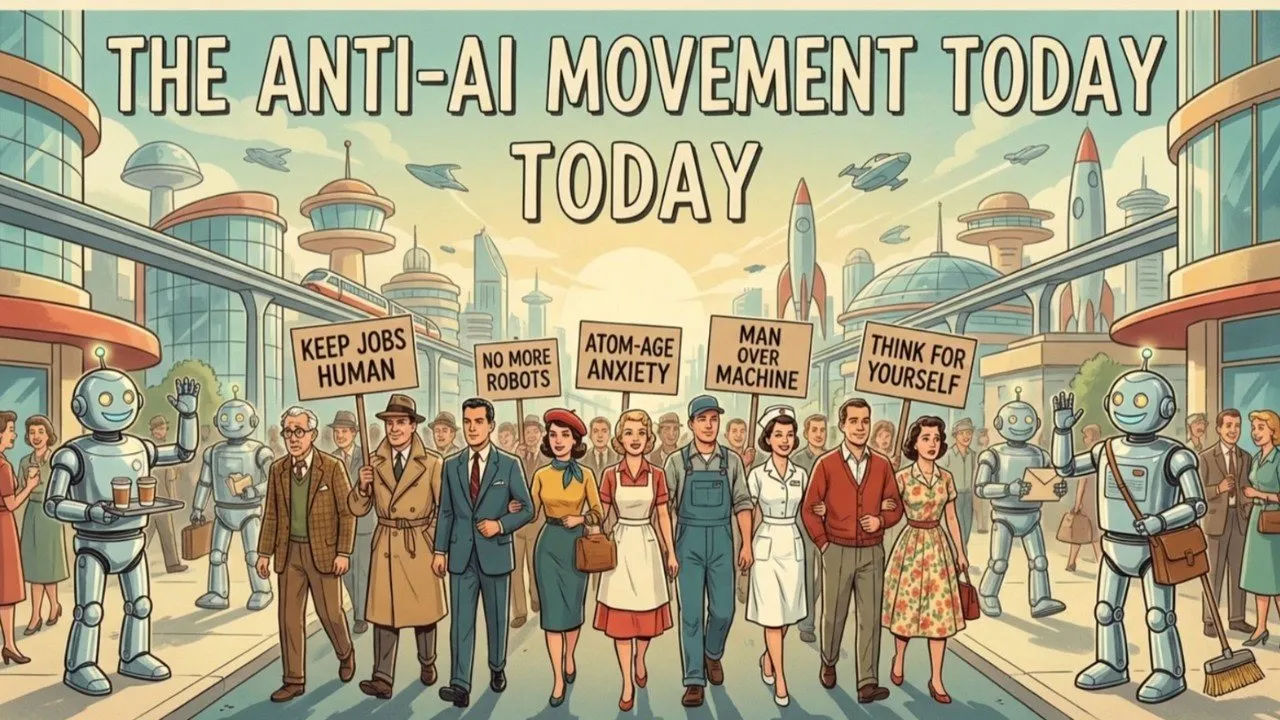
Public skepticism toward artificial intelligence is reaching a critical inflection point in the United States, transitioning from niche academic debate to localized political action and mainstream media scrutiny. Recent data and high-profile protests indicate a growing disconnect between Silicon Valley’s rapid deployment of generative tools and a public increasingly wary of the technology's impact on labor markets, privacy, and community resources.
Key Points
- Widespread Distrust: A recent YouGov study found that 58% of Americans do not trust AI, while 63% believe the technology will lead to a net decrease in available jobs.
- Localized Resistance: Grassroots opposition is manifesting in physical infrastructure battles, exemplified by residents in New Brunswick, New Jersey, successfully blocking a proposed data center.
- Diverse Opposition: The "anti-AI" movement is not monolithic, comprising artist advocates, safety researchers concerned with existential risk, and "capability skeptics" who view AI as overhyped.
- Communication Gap: Industry critics argue that AI leadership has failed to articulate a compelling reason why the average citizen should expect a higher quality of life due to these advancements.
The Pulse of Public Skepticism
While the initial launch of ChatGPT sparked a cycle of enthusiasm, the narrative has shifted toward skepticism. Recent cover stories from Time magazine and the New York Times have highlighted an "underwhelming enthusiasm" for tech leaders' plans to remake the world. According to Pew Research, the United States ranks significantly lower than other nations in terms of public excitement for AI, with 50% of respondents stating they are more concerned than excited.
This sentiment is no longer confined to social media discourse. Political commentator and statistician Nate Silver suggests that the speed of AI disruption could lead to an unprecedented political struggle, particularly as it begins to affect white-collar workers who possess significant political influence.
"If AI produces unprecedented levels of technological disruption on time scales that are an order of magnitude or two faster than anything in human history, it's going to be an unprecedented political fight." — Nate Silver, Political Commentator
Mapping the Multi-Faceted Resistance
The anti-AI movement is a collection of distinct groups with varying motivations. These include AI Safety advocates focused on existential risks, and Artist Advocates concerned with copyright and the "slop" or low-quality output of generative models. Additionally, Capability Skeptics like Gary Marcus argue that AI progress is hitting a plateau, potentially misleading the public about its true utility.
One of the most potent subsets of this movement involves healthcare and labor professionals. Hannah Drummond, a nurse who helped win AI protections in hospital contracts, emphasizes that the concern is often about the safety and efficacy of implementation rather than a total rejection of the technology.
"Everything that reaches patients in healthcare has gone through rigorous testing and has proven to be safe, effective and free from harming us. Why would we cut out those same test points for this?" — Hannah Drummond, Registered Nurse
The Implications of Industry Leadership
Critics suggest that the rhetoric used by industry leaders has exacerbated public anxiety. OpenAI CEO Sam Altman recently drew fire for comparing the energy required to train AI models to the energy required to "train" a human being. This framing—viewing human life through the lens of compute efficiency—has been described by some engineers as "tonedeaf and strategically reckless."
The pushback against data centers also highlights a growing "vibe-cession" where the macro-economic benefits of AI do not align with the micro-economic realities of local communities. Residents often face rising electricity costs and environmental concerns without seeing direct improvements in their daily lives. This friction suggests that the "Big Tech" era's legacy of social media disruption has left many unwilling to grant AI developers the benefit of the doubt.
As the 2028 U.S. election cycle approaches, the political discourse surrounding AI is expected to harden. Lawmakers are currently exploring various regulatory frameworks to address job displacement and data sovereignty. The future of the industry may depend on whether tech leaders can transition from a posture of disruption to one of community-aligned innovation, turning a growing resistance into a cautiously optimistic coalition.