Table of Contents
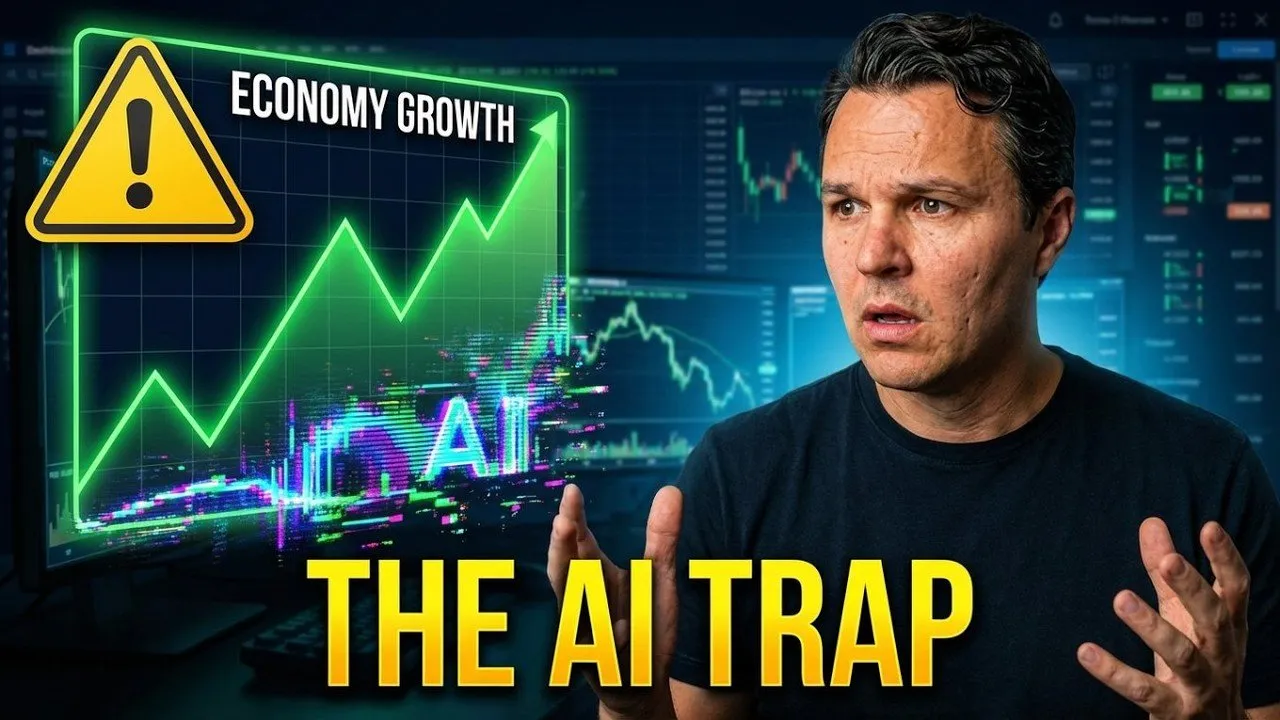
The rapid advancement of artificial intelligence is fueling a new wave of economic anxiety on Wall Street, characterized by some analysts as an impending "AI depression." This narrative suggests that while AI-driven automation will lead to unprecedented productivity gains, the resulting displacement of human labor could trigger a self-reinforcing "doom loop" where corporations maximize efficiency but eliminate the consumer base necessary to purchase their products.
Key Points
- Widespread Displacement: Unlike previous technological shifts, AI threatens both white-collar roles (legal, accounting, marketing) and blue-collar sectors through the integration of humanoid robotics.
- The Urban Doom Loop: The declining need for physical office workers risks a collapse in commercial real estate values, transit revenue, and city tax receipts, potentially leading to urban decay.
- Educational Devaluation: Traditional university degrees face a diminishing return on investment as entry-level positions are increasingly automated, leaving graduates with significant debt and fewer career prospects.
- Strategic Opportunity: Despite the disruption, the current era is viewed as a "new gold rush" for those who move from being passive observers to active architects of AI-driven businesses.
The Mechanics of the AI Doom Loop
The primary concern regarding the current AI trajectory is the creation of a closed-loop economy that benefits capital at the expense of labor. In this scenario, firms replace human employees with autonomous systems to maximize productivity and lower overhead. While Gross Domestic Product (GDP) may appear stable or even grow on paper, the underlying reality is a workforce with dwindling purchasing power.
Historically, automation transitioned workers from blue-collar manual labor to white-collar service and administrative roles. AI, however, is unique in its ability to disrupt both categories simultaneously. Initial impacts are already being felt in knowledge-based sectors. For example, a law firm utilizing advanced large language models (LLMs) can theoretically operate with half the staff while doubling its output. While beneficial for the firm's bottom line, the displacement of the remaining staff contributes to a broader decline in consumer spending.
"AI is not going to take your job. Somebody using AI is going to take your job. A law firm might be able to have half the staff and do twice the work—great for productivity, but devastating for the people who lose their jobs."
From Office Hubs to Urban Decay
The ripples of AI automation extend far beyond the individual worker, threatening the stability of metropolitan centers. As AI agents and remote collaboration tools reduce the necessity for physical office space, commercial real estate (CRE) is undergoing a massive repricing. This shift triggers a "city doom loop" where the disappearance of office workers leads to the closure of auxiliary businesses, such as restaurants, dry cleaners, and retail outlets.
The resulting loss in tax revenue often leads to a decline in city services and infrastructure, which can further accelerate the exodus of residents to rural areas. These individuals, often dubbed "AI entrepreneurs," may choose to run "agent armies" from lower-cost jurisdictions, bypassing the traditional urban economic model entirely. This transition could lead to a period of significant civil unrest as displaced workers in major Western cities demand government intervention or Universal Basic Income (UBI) to compensate for the loss of traditional employment.
The Crisis in Higher Education
For the next generation, the traditional path of university education is under intense scrutiny. With total student loan debt in the United States reaching $1.78 trillion, the proposition of spending a quarter-million dollars on a degree is becoming increasingly difficult to justify. As entry-level roles in engineering, law, and accounting are automated, the "ladder" of professional progression is being dismantled, forcing a re-evaluation of how skills are acquired and valued.
The New Gold Rush: Navigating Disruption
While the "doom loop" presents a dark outlook, many experts argue that we are currently in a period comparable to the early days of the internet or the 2010s crypto boom. The barriers to entry for starting a business have collapsed; AI tools allow a single individual to handle marketing, coding, and sales with minimal overhead. The challenge for the modern worker is to shift from a paycheck-dependent mindset to an asset-ownership mindset.
Early data suggests that the window of opportunity is wide open. Currently, only about 14% of the global population has utilized AI, and a mere 0.3% maintain active subscriptions to advanced tools like ChatGPT Plus or Google Gemini. This gap represents a massive first-mover advantage for those willing to reskill.
"Collect capabilities, not credentials. Build, ship, and prove your value. It has never been easier to launch a service or an app, but you must be the architect of the AI, not its victim."
The fastest-growing job titles today—such as AI Solution Architect, Prompt Engineer, and AI Compliance Manager—did not exist five years ago. These roles prioritize judgment, persuasion, and leadership—human traits that remain difficult for current models to replicate perfectly.
Market Realities and Future Outlook
Despite the fears of a total labor collapse, physical and logistical constraints may slow the "doom loop" transition. The energy requirements for AI are staggering; some estimates suggest the United States would need to double its energy capacity within four years to meet projected demand—a feat unlikely to be achieved under current infrastructure limitations. Furthermore, economies are rarely "clean loops"; they are characterized by friction, governance hurdles, and maintenance requirements that necessitate human oversight.
Investors are encouraged to look toward the "pick and shovel" plays of this era. While software stocks have seen volatility, semiconductor manufacturers and energy providers remain critical to the AI infrastructure. On a personal financial level, reducing debt exposure and diversifying income streams are cited as the best defenses against the coming disruption.
As the global economy moves toward what some call "neofetalism," where tech conglomerates hold immense power, the individual's best strategy is adaptation. History shows that while technology wave—from the printing press to the tractor—causes short-term upheaval, it eventually leads to higher standards of living and the creation of entirely new industries that were previously unimaginable. The transition will be messy, but for those who absorb the technology like a "fire hose," the potential for personal and financial freedom has never been higher.