Table of Contents
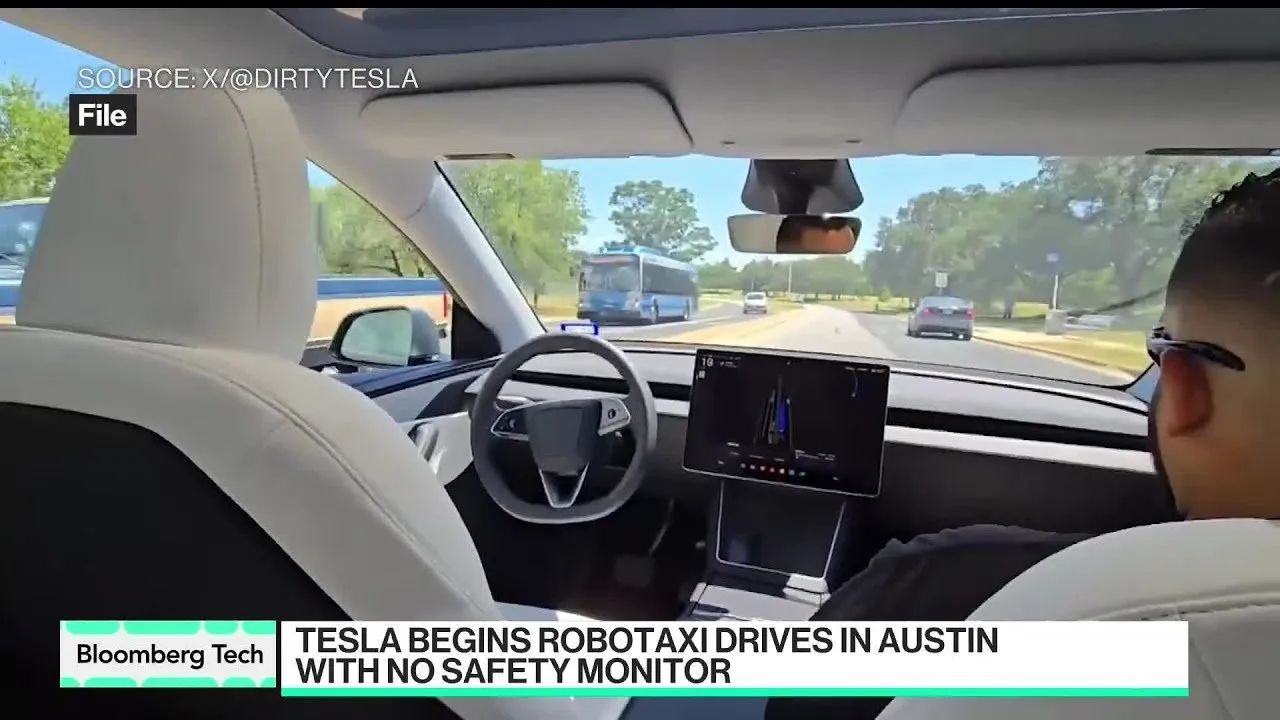
Tesla has officially launched its autonomous Robotaxi operations in Austin, Texas, deploying vehicles on public roads without a human driver behind the wheel or a supervising attendant in the passenger seat. This deployment marks a pivotal moment for the electric vehicle manufacturer’s "vision-only" self-driving strategy as it attempts to close the gap with established autonomous ride-hailing leaders.
Key Points
- Vision-Only Milestone: Tesla’s Austin deployment is reportedly the first time a camera-only autonomous platform has operated without in-car supervision.
- Market Reaction: Shares of traditional ride-hailing giants Uber and Lyft declined following the announcement, signaling investor sensitivity to Tesla’s potential market entry.
- Competitive Gap: Despite this technical feat, Tesla lags significantly behind Waymo, which is currently targeting one million rides per week by year-end.
- Global Context: Autonomous adoption is accelerating globally, with significant activity in Beijing and the Middle East alongside U.S. markets.
The "Vision-Only" Experiment
The launch in Austin represents a distinct technological gamble for Tesla. unlike competitors that utilize a "multi-sensor suite"—typically combining LiDAR, radar, and cameras—Tesla’s system relies exclusively on cameras and neural networks to navigate complex urban environments. Proponents of the Tesla strategy argue that this deployment demonstrates a new level of confidence in the technology.
However, industry observers note that the current rollout remains an experiment with notable constraints. Reports suggest that while the vehicles lack internal human supervisors, they are likely being trailed by Tesla support vehicles to monitor performance. This controlled environment contrasts with the commercial-scale operations of competitors, yet experts view the move as a critical step forward for the sector.
"This is definitely a significant development. It’s another major player in the autonomous vehicle space... But it is still pretty limited. It’s an experiment."
Market Dynamics and Competitor Lead
While Tesla’s entry generates headlines, Waymo remains the dominant force in the autonomous ride-hailing sector. The Alphabet-backed company has already deployed commercial services in multiple cities, charging fares for fully driverless rides. In comparison to Tesla's initial fleet in Austin, Waymo is scaling operations aggressively.
The disparity in scale is stark. Current projections estimate that Waymo aims to reach one million paid rides per week by the end of the year. Conversely, Tesla is just beginning to put a handful of unsupervised vehicles on the road. Despite this gap, the mere presence of Tesla in the Robotaxi space caused immediate ripples in the financial markets, impacting the stock performance of Uber and Lyft.
"Waymo is significantly ahead at the moment in terms of commercial ride hailing... But I don't think that it's clear that there's any one winner at this point in time. Although Waymo is ahead, it’s still anyone’s market to win."
Consumer Sentiment and Global Readiness
Beyond the technology, the readiness of the general public to adopt autonomous transport remains a key variable. Data from San Francisco, where robotaxis are more common, suggests a rapidly growing comfort level among consumers. Some segments of the population now prefer autonomous options over traditional human-driven ride-shares, citing consistency and safety.
This trend is not isolated to the United States. Global markets are moving quickly, with active deployments in Beijing and partnerships forming in the Middle East, such as those involving WeRide and Uber. Experts suggest that as more operators enter the field, the regulatory landscape will stabilize, making it easier for cities to manage mixed fleets of autonomous vehicles.
As the sector matures over the next year, the focus will likely shift from technological "firsts" to commercial scalability and the ability to maintain safety standards at high volume.