Table of Contents
Tesla is halting production of its legacy Model S and Model X vehicles at its Fremont, California factory to pivot toward manufacturing humanoid robots, while Amazon announces a significant restructuring of its retail operations, including store closures and the discontinuation of its palm-scanning payment technology in retail locations. These moves highlight a broader shift in the technology sector as major players reallocate resources from stagnating hardware and retail experiments toward automation, robotics, and artificial intelligence integration.
Key Points
- Tesla’s Strategic Pivot: The automaker will stop producing Model S and Model X vehicles at its Fremont plant to clear factory space for the production of "Optimus" humanoid robots, targeting a 2027 launch.
- Amazon Retail Restructuring: Amazon is eliminating approximately 1% of its workforce, closing Amazon Fresh and Amazon Go locations, and ending the use of Amazon One palm recognition in retail stores.
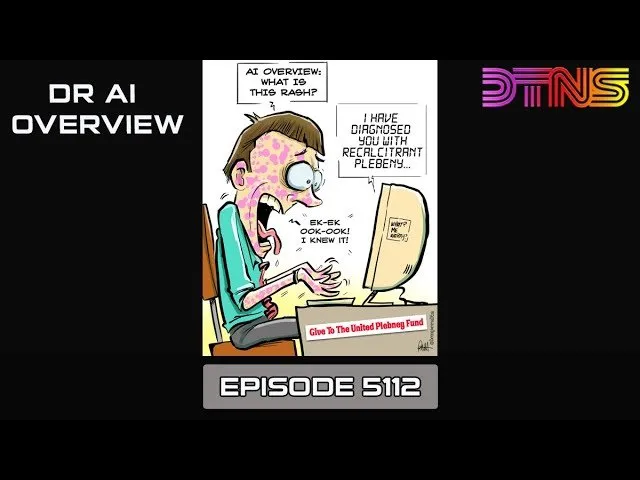
- AI in Healthcare Search: A new study suggests Google’s AI Overviews cite YouTube videos more frequently than trusted medical websites for health queries, raising concerns about misinformation.
- Mobile Desktop Convergence: Advancements in Samsung DeX and the rumored "Aluminum OS" indicate high-end smartphones are approaching the capability to replace traditional laptops for general productivity.
Tesla Bets on Robotics Amidst EV Market Shifts
In a move that signals a significant change in corporate strategy, Tesla announced it will cease production of its flagship Model S and Model X electric vehicles at its Fremont facility. The factory space will be retooled to focus on the production of Optimus, the company's humanoid robot line. This decision follows a fiscal year where Tesla saw profits decline by nearly 50% and recorded its first drop in revenue.
While the Model S and Model X were instrumental in establishing Tesla as a luxury EV brand, the platforms are now over a decade old. The company will continue to produce its high-volume Model 3 and Model Y vehicles, along with the Cybertruck, at other facilities. However, the pivot suggests CEO Elon Musk is banking the company's future valuation on autonomy and robotics rather than solely on automotive sales.
Industry observers note that this transition allows Tesla to sidestep manufacturing taxes in California associated with car production while maintaining a technological foothold in the state. However, skepticism remains regarding the timeline and viability of the Optimus robot.
"You're telling us that you're going to swap making cars for making humanoid robots? These things are not apples to apples... They're not making these cars because they're not selling these cars. It’s like, 'Okay, can we put some news in there that we're going to build robots to maybe make the sting not hurt as much?'"
The aggressive timeline for the robot launch—slated for 2027—mirrors previous ambitious schedules for Full Self-Driving (FSD) capabilities, which have faced repeated delays.
Amazon Retrenches Physical Retail Operations
Amazon continues to adjust its physical retail strategy, announcing a workforce reduction affecting approximately 1% of employees, primarily within managerial roles. Concurrently, the e-commerce giant plans to close all Amazon Fresh and Amazon Go locations in the United States. While the company is retreating from these specific convenience formats, it plans to expand its Whole Foods footprint and is developing a new big-box store concept in suburban Chicago.
Additionally, Amazon is discontinuing the use of Amazon One—its biometric palm-recognition payment system—at retail locations. The technology will, however, remain in use for identity verification within its healthcare facilities. This retreat suggests Amazon is conceding that its high-tech "Just Walk Out" shopping experience did not resonate with consumers or offer enough efficiency over traditional grocery competitors like Kroger or Walmart.
Scrutiny Over AI Search Results in Healthcare
A recent study by SEO platform SE Ranking has drawn attention to how Google’s AI Overviews handle medical queries. The data indicates that the AI is two to three times more likely to cite YouTube videos than authoritative medical websites. The findings have sparked a debate regarding the reliability of AI-generated health summaries and the potential for algorithmic hallucinations to spread misinformation.
Google has pushed back against these claims, stating that the study used a limited data set. The search giant argues that when YouTube is cited, the algorithms prioritize content from verified health professionals, hospitals, and accredited organizations. Under current YouTube policies in countries like the US, UK, and Canada, licensed healthcare professionals can apply for verification to ensure their content is prioritized in health-related algorithms.
"If I believed everything I read on the internet, I would have died 57 times by now... Use this AI overview as your jump-off point, just as you hopefully did with Google search, rather than automatically freaking out."
Beyond search, Google is integrating deeper "personal intelligence" features into its Chrome browser. Formerly known as "connected apps," this functionality allows Gemini to access data across Google Workspace apps—such as Calendar, Gmail, and Maps—to execute agentic tasks, effectively acting as a digital assistant that manages workflows across tabs.
The Convergence of Mobile and Desktop Computing
As hardware becomes more powerful, the line between smartphones and laptops continues to blur. Recent hands-on testing with Samsung’s DeX (Desktop Experience) software suggests that for web-based workflows, flagship smartphones are nearing the capability to serve as primary computing devices. When connected to a monitor and keyboard, devices like the Galaxy S22 Ultra can run browser-based applications like Google Docs and Notion with a near-desktop fidelity.
However, limitations persist for creative professionals relying on heavy local processing. Applications requiring significant graphical rendering or specialized file management, such as DaVinci Resolve or complex audio engineering software, still require traditional PC architecture.
"I think the day is nigh when our flagship phones will actually replace laptops, but not yet... If your life revolves around a bunch of tabs and you're doing stuff in web browsers, DeX is there. It is a Chromebook for all practical purposes."
Google is reportedly developing "Aluminum OS," a project aimed at bridging the gap between Android and Chrome OS. This development could standardize desktop modes across the Android ecosystem, potentially encouraging developers to optimize more professional-grade applications for ARM-based mobile chipsets.
Market Outlook
The tech industry is entering a phase of consolidation and specific bet-hedging. Tesla is attempting to transition from a car manufacturer to an AI and robotics firm to justify its market capitalization, while Amazon is cutting losses on experimental retail tech to focus on proven revenue generators like Whole Foods and logistics. Meanwhile, Google’s integration of agentic AI into browsers and search results will likely face continued regulatory and ethical scrutiny as it becomes the primary interface for information consumption.


![Fidelity Just EXPOSED Crypto's Biggest Secret [Not What You Think]](/content/images/size/w1304/format/webp/2026/02/fidelity-2026-crypto-outlook-revenue-sharing.jpg)