Table of Contents
The history of scientific progress is often framed as a series of "eureka" moments by singular geniuses. However, when we look at figures like Johannes Kepler, the reality is far more iterative and collaborative. Today, we are witnessing a new chapter in this story as artificial intelligence begins to act as a powerful catalyst for mathematical and scientific discovery. Terence Tao, one of the world's most preeminent mathematicians, suggests that we are currently undergoing a "cognitive Copernican revolution," where our understanding of intelligence is being fundamentally reordered by the emergence of AI.
Key Takeaways
- The Iterative Nature of Science: Great breakthroughs, like Kepler's laws of planetary motion, were the result of decades of trial and error rather than purely inspired "aha" moments.
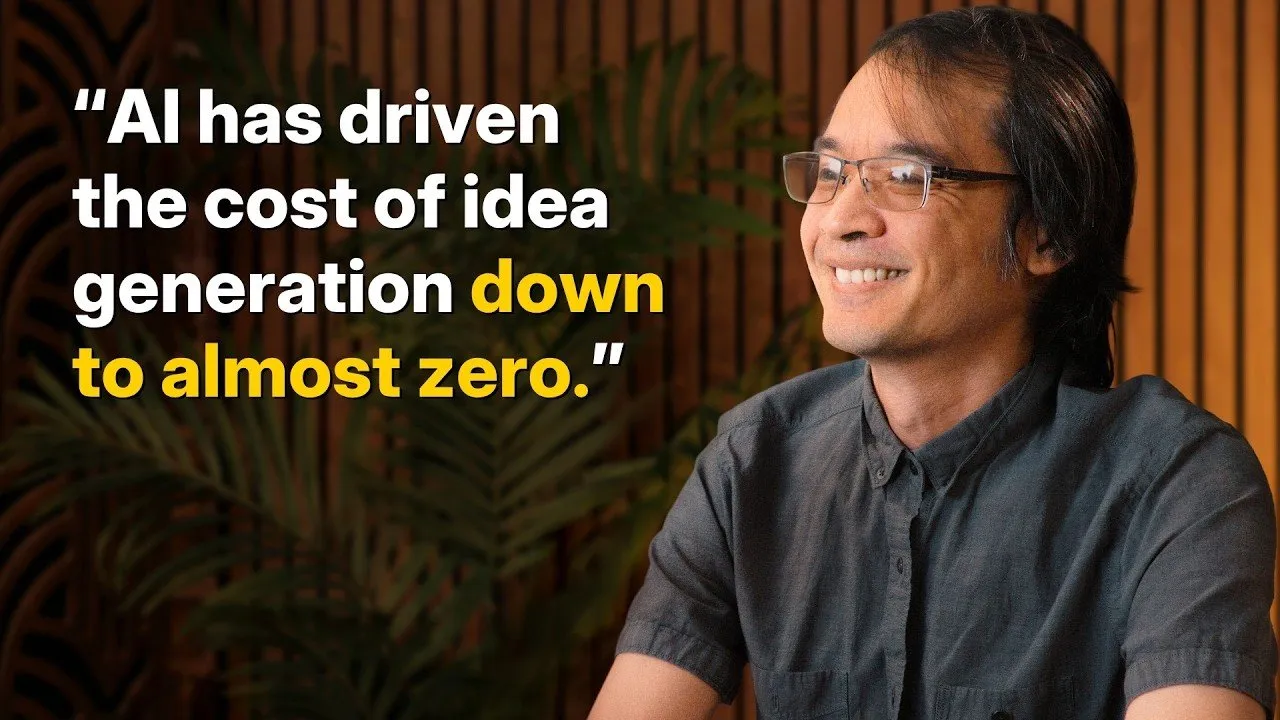
- The Shift in Scientific Bottlenecks: AI has driven the cost of idea generation toward zero, shifting the scientific burden from hypothesis creation to verification, validation, and curation.
- Breadth vs. Depth: While human experts excel at deep, specialized inquiry, AI offers unprecedented breadth, allowing us to map entire fields and identify empirical regularities at an impossible scale.
- The Necessity of Serendipity: In an era of hyper-optimized search and AI-driven workflows, maintaining room for "inefficient" discovery and unplanned interactions is essential for long-term innovation.
- A Complementary Future: The most significant advancements will likely come from a hybrid model, where humans and AI collaborate to explore, verify, and narrate new scientific frontiers.
Kepler, Brahe, and the Birth of Data-Driven Science
Kepler’s work on planetary motion is often romanticized, yet it serves as a perfect analogy for how modern AI interacts with massive datasets. Kepler was armed with the most precise dataset of his era, painstakingly collected by the eccentric astronomer Tycho Brahe. Despite his initial obsession with the "mathematical perfection" of Platonic solids, Kepler’s reliance on Brahe’s high-quality data forced him to confront the truth: his beautiful theory didn't work.
Kepler functioned much like a high-temperature Large Language Model (LLM). He spent years testing random geometric relationships, many of which were essentially scientific "slop." However, because he had a verifiable dataset to check his ideas against, these empirical stabs in the dark eventually led to his three laws of planetary motion. As Tao notes, the lesson is clear: "As long as you can verify it, these empirical regularities can then drive actual deep scientific progress."
From Hypothesis to Data-First
Historically, science followed a rigid path: define a problem, hypothesize, then collect data to test it. Today, the process is increasingly inverted. We now collect massive datasets first and use machine learning to extract hypotheses from them. This shift is critical because it allows us to identify patterns that might be invisible to the human eye, much like Kepler’s regression on a handful of planetary data points helped him derive a square-cube law.
"It’s not just creating a new theory and validating it, but communicating it to others. The art of exposition and making a case and creating a narrative is also a very important part of science."
The New Bottleneck: Verification and Curation
If AI has reduced the cost of idea generation to nearly zero, we have entered a new era where we are overwhelmed by potential theories. When AI can generate a thousand scientific hypotheses a day, the challenge is no longer finding ideas, but filtering the signal from the noise. We have moved from a famine of ideas to a feast that threatens to overwhelm our traditional peer-review systems.
Addressing the "AI Slop"
The scientific community has traditionally relied on walls—peer reviews and rigorous publication standards—to keep bad ideas at bay. As these systems are now being flooded with AI-generated submissions, we must innovate our methods of verification. We need systems that can take giant, machine-generated proofs and allow human experts to perform "ablation studies"—breaking down proofs to see which lemmas are revolutionary and which are just boilerplate.
The Future of Human-AI Complementarity
Many fear that AI will replace human intelligence, but Tao suggests that we are entering a phase of deep complementarity. AI excels at breadth; it can map out entire fields and solve problems that require processing power beyond human capacity. Humans, conversely, excel at depth and narrative structure. The most successful scientists of the next decade will likely be "foxes" who know how to use AI tools to manage broad, systematic data exploration while reserving their own cognitive energy for the most stubborn, resistant 20% of a problem.
"I think within a decade, a lot of things that math students currently do—what we spend the bulk of our time doing and a lot of stuff we put in our papers today—can be done by AI. But we will find that that actually wasn't the most important part of what we do."
Redesigning Scientific Discovery
To fully utilize this new intelligence, we must move beyond focusing solely on "prestige" problems. We should be designing structures that incentivize the discovery of broad classes of problems. The current "1% success rate" of AI on specific hard problems is misleading; when scaled, that 1% represents hundreds of breakthroughs that would have remained hidden for decades.
Conclusion
The integration of AI into mathematics and science is not merely a tool upgrade; it is a shift in the human relationship with knowledge. While we may lose the traditional, slow-paced environment that defined the 20th century, we are gaining the ability to traverse intellectual landscapes at unprecedented speeds. By embracing this change, focusing on robust verification systems, and maintaining our human capacity for narrative and serendipitous exploration, we can ensure that this cognitive revolution leads to genuine, transformative progress for civilization.