Table of Contents
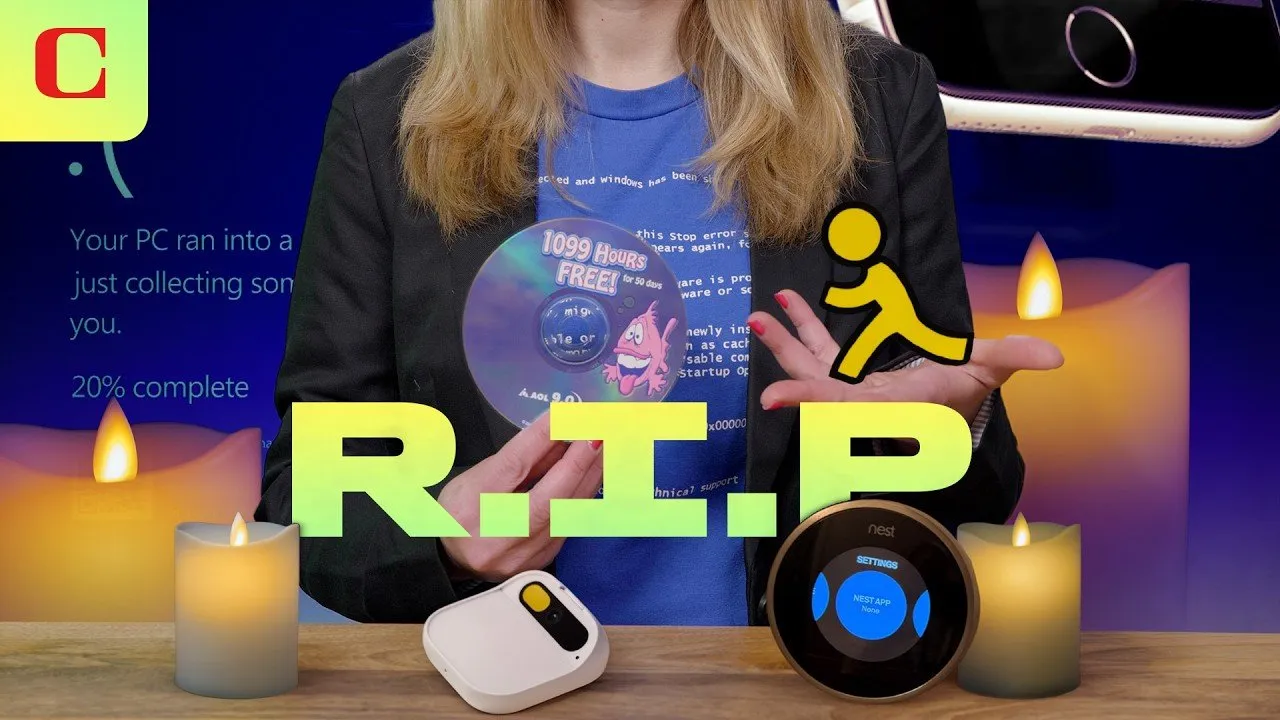
Google rendered millions of Nest smart thermostats obsolete this year by remotely disabling their connectivity features, forcing customers to purchase $150 replacements despite the hardware functioning perfectly. The move exemplifies how corporate decisions can turn functional technology into "dumb" devices overnight, highlighting broader concerns about digital ownership in an era of connected appliances.
Key Points
- Google shut off smart features for older Nest Learning Thermostats in October, removing app connectivity and remote controls
- Apple discontinued the iPhone Home button by ending sales of the iPhone SE when launching the iPhone 16
- Microsoft retired Skype after 22 years and replaced the iconic Blue Screen of Death with a gentler black error screen
- AOL ended dial-up internet service after 34 years, affecting over 265,000 rural users who relied solely on phone-line connections
- The Humane AI pin failed spectacularly, becoming non-functional within a year of launch before HP acquired the rights
Google's Smart Home Controversy
The most contentious tech death of 2025 involved Google's decision to disable connectivity features on older Nest Learning Thermostat models. The company cut off devices from connecting to the Google Home app, eliminating remote control capabilities and smart learning functions that customers had relied on for years.
Rather than offering free replacements, Google provided affected customers with discount coupons toward purchasing newer models for $150. The transition requires homeowners to install new hardware, including drilling fresh wall mounting holes and rewiring electrical connections.
Google cited that it was "increasingly challenging to continue to update these products," despite the company investing billions in artificial intelligence development.
The controversy underscores growing concerns about forced obsolescence in smart home devices, where manufacturers can remotely degrade functionality of working hardware to drive new sales.
Major Platform Shutdowns
Microsoft concluded Skype's 22-year run in May, officially hanging up on the service that pioneered mainstream video calling. The platform helped connect users internationally when traditional long-distance calls were expensive and difficult to arrange. Microsoft redirected its video communication focus entirely to Microsoft Teams.
The company also retired the infamous Blue Screen of Death after 40 years of traumatizing computer users. The critical system error screen, which displayed white text on bright blue backgrounds warning of impending shutdowns, has been replaced with a gentler black screen featuring simplified messaging about device problems requiring restarts.
AOL discontinued dial-up internet service after 34 years, ending an era of phone-line internet connections that charged users by the minute. According to 2019 census data, over 265,000 people in rural areas still relied solely on dial-up internet where broadband remains unavailable.
Amazon Streamlines App Strategy
Amazon closed its dedicated App Store for Android and Windows devices, along with the Amazon Coins rewards program designed to compete with Google Play. The company committed to refunding unused coins previously purchased by customers, as it consolidates app distribution through existing platforms.
Hardware Failures and Revivals
The Humane AI pin represented one of 2025's most spectacular product failures. The $700 wearable device, inspired by Star Trek communicator badges, suffered from overheating issues and relied on awkward hand gestures while projecting interfaces onto users' palms. The AI functionality proved inadequate compared to smartphones, and the hardware became non-functional within months of launch before HP acquired the rights.
Apple marked the end of an era by discontinuing the iPhone Home button when it stopped selling the budget-friendly iPhone SE alongside the iPhone 16 launch. The physical button had been a defining iPhone characteristic since the original 2007 model.
However, some technologies found new life in 2025. Vine announced its return as "Devine," funded by Twitter co-founder Jack Dorsey, with a focus on human-created content that explicitly prohibits AI-generated material. The revival targets creators seeking alternatives to AI-dominated platforms.
The year's tech obituaries reflect broader tensions between innovation and ownership rights, as companies increasingly control device functionality through remote updates and service dependencies. As connected devices become more prevalent, the boundary between hardware ownership and software licensing continues to blur, leaving consumers vulnerable to corporate decisions that can instantly transform functional technology into obsolete equipment.