Table of Contents
In an era where youth sports participation faces significant challenges—from burnout to financial barriers—the United States Olympic & Paralympic Committee (USOPC) is spearheading a transformative approach to how we develop young athletes. Through the "63 by 30" initiative, which aims to increase youth sport participation to 63% by the year 2030, national governing bodies are shifting their focus from short-term wins to long-term well-being. By prioritizing age-appropriate development, fun, and multi-sport sampling, Team USA leaders are proving that the path to the podium begins with a positive grassroots experience.
Key Takeaways
- The American Development Model (ADM): A shift away from early specialization toward a framework that emphasizes fun, skill acquisition, and age-appropriate training.
- Multi-Sport Advantage: Data confirms that elite success often stems from playing multiple sports; notably, 98% of NHL players were multi-sport athletes until age 14.
- Coach & Parent Education: Quality coaching and informed parenting are the single biggest drivers of athlete retention and personal development.
- Proven Results: Early adopters like USA Hockey have seen record retention rates and international dominance by dismantling archaic rules and focusing on player enjoyment.
- Adaptive Pathways: Sports like football and tennis are evolving their structures—introducing flag football and "red ball" tennis—to create more accessible entry points for children.
The American Development Model: A Framework for Life
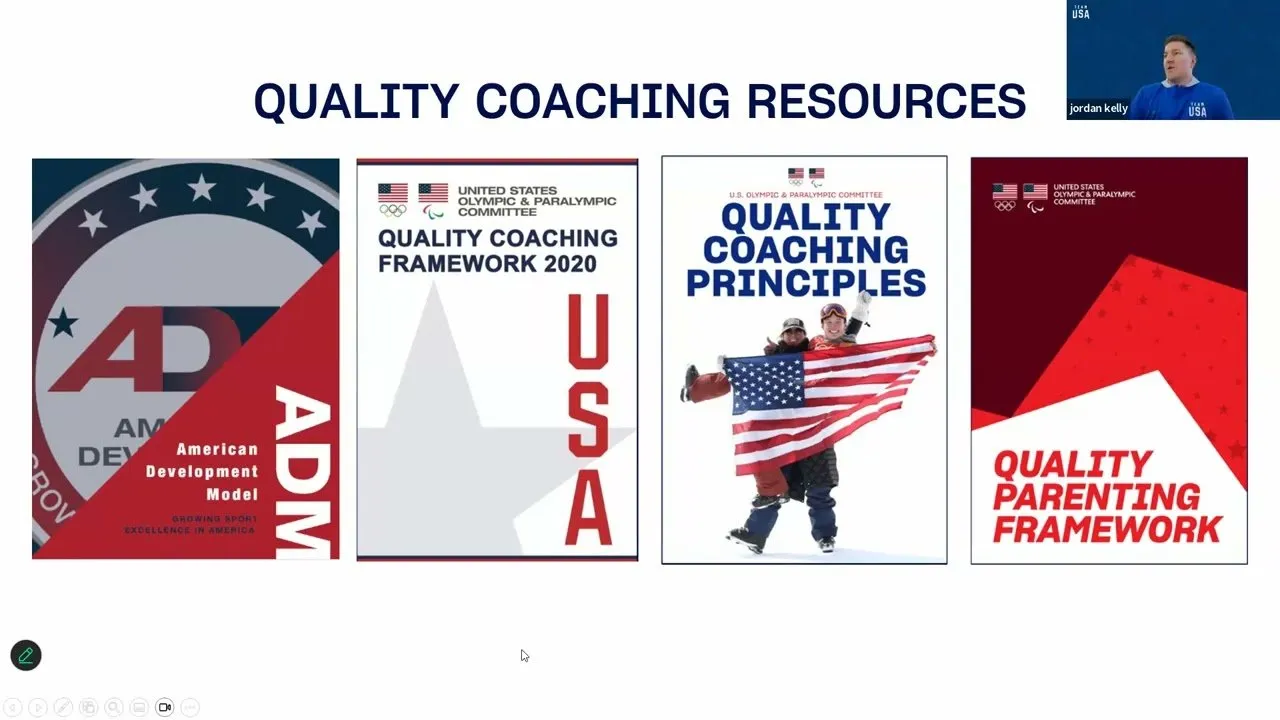
At the heart of this transformation is the American Development Model (ADM). The USOPC has recognized that the traditional "win-at-all-costs" mentality in youth sports is counterproductive, often leading to early dropout rates. Instead, the ADM promotes a pathway that moves from "Discover, Learn, and Play" to "Train and Compete," and ultimately to "Active for Life."
Jordan Kelly, Manager of Grassroots Pathways for the USOPC, emphasizes that the goal is not just to create Olympians, but to foster healthy individuals. This is supported by the Personal Assets Framework, which links the immediate sport experience directly to personal development.
"The goal of the ADM really is to support and get participants what they need and to support as many as possible for as long as possible as best as possible regardless of whatever their level, ability or desired goals are."
When coaches create an environment defined by meaningful engagement and quality social dynamics, athletes experience increased confidence and character growth. This, in turn, drives performance and retention.
USA Hockey: The Blueprint for Success
Often cited as the pioneer of this movement, USA Hockey has spent the last 15 years radically overhauling its youth structure. Ken Martell, Senior Director of Player and Coach Development, notes that the organization realized a fundamental truth: you cannot develop elite talent if children quit the sport before they reach puberty.
Dismantling Barriers
USA Hockey took bold steps to align the sport with child development rather than adult convenience. This included:
- Eliminating National Championships for 12U: Removing the pressure of national titles to focus on skill development.
- Cross-Ice Hockey: Shrinking the playing surface to match the size of the players, ensuring more puck touches and engagement.
- Prioritizing Practice: Shifting the focus from travel-heavy game schedules to local skill-based training.
"You can't be a great Olympian at 23, 24 if you quit at 10."
The Results
The commitment to the ADM has paid dividends. Despite having the same number of ice facilities as they did in 2007, USA Hockey has more children playing than ever before. On the world stage, the U.S. is entering the next Olympic cycle with top-ranked men’s, women’s, and para teams—a testament to the long-term efficacy of a patient, player-centered approach.
USA Football: Evolution and Olympic Expansion
While hockey has a long-established ADM history, USA Football is rapidly adapting its Football Development Model (FDM) to meet modern demands and new opportunities. With flag football set to debut at the 2028 Los Angeles Olympics, the sport is expanding its entry points.
Lauren Davenport, Senior Manager for Curriculum and Long-Term Athlete Development, highlights that development is not linear. The FDM acknowledges that athletes enter the sport at different ages and through different modalities, whether tackle or flag. To support this, USA Football has built education pillars that extend beyond just players and coaches.
Educating the Ecosystem
A unique aspect of USA Football’s approach is the inclusion of officials in their development model. By conducting research into the needs of officials, the organization ensures that the individuals managing the game are as well-equipped to foster a positive environment as the coaches on the sidelines. This holistic approach ensures that every adult interaction contributes to a "fun and fulfilling experience" for the athlete.
USA Tennis: From "Quick Start" to Grand Slams
Tennis faces unique challenges as an individual sport often driven by private lessons rather than team structures. However, Craig Jones, Senior Director of Delivery and Quality Standards for USA Coaching, outlines a significant cultural shift toward the ADM and the "5 Cs"—Competence, Confidence, Connection, Character, and Creativity.
Adapting the Equipment
Similar to hockey’s cross-ice initiative, tennis has embraced the "Red, Orange, Green" ball progression. By using slower-moving balls and smaller courts, children can actually rally and play the game, rather than spending their time chasing yellow balls they cannot control. This "play to learn" philosophy contrasts sharply with the old model of static lessons.
High-Performance Outcomes
The shift toward long-term development is reshaping American tennis at the highest levels. The current generation of stars, including Coco Gauff and Ben Shelton, came up through these modified systems. Jones points out that Ben Shelton is a prime example of the multi-sport philosophy; he played football extensively and did not specialize in tennis until much later than traditional wisdom would suggest. The result? A powerful, athletic player with a "live arm" and a fresh perspective on competition.
The Critical Role of Coach Education
Across all national governing bodies, the common denominator for success is the quality of the coach. However, the approach to education varies:
- Mandatory Training: USA Hockey requires coaches to complete age-specific modules and attend annual workshops to stand behind the bench. This ensures a baseline of competence and safety.
- Market-Driven Quality: USA Tennis recently launched "USA Coaching," moving from an accreditation body to a direct education provider. Their goal is to create such high-value resources that coaches voluntarily flock to them to improve their businesses and athlete outcomes.
Regardless of the method, the data is clear: educated coaches retain athletes. When coaches understand *how* to teach—not just *what* to teach—children are more likely to return season after season.
Conclusion
The transformation of youth sports in America is not an overnight fix; it is a generational shift. By prioritizing the mental, physical, and emotional well-being of the child over the immediate gratification of a scoreboard, Team USA leaders are building a more robust sporting future.
Whether it is through the USOPC’s centralized resources or the sport-specific adaptations of hockey, football, and tennis, the message remains consistent: create the best possible environment, and the performance will follow. As the U.S. looks toward the 2028 Olympics and beyond, the true victory lies in the millions of children who will develop a lifelong love for movement, teamwork, and healthy competition.