Table of Contents
The final week of February has left market participants grappling with a profound sense of dislocation. Across both crypto and traditional equities, a thick "fog of the future" has settled, driven by a volatile cocktail of aggressive trade tariffs, the disruptive potential of artificial intelligence, and a persistent "extreme fear" in digital asset sentiment. While prices remain far above previous cycle lows, the psychological state of the market suggests a structural shift in how investors perceive risk. From insider trading allegations against major trading firms to high-stakes standoffs between AI labs and the Pentagon, the current landscape feels less like a standard correction and more like a fundamental reordering of the financial status quo.
Key Takeaways
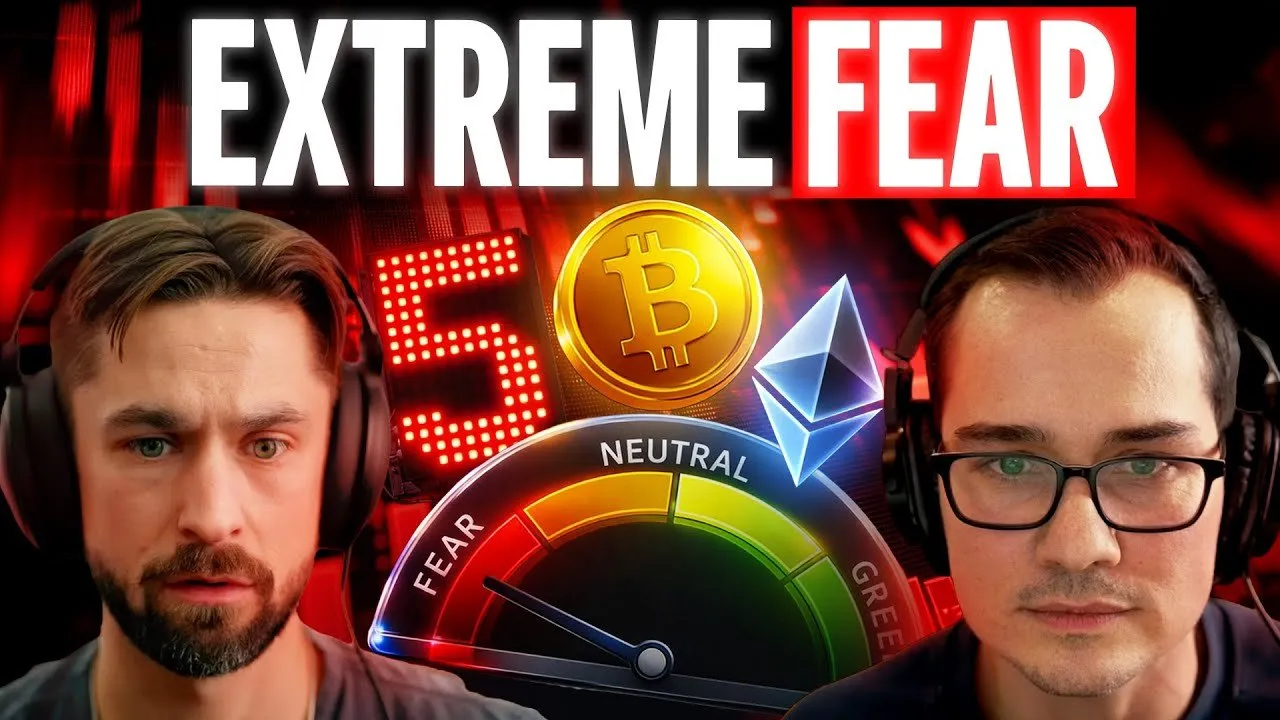
- Historic Fear Levels: The Crypto Fear and Greed Index hit a staggering low of 5 out of 100, indicating deeper market pessimism than during the collapses of FTX or Terra Luna.
- The Uncertainty Bubble: A combination of Supreme Court rulings on tariffs and "AI doomer" narratives has created a "macro fog" that makes long-term forecasting nearly impossible.
- Institutional Allegations: Terraform Labs' administrators have accused Jane Street of insider trading during the 2022 de-pegging event, while sleuths investigate daily Bitcoin price suppression.
- The AI Sovereignty Battle: Anthropic faces an ultimatum from the Pentagon regarding guardrails on autonomous weapons and mass surveillance, highlighting a growing tension between silicon valley ethics and national security.
- Expanding Retail Access: Robin Hood and Coinbase are aggressively moving to bridge the gap between private equity, traditional stocks, and crypto-native rails.
The Sentiment Crisis: More Fearful Than FTX
Despite Bitcoin maintaining a price range significantly higher than the dark days of 2022, market sentiment has plummeted to historic lows. The Fear and Greed Index recently bottomed at a five, a level of "extreme fear" that persists without the usual signs of a quick recovery. Notably, this is lower than the sentiment recorded during the Terra Luna collapse or the bankruptcy of FTX.
Analysts suggest this disconnect between price and sentiment is driven by a "permanent allocation shift." Long-term crypto investors, who previously held nearly 100% of their net worth in digital assets, appear to be diversifying into AI and robotics. This trend is exacerbated by "grift fatigue," where the association of crypto with political maneuvering and low-effort meme coins has soured the industry's reputation among serious builders.
A Shift in the Four-Year Cycle
The traditional four-year cycle narrative is also facing scrutiny. While the "down part" of the cycle is expected, the current malaise feels different. The lack of a major "blow-up" this cycle—no BlockFi, no 3AC—leaves investors wondering why the atmosphere remains so heavy. The answer may lie in the "doubt" component of FUD (Fear, Uncertainty, Doubt). There is a growing skepticism about whether crypto can regain its "hot" status as AI continues to dominate the cultural and technological zeitgeist.
The Uncertainty Bubble: Tariffs and AI Doomerism
The broader markets are currently trapped in what some call an "uncertainty bubble." This is characterized by two main forces: the legal volatility of international trade and the existential variance of AI productivity. The Supreme Court recently struck down various emergency tariffs, only for the executive branch to immediately pivot to alternative legal frameworks to re-invoke them. This "regulatory rodeo" leaves global businesses in a state of perpetual limbo regarding supply chain costs.
Simultaneously, a viral "AI Doomer" narrative has begun to spook institutional investors. A retrospective-style report from Centrini Research, titled The 2028 Global Intelligence Crisis, argues that AI-driven productivity gains could paradoxically undermine the economy by displacing the global workforce before new economic structures can be built.
"AI is so bullish that it's bearish; the disruption happens so fast that the traditional economic model collapses under the weight of its own efficiency."
While critics argue these scenarios are "AI doomer fanfiction," the market reaction is real. US stocks erased nearly $800 billion in market cap in a single day as these headlines converged with trade war uncertainty. The "random walk" of the market has, for the moment, walked directly into a wall of pessimism.
Institutional Shadow Games: The Jane Street Allegations
The ghost of 2022 returned this week as administrators for Terraform Labs accused the trading giant Jane Street of "rigging the market." The allegation centers on a 2022 withdrawal of $150 million in TerraUSD (UST) from the Curve 3pool. Documents suggest Jane Street exploited non-public information to exit an $85 million position just minutes later, contributing to the "fragility" that eventually led to the total collapse of the ecosystem.
The 10 AM Bitcoin Drop
The scrutiny on Jane Street extends beyond historical events. Internet sleuths have identified a consistent downward price movement in Bitcoin at 10:00 AM daily, colloquially known as the "10 AM drop." Some market observers argue that TradFi hedging techniques involving spot ETFs are creating "synthetic Bitcoin" supply, which may be suppressing the price of the actual 21 million hard-capped coins. While these theories remain speculative, they highlight a growing anxiety that traditional financial instruments have become the "tail that wags the dog" in crypto markets.
Mainstreaming Financial Rails: Zuck Bucks and Public VC
Despite the prevailing fear, major tech and finance players are doubling down on infrastructure. Meta (formerly Facebook) has reportedly revived its stablecoin ambitions by issuing a Request for Proposal (RFP) to third-party firms. Unlike the ill-fated "Libra" project, which sought to create a new currency, Meta is now focused on integrating existing stablecoin technology into the Facebook, Instagram, and WhatsApp ecosystems. This move could potentially bring decentralized settlement to billions of users, particularly for remittances via WhatsApp.
In another significant move, Robin Hood is launching "Robin Hood Ventures Fund 1," a closed-end fund that will IPO on the New York Stock Exchange. This allows unaccredited retail investors to gain exposure to late-stage private companies like Stripe, SpaceX, and Revolute—investments previously reserved for elite venture capital firms. Similarly, Coinbase has begun rolling out stock and ETF trading within its app, moving closer to product parity with traditional brokerages while offering 24/5 trading capabilities.
The Sheriff of Crypto: Exposing the "Meme Coin Complex"
The pseudonymous on-chain sleuth ZachXBT continues to serve as the industry's unofficial sheriff. His latest investigation targeted Axiom, a Solana-based meme coin marketplace. ZachXBT alleged that internal employees abused data dashboards to link user wallets to influencers, allowing them to front-run trades and "copy-trade" private allocations before they were promoted to the public.
This exposure highlights the "cutthroat" nature of the current meme coin trenches. What was once a playground for retail "moonshots" has evolved into a sophisticated game of data intelligence and insider access. Notably, some of the individuals involved are based in New York City, leading to speculation that the Southern District of New York (SDNY) may take an interest in the case, mirroring the prosecution of former OpenSea employee Nate Chastain for similar front-running activities.
AI Sovereignty: Anthropic vs. The Pentagon
Perhaps the most consequential development of the week is the reported standoff between AI lab Anthropic and the US Department of War. The Pentagon has reportedly demanded that Anthropic remove its "safety guardrails" regarding mass surveillance and fully autonomous weapons for military use. Anthropic, which has built its brand on AI safety and "Constitutional AI," now faces a classic "Moloch" trap: if they refuse to cooperate, the government may simply move its hundreds of millions in funding to competitors like XAI or OpenAI.
Vitalik Buterin, the co-founder of Ethereum, publicly urged Anthropic to "honorably eat the consequences" and stay firm on its values. He argues that fully autonomous weapons and mass privacy violations are the two outcomes society should most aggressively resist. The outcome of this fight will likely determine whether AI labs remain independent entities or become effectively nationalized arms of the state's security apparatus.
Conclusion: Navigating the Fog
The current market environment is defined by a lack of clarity. We are witnessing the collision of decentralized finance, traditional institutional power, and the nascent sovereignty of artificial intelligence. While the "Fear and Greed Index" suggests a period of maximum pain, history often shows that such extremes precede a rebalancing. Whether the "uncertainty bubble" pops or slowly dissipates, the winners will be those who can distinguish between short-term noise and the structural rebuilding of the global financial system. The frontier remains volatile, but as the "fog of the future" thickens, the importance of transparent, permissionless rails has never been clearer.