Table of Contents
The U.S. technology sector is signaling urgent concern that escalating tariff uncertainty could derail the domestic artificial intelligence buildout and destabilize critical international trade alliances. While the Trump administration continues to prioritize American leadership in AI manufacturing and data center construction, industry leaders warn that aggressive trade tactics may inadvertently stifle the foreign investment and supply chain stability required to sustain this infrastructure. The tension comes as major trading partners, including the European Union and India, pause key negotiations in response to shifting U.S. trade policies.
Key Points
- Investment Deterrence: Industry leaders warn that tariffs act as a significant barrier to the "necessary inputs" for AI infrastructure, including semiconductor components and energy grid equipment.
- Stalled Global Agreements: The EU has frozen the ratification of a pre-existing trade deal, and trade talks with India have been suspended, threatening a digital trade market valued at nearly $1 trillion.
- Strategic Conflict: While the administration seeks to encourage domestic manufacturing, the tech sector argues that tariffs conflict with the goal of exporting American AI technology to 95% of the world’s consumers.
- Regulatory Timeline: The recent invocation of Section 122 carries a 150-day cap, creating a narrow window for the administration to resolve trade disputes without long-term industrial damage.
Infrastructure and the Cost of Uncertainty
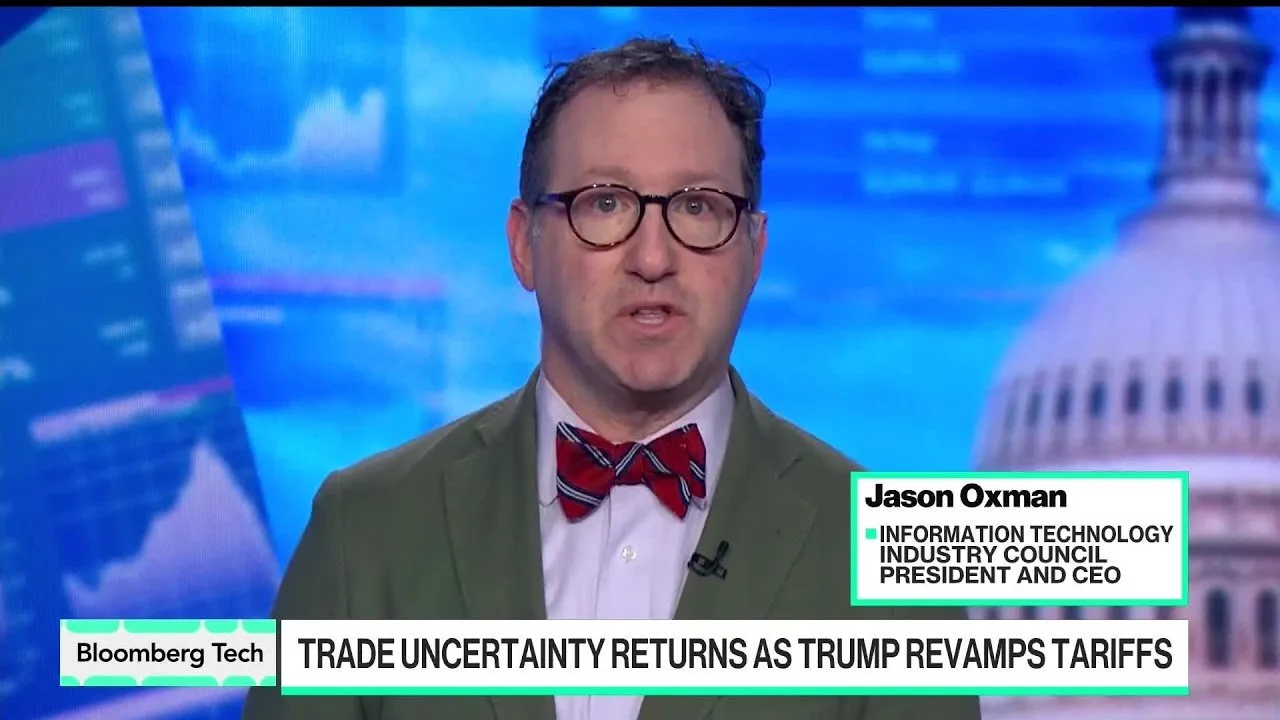
The buildout of AI capacity in the United States relies on a complex global web of capital and hardware. Major players such as NVIDIA and international investors from Taiwan and South Korea have already committed hundreds of billions of dollars to semiconductor plants and data center projects across the country. However, Jason Oxman, President and CEO of the Information Technology Industry Council (ITI), suggests that the lack of a predictable trade framework is forcing CEOs to navigate an increasingly volatile investment landscape.
The concern extends beyond chips to the foundational infrastructure required to power them. Upgrading the American transmission grid requires specialized equipment sourced globally. If tariffs are applied broadly to these inputs, the cost of scaling the AI ecosystem could become prohibitive, slowing the pace of adoption that the administration has championed as a national security and economic priority.
"Tariffs are good tactics in a lot of negotiation, but they're not a broader strategy to encourage the kind of investment that we're looking for... Tariffs can be a deterrent to the necessary inputs into that infrastructure."
Strained Alliances and the Digital Trade Market
On the international stage, the fallout from tariff uncertainty has already begun to manifest in stalled diplomatic progress. Following recent U.S. shifts toward separate jurisdictions for tariff legitimacy, the European Union moved to halt the ratification of a significant trade agreement. This freeze is particularly impactful given that the EU accounts for approximately 20% of U.S. imports and maintains a digital trade relationship with the U.S. approaching $1 trillion.
Similarly, trade momentum with India has faced setbacks. Despite recent high-level summits in Delhi aimed at advancing AI collaboration, scheduled delegations have been disrupted. For U.S. tech companies, these markets are essential; with 95% of the world’s consumer base residing outside U.S. borders, the ability to export American-made AI technology is the primary driver of long-term growth.
The Challenge of Exporting Innovation
The administration’s "Liberation Day" strategy, which seeks to foster global adoption of American AI, faces a paradox. To be a global leader, the U.S. must not only manufacture technology at home but also ensure it can reach foreign markets without retaliatory barriers. Industry advocates argue that a trade strategy focused heavily on tariffs may close doors to the very markets the U.S. hopes to lead.
Aligning Trade Tactics with Industrial Strategy
The technology industry’s primary request to the administration is a realignment of trade tactics with the broader goal of AI dominance. While the use of Section 122 provides the president with temporary authority to address trade imbalances, it also creates a countdown for the private sector. The 150-day cap on such measures provides a temporary window for negotiation, but permanent investment decisions require a multi-year horizon of stability.
"The one ask of the administration is as they reevaluate the trade and tariff strategy... we need to look at what the broader goals are, what the broader strategy is to encourage investment in AI in the U.S., the adoption of AI technology around the world, and how tariffs would interfere with the ability of that to be a successful strategy."
As the administration reevaluates its position, the tech sector remains focused on resolving both physical and digital trade issues. The coming months will be critical as the Trump administration determines whether to leverage current legal openings to codify a more permanent trade framework or continue utilizing tariffs as a recurring tool of negotiation. For the AI buildout to remain on schedule, the industry maintains that the transition from tactical uncertainty to strategic clarity must happen sooner rather than later.